Maruyama, Japan
Point d'atterrissage · JP Japan
Câbles connectés
| Câble | Statut |
|---|---|
| Asia Direct Cable (ADC) | Actif |
| Asia Pacific Gateway (APG) | Actif |
| Asia Submarine-cable Express (ASE)/Cahaya Malaysia | Actif |
| Australia-Japan Cable (AJC) | Actif |
| Candle | Planifié |
| E2A | Planifié |
| JUPITER | Actif |
| New Cross Pacific (NCP) Cable System | Actif |
| Trans-Pacific Express (TPE) Cable System | Actif |
Performance en direct
Mesures RTT vers ce point du 2026-03-02 au 2026-09-12 - RTT ICMP en direct via nos sondes de mesure. Recalculé quotidiennement.
Sources de mesure
| Sonde | Emplacement | Mesures | Moy. |
|---|---|---|---|
| #1033 | control probe | 350 | 105.8 ms |
| #4429 | control probe | 221 | 112.7 ms |
| #1318 | control probe | 49 | 154.6 ms |
| #1014589 sonde propre | Almaty KZ | 39 | 333.7 ms |
| #6410 sonde propre | Sao Paulo BR | 33 | 283.4 ms |
| #6487 sonde propre | Singapore SG | 31 | 83.9 ms |
| #1014473 sonde propre | Minsk BY | 8 | 291.6 ms |
| #1014597 sonde propre | Tbilisi GE | 8 | 314.0 ms |
| #1014969 sonde propre | Jerusalem IL | 8 | 318.2 ms |
| #6477 | control probe | 4 | 82.8 ms |
| #7062 sonde propre | Cape Town ZA | 4 | 411.3 ms |
| #1015523 sonde propre | Moscow RU | 4 | 246.0 ms |
| #6427 sonde propre | Sydney AU | 3 | 184.6 ms |
| #1015563 sonde propre | Saint Petersburg RU | 2 | 336.6 ms |
| #1015893 sonde propre | Rostov RU | 2 | 347.9 ms |
| #1015932 sonde propre | Odessa UA | 2 | 321.5 ms |
| #1015984 sonde propre | Balancer IL | 2 | 318.8 ms |
| #1016031 sonde propre | Kyiv UA | 2 | 309.9 ms |
À propos Maruyama, Japan
Position dans l'infrastructure régionale
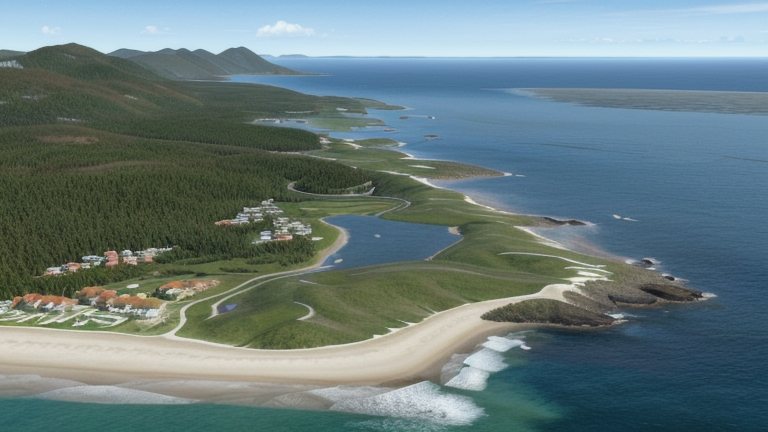
Maruyama est un point d'atterrissage de câbles sous-marins côtiers sur la côte pacifique du péninsule Bōsō en préfecture de Chiba, au Japon, aux coordonnées 35.005433°N, 139.975467°E. La ville se situe à l'ouest-sud-ouest de Tokyo sur la côte ouverte du Pacifique et sert d'un des principaux points d'atterrissage trans-pacifique au Japon — le pendant japonais des atterrissages situés en Californie occidentale qui ancrent la plupart du trafic internet entre les États-Unis, le Japon et l'Asie. Plusieurs systèmes de câbles majeurs s'y attèlent, ce qui en fait l'un des points d'atterrissage pacifiques les plus utilisés en Asie.
Le rôle de Maruyama est structuralement similaire à Shima (précédemment dans la préfecture de Mie, ouest de Tokyo) et Chikura (également sur la péninsule Bōsō) : ces atterrissages distribuent l'infrastructure trans-pacifique du Japon sur plusieurs sites physiquement séparés, fournissant une diversité d'atterrissage qui protège contre le risque de séisme ou d'impact de navire à un seul point.
Câbles sous-marins en service à Maruyama comprennent des systèmes atteignant directement la côte occidentale des États-Unis, les hubs coréens et taiwanais de câbles, le réseau filaire du sud-est asiatique reliant les Philippines à Singapour, ainsi que Guam comme point de transit pacifique.
Câbles sous-marins s'attelant à Maruyama
JUPITER est un câble sous-marin de 14 557 km en service depuis 2020, appartenant à Amazon Web Services, Meta, NTT, PCCW, PLDT et Softbank. Il atteint Shima (Japon), Daet (Philippines), Cloverdale (Oregon, États-Unis) et Hermosa Beach (Californie, États-Unis) — un parcours trans-pacifique dominé par des hyperscalers avec deux atterrissages sur la côte ouest des États-Unis.
Système Trans-Pacifique Express (TPE) est un câble sous-marin de 17 968 km en service depuis 2008, appartenant à AT&T, China Telecom, China Unicom, Chunghwa Telecom, KT, NTT et Verizon. Il atteint Chongming (Chine), Qingdao (Chine), Geoje (Corée du Sud), Tanshui (Taïwan) et Nedonna Beach (Oregon, États-Unis).
Nouveau Trans-Pacifique (NCP) est un câble sous-marin de 13 618 km en service depuis 2018, appartenant à China Mobile, China Telecom, China Unicom, Chunghwa Telecom, KT, Microsoft et Softbank. Il atteint Chongming, Lingang et Nanhui (Chine), Busan (Corée du Sud), Toucheng (Taïwan) et Pacific City (Oregon, États-Unis).
Porte d'Asie Pacifique (APG) est un câble sous-marin de 10 400 km en service depuis 2016, appartenant à une consortium chinois-dirigé incluant Meta, NTT, KT et autres. Il atteint Chongming et Nanhui (Chine), Tseung Kwan O (Hong Kong, Chine), Shima (Japon), Cherating (Malaisie), Changi South (Singapour), Busan (Corée du Sud), Toucheng (Taïwan), Songkhla (Thaïlande) et Danang (Vietnam).
Cable Direct Asia (ADC) est un câble sous-marin de 9 988 km en service depuis 2024, appartenant à China Telecom, China Unicom, National Telecom, PLDT, Singtel, Softbank, Tata Communications et Viettel. Il atteint Chung Hom Kok (Chine), Shantou (Chine), Batangas (Philippines), Tuas (Singapour), Sriracha (Thaïlande) et Quy Nhon (Vietnam).
Cable Australie-Japon (AJC) est un câble sous-marin de 12 700 km en service depuis 2001, appartenant à une consortium dirigée par AT&T. Il atteint Tanguisson Point et Tumon Bay (Guam), Shima (Japon) et Sydney (Oxford Falls et Paddington, Australie).
Cable Express Asiatique (ASE) / Cahaya Malaysia est un câble sous-marin de 8 148 km en service depuis 2012, appartenant à NTT, PLDT, StarHub et Telekom Malaysia. Il atteint Tseung Kwan O (Hong Kong, Chine), Komesu (Japon), Mersing (Malaisie), Daet (Philippines) et Changi South (Singapour).
Plusieurs systèmes futurs sont prévus pour l'atterrissage à Maruyama : E2A (Chunghwa Telecom + SK Broadband + Softbank + Verizon, mise en service 2029, vers la Corée du Sud, Taïwan et côte ouest des États-Unis) et Candle (dirigé par Meta, mise en service 2028, vers l'Indonésie, la Malaisie, les Philippines, Singapour, Taïwan).
Topologie de connexion et redondance
L'portfolio de câbles sous-marins à Maruyama offre une redondance trans-pacifique extensive : TPE, NCP, JUPITER et AJC se terminent sur la côte ouest des États-Unis via différents consortiums d'opérateurs et différents atterrissages (Oregon Cloverdale/Pacific City/Nedonna Beach, Californie Hermosa Beach, Guam-Sydney via AJC). Sur le côté asiatique, plusieurs câbles (APG, ADC, ASE/Cahaya Malaysia) fournissent des chemins divers vers la toile d'Asie de Hong Kong à Singapour en passant par la Malaisie.
La mixité opérative à Maruyama est également diverse : opérateurs japonais (NTT, Softbank), hyperscalers américains (AWS, Meta, Microsoft), opérateurs chinois alignés sur l'État (China Telecom, China Mobile, China Unicom), opérateurs coréens (KT, SK Broadband), taïwanais (Chunghwa Telecom) et autres. Cette diversité signifie que les perturbations d'un seul opérateur à Maruyama ne cascadent pas simultanément sur tous les câbles, fournissant une redondance fonctionnelle forte au niveau de l'atterrissage.
Géographie et coordonnées
L'atterrissage sous-marin de Maruyama se situe à 35.005433°N, 139.975467°E (35°00'20"N, 139°58'32"E) sur la côte pacifique de la péninsule Bōsō en préfecture de Chiba, au sud de Honshu, au Japon. La localisation exposée directement à l'océan Pacifique offre des corridors trans-océaniques sans éclairage d'îles intermédiaires, tandis que les conditions de fin de câble abritées permettent la construction standard d'un manoir de plage armé.
Questions fréquemment posées
Quels sont les câbles sous-marins qui s'attellent à Maruyama, au Japon ?
Maruyama accueille de nombreux câbles trans-pacifiques majeurs : JUPITER (mise en service 2020), TPE (mise en service 2008), NCP (mise en service 2018), APG (mise en service 2016), ADC (mise en service 2024), AJC (mise en service 2001), ASE/Cahaya Malaysia (mise en service 2012), avec des systèmes futurs prévus E2A (mise en service 2029) et Candle (mise en service 2028).
Quelles sont les coordonnées de l'atterrissage sous-marin de Maruyama ?
L'atterrissage sous-marin de Maruyama se situe à 35.005433°N, 139.975467°E (35°00'20"N, 139°58'32"E) sur la côte pacifique de la péninsule Bōsō en préfecture de Chiba, au sud de Honshu, au Japon.
Quels pays se connectent au Japon via Maruyama ?
À travers les câbles d'atterrissage à Maruyama, le Japon atteint les États-Unis (côte ouest des États-Unis via JUPITER, TPE, NCP, AJC ; Hawaï via PPC-1 connecté via Sydney/Guam), la Chine (via TPE, NCP, APG, ADC), la Corée du Sud (via TPE, NCP, APG, ADC), Taïwan (via TPE, NCP, APG, ADC), les Philippines (via JUPITER, ADC, APG, ASE/Cahaya), Singapour (via APG, ADC, ASE/Cahaya), le Vietnam (via APG, ADC), la Malaisie (via APG, ASE/Cahaya), la Thaïlande (via APG, ADC), Hong Kong (via APG, ASE/Cahaya), l'Australie (via AJC) et Guam (via AJC).
Quand a été posé le premier câble sous-marin à Maruyama ?
L'atterrissage sous-marin de Maruyama le plus ancien dans les données GeoCables est le Cable Australie-Japon (AJC), en service depuis 2001. TPE a suivi en 2008 et des câbles ultérieurs ont progressivement élargi Maruyama au principal atterrissage trans-pacifique du Japon.
Qui opère les câbles s'attelant à Maruyama ?
Les câbles d'atterrissage à Maruyama sont exploités par un mélange exceptionnellement divers : NTT et Softbank (opérateurs japonais), AWS, Meta et Microsoft (hyperscalers américains), AT&T et Verizon (opérateurs américains), China Mobile, China Telecom et China Unicom (opérateurs alignés sur l'État chinois), KT et SK Broadband (coréens), Chunghwa Telecom (taïwanais), Singtel et StarHub (singapouriens), Telekom Malaysia, PLDT (philippins) et autres.
=== FIN DU DOCUMENT ===Et ensuite : Maruyama, Japan dans l'annuaire mondial des points d'atterrissage; visualisez les routes environnantes sur la carte interactive des câbles ou suivez la surveillance réseau en direct.
Autres points d'atterrissage en Japan
FAQ
Point d'atterrissage
- PaysJP Japan
- Coordonnées35.0054°N 139.9755°E
- Câbles connectés9
Voir les routes réelles
Visualisez le routage réel des câbles sous-marins depuis Maruyama, Japan - avec nœuds, distances et latence
Ouvrir le calculateur →