Ajigaura, Japan
Landing Point · JP Japan
Connected Cables
| Cable | Status |
|---|---|
| EAC-C2C | Active |
| Pacific Crossing-1 (PC-1) | Active |
| Sta’O’Nuk | Planned |
Live Performance
RTT measurements to this landing point from 2026-03-02 through 2026-10-15 - live ICMP round-trip time via our monitoring probes. Recomputed daily. ✓ No anomalies detected in the monitored period.
Measurement sources
| Probe | Location | Samples | Avg |
|---|---|---|---|
| #4429 | control probe | 102 | 109.3 ms |
| own probe | Almaty KZ | 21 | 323.2 ms |
| own probe | Minsk BY | 13 | 290.4 ms |
| own probe | Tbilisi GE | 13 | 303.3 ms |
| #6410 own probe | Sao Paulo BR | 8 | 280.0 ms |
| own probe | Jerusalem IL | 8 | 297.1 ms |
| #6487 | control probe | 7 | 88.1 ms |
| own probe | Moscow RU | 6 | 257.2 ms |
| #7062 own probe | Cape Town ZA | 4 | 391.3 ms |
| #7433 | control probe | 2 | 13.8 ms |
| #55091 | control probe | 2 | 4.4 ms |
| #6477 | control probe | 1 | 91.9 ms |
| #50304 | control probe | 1 | 28.2 ms |
| own probe | Sevastopol UA | 1 | 317.4 ms |
About Ajigaura, Japan
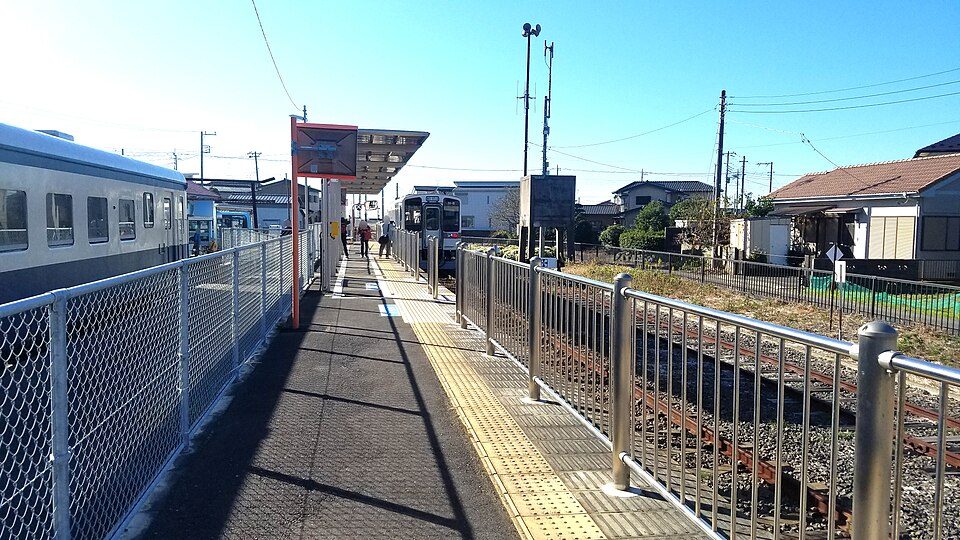
Ajigaura, Japan: Submarine Cable Landing Point
Ajigaura is a coastal location in Hitachinaka, Ibaraki Prefecture, Japan, serving as a submarine cable landing point on the country's Pacific-facing coastline. Two submarine cables come ashore here, connecting Japan to a broad set of economies across the Asia-Pacific region and directly to the United States. These two systems together enable both transpacific and intra-Asian connectivity from a single landing point on Japan's eastern seaboard.
The cables landing at Ajigaura reflect two distinct connectivity corridors: one reaching westward across the Asia-Pacific to link Japan with other major East and Southeast Asian economies, and one extending eastward across the Pacific to the United States. This combination makes Ajigaura a point where both regional and intercontinental submarine infrastructure converges.
Cables Landing at Ajigaura
EAC-C2C is a submarine cable system with a total length of 36,500 km that entered service in 2002. In addition to Japan, the cable connects China, the Philippines, Singapore, South Korea, and Taiwan, forming a ring or mesh of connectivity across major East and Southeast Asian economies. Ajigaura serves as one of the Japanese landing points on this extensive regional system.
Pacific Crossing-1 (PC-1) is a transpacific submarine cable system stretching 21,000 km that entered service in 1999. The cable links Japan and the United States, providing a direct high-capacity corridor across the Pacific Ocean. Ajigaura is one of the Japanese terminals on this system, positioning it as a transpacific gateway on Japan's northeastern coast.
Regional Context
Within Japan's submarine cable infrastructure of 51 cables spread across 68 landing points, Ajigaura hosts 2 cables, placing it in the top 90 percent of Japanese landing points by cable count. Larger hubs such as Shima (12 cables), Maruyama (9 cables), and Chikura (8 cables) host significantly more systems, while Ajigaura is broadly comparable to mid-tier landing points such as Hachijo, Minamiboso, and Naha, each of which also serves four or fewer cables.
Network Role
Ajigaura functions as a dual-corridor landing point, simultaneously anchoring a transpacific link to the United States via PC-1 and participating in the broader East and Southeast Asian regional mesh via EAC-C2C. While it is not among Japan's largest cable hubs, its combination of a long-haul transpacific system and a wide intra-Asian regional cable means that Ajigaura connects Japan to six distinct national cable ecosystems - the United States, China, the Philippines, Singapore, South Korea, and Taiwan - from just two cable systems.
As a two-cable terminus rather than a large multi-cable hub, Ajigaura represents a focused but geographically diverse node in the Japan submarine cable graph, contributing transpacific and pan-Asian reach to Japan's overall 51-cable international network.
What next: Ajigaura, Japan in the global directory of cable landing points; see surrounding routes on the interactive submarine cable map or follow live network monitoring.
Our measurements to Ajigaura
Traceroutes from our own measurement points over the last 30 days: usual delay and number of network hops on the way to Ajigaura.
- From RIPE Atlas probes: 86 ms, 11 hops, 11 traces
Last trace: 2026-10-15. Live network map
Other Landing Points in Japan
FAQ
Landing Point
- CountryJP Japan
- Coordinates36.3836°N 140.6123°E
- Connected Cables3
See Real Cable Routes
View actual submarine cable routing from Ajigaura, Japan - with backbone nodes, distance calculations, and latency estimates
Open Calculator →