Aguni, Japan
Landing Point · JP Japan
Connected Cables
| Cable | Status |
|---|---|
| Okinawa Remote Islands | Active |
Live Performance
RTT measurements to this landing point from 2026-03-02 through 2026-09-27 - live ICMP round-trip time via our monitoring probes. Recomputed daily. ✓ No anomalies detected in the monitored period.
Measurement sources
| Probe | Location | Samples | Avg |
|---|---|---|---|
| own probe | Almaty KZ | 5 | 320.4 ms |
| own probe | Tbilisi GE | 4 | 304.8 ms |
| #6410 own probe | Sao Paulo BR | 3 | 285.4 ms |
| #6427 own probe | Sydney AU | 3 | 185.5 ms |
| #7062 own probe | Cape Town ZA | 3 | 383.0 ms |
| #60306 | control probe | 3 | 35.0 ms |
| #65655 | control probe | 3 | 46.0 ms |
| #1013597 | control probe | 3 | 35.0 ms |
| own probe | Minsk BY | 3 | 302.0 ms |
| own probe | Jerusalem IL | 2 | 310.5 ms |
| own probe | Moscow RU | 1 | 240.4 ms |
| own probe | Rostov RU | 1 | 317.1 ms |
About Aguni, Japan
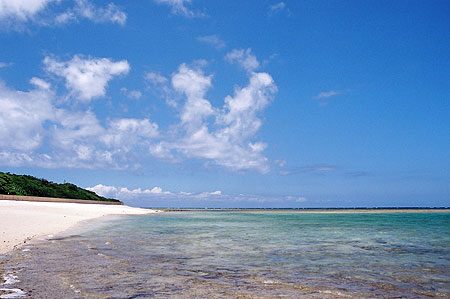
Aguni, Japan: Submarine Cable Landing Point
Aguni is a village in Shimajiri District, Okinawa Prefecture, Japan, occupying the entirety of Aguni Island. As a remote island community in the Okinawa region, it is served by submarine cable infrastructure that connects it to the broader Japanese national network. One submarine cable lands at Aguni, making it one of 68 submarine cable landing points distributed across Japan.
The single cable landing here, the Okinawa Remote Islands system, forms part of an intra-Japanese corridor designed to bring connectivity to the island communities of Okinawa Prefecture. Rather than linking Japan to international destinations, this cable operates entirely within Japanese territory, reflecting the practical demands of maintaining communications with geographically dispersed island settlements. Aguni Island, with a population of approximately 672 residents as of 2022 and a total land area of 7.65 square kilometres, represents precisely the kind of small, isolated community that such infrastructure is built to serve.
Cables Landing at Aguni, Japan
Okinawa Remote Islands is a submarine cable system with a total length of 915 km. It reached ready-for-service status in 2017 and connects multiple landing points entirely within Japan. The cable links Aguni to other locations across the Okinawa island chain, forming an intra-national network route that supports communications across one of Japan's most geographically fragmented prefectures.
Regional Context
Within Japan's submarine cable landscape, Aguni sits at the lower end of the scale by cable count. Japan hosts 51 submarine cables across 68 landing points, with major hubs such as Shima (12 cables), Maruyama (9 cables), and Chikura (8 cables) handling substantially higher volumes of traffic. Aguni's single-cable profile places it among the more lightly served landing points in the country, ranking within the top 68 percent of Japanese landing points by cable count, a position that reflects its role as a terminus serving a small island community rather than a transit or aggregation node.
Network Role
Aguni functions as a single-cable terminus rather than a multi-cable hub. Its connection via the Okinawa Remote Islands cable enables basic submarine cable-based connectivity for Aguni Island within the Japanese domestic network, linking a small and geographically isolated community to the wider infrastructure of Okinawa Prefecture. The cable's 915 km length and entirely intra-Japanese routing reflect the scale and purpose of regional island connectivity projects, distinct from the long-haul international systems that dominate Japan's submarine cable profile at larger landing points.
Within the regional submarine cable graph, Aguni's presence as a landing point illustrates how national cable programmes extend network reach to communities that would otherwise remain dependent on alternative and less resilient forms of communication.
What next: Aguni, Japan in the global directory of cable landing points; see surrounding routes on the interactive submarine cable map or follow live network monitoring.
Other Landing Points in Japan
Landing Point
- CountryJP Japan
- Coordinates26.5872°N 127.2290°E
- Connected Cables1
See Real Cable Routes
View actual submarine cable routing from Aguni, Japan - with backbone nodes, distance calculations, and latency estimates
Open Calculator →