Awashimaura, Japan
Landing Point · JP Japan
1
Connected Cables
JP
Country
38.46°
Latitude
139.25°
Longitude
Ctrl + Scroll to zoom
Connected Cables
| Cable | Status |
|---|---|
| Awashima-Murakami | Active |
Live Performance
67
measurements
9
probes
113
days monitored
222.8
ms avg RTT
0
anomalies
RTT measurements to this landing point from 2026-06-01 through 2026-09-22 - live ICMP round-trip time via our monitoring probes. Recomputed daily. ✓ No anomalies detected in the monitored period.
Measurement sources
| Probe | Location | Samples | Avg |
|---|---|---|---|
| #6410 own probe | Sao Paulo BR | 15 | 277.6 ms |
| own probe | Almaty KZ | 15 | 297.8 ms |
| #6487 | control probe | 12 | 79.6 ms |
| own probe | Moscow RU | 8 | 260.5 ms |
| #7062 own probe | Cape Town ZA | 7 | 395.4 ms |
| #29036 | control probe | 3 | 16.2 ms |
| #52844 | control probe | 3 | 32.0 ms |
| #60782 | control probe | 3 | 21.1 ms |
| own probe | Saint Petersburg RU | 1 | 281.2 ms |
About Awashimaura, Japan
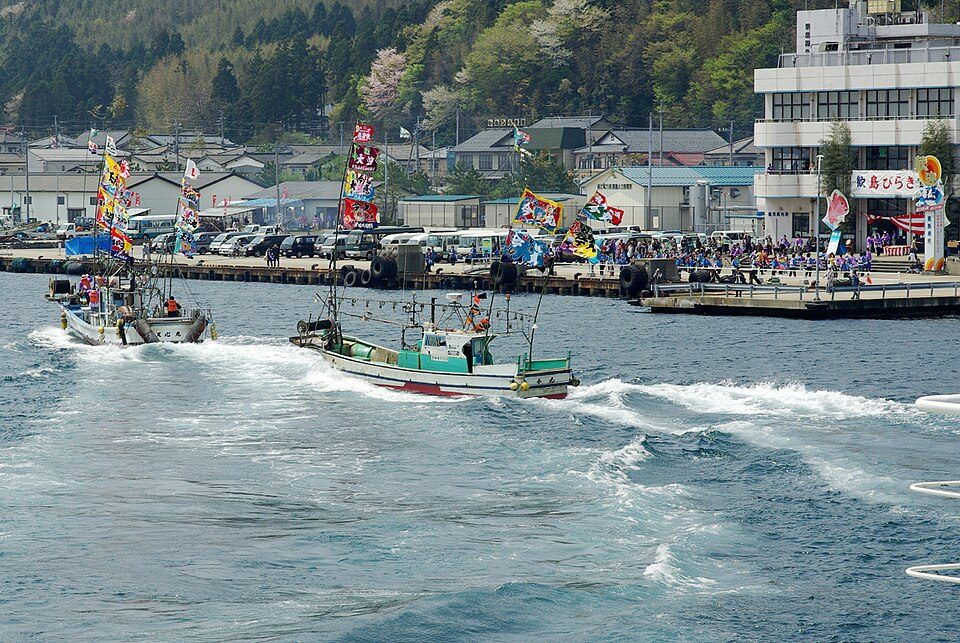
Awashimaura: A Submarine Cable Connection to Murakami
Awashimaura, a small village in Niigata Prefecture, Japan, is home to one submarine cable landing point that connects it to Murakami via the Awashima-Murakami cable. This 66-kilometer domestic cable, which became operational in 2022, is the sole link for Awashimaura to the broader Japanese network. While many landing points in Japan host multiple cables-such as Shima with 12 or Maruyama with 9-Awashimaura stands out for its simplicity and focus, supporting just one cable.A Village with Limited but Essential Connectivity
Awashimaura is a remote village with an estimated population of 353 and a total area of 9.78 square kilometers. Its location on Awashima Island makes connectivity particularly important. The Awashima-Murakami cable ensures that the village remains linked to mainland Japan, with Murakami serving as its gateway to larger regional and national networks. This cable is not an international route; it is entirely domestic, stitching Awashimaura into Japan’s extensive infrastructure of 51 submarine cables and 68 landing points. While Awashimaura ranks in the top 68% of Japan’s landing points by cable count, it is dwarfed by major hubs like Shima, Maruyama, and Chikura, which host multiple international cables. However, for a village of this size and isolation, even a single cable is transformative, enabling residents to access digital services, communicate with the mainland, and participate in the modern economy.Latency Insights: A Window into Performance
GeoCables' latency measurements provide a unique perspective on the Awashima-Murakami cable’s performance. Across 20 completed checks from five source cities, the average round-trip latency to Awashimaura was 252 milliseconds, with the best observed latency at 80 milliseconds. These numbers reflect the cable’s modest length and domestic scope, offering reliable connectivity for local needs.Positioning Awashimaura Among Japan’s Cable Network
Japan’s submarine cable infrastructure is vast, with an average cable length of 5,696 kilometers and a history dating back to 1996. Awashimaura’s single cable is much shorter and newer, reflecting its role as a local connector rather than a major international hub. While regional peers like Naha and Minamiboso host four cables each, Awashimaura’s one cable is sufficient for its scale and purpose. In a country where major landing points like Shima and Maruyama dominate the landscape, Awashimaura offers a glimpse into how submarine cables serve even the smallest and most remote communities. This single connection ensures that Awashimaura remains part of the digital world, linking its island life to the broader network of Japan.What next: Awashimaura, Japan in the global directory of cable landing points; see surrounding routes on the interactive submarine cable map or follow live network monitoring.
Other Landing Points in Japan
JP Aguni, Japan
26.5872°N 127.2290°E
JP Ajigaura, Japan
36.3836°N 140.6123°E
JP Akita, Japan
39.7167°N 140.1167°E
JP Ama, Japan
26.2310°N 127.2923°E
JP Aogashima, Japan
32.4572°N 139.7656°E
JP Chichijima, Japan
27.0665°N 142.2041°E
JP Chikura, Japan
34.9767°N 139.9547°E
JP Emi, Japan
35.0624°N 140.0611°E
JP Fukuoka, Japan
33.5904°N 130.4017°E
JP Gusukube, Japan
24.7515°N 125.3873°E
JP Hachijo, Japan
33.1123°N 139.7968°E
JP Hachinohe, Japan
40.4767°N 141.5005°E
Landing Point
- CountryJP Japan
- Coordinates38.4646°N 139.2528°E
- Connected Cables1
See Real Cable Routes
View actual submarine cable routing from Awashimaura, Japan - with backbone nodes, distance calculations, and latency estimates
Open Calculator →
Submarine cables
Land fiber
Live probes