Akita, Japan
Landing Point · JP Japan
Connected Cables
| Cable | Status |
|---|---|
| Hokkaido-Akita Cable | Active |
| Japan Information Highway (JIH) | Active |
Live Performance
RTT measurements to this landing point from 2026-03-25 through 2026-09-29 - live ICMP round-trip time via our monitoring probes. Recomputed daily. ✓ No anomalies detected in the monitored period.
Measurement sources
| Probe | Location | Samples | Avg |
|---|---|---|---|
| own probe | Almaty KZ | 6 | 350.1 ms |
| #6410 own probe | Sao Paulo BR | 3 | 289.0 ms |
| own probe | Minsk BY | 3 | 312.2 ms |
| own probe | Tbilisi GE | 3 | 296.1 ms |
| own probe | Jerusalem IL | 3 | 301.3 ms |
| #7062 own probe | Cape Town ZA | 2 | 372.4 ms |
| #29036 | control probe | 2 | 7.9 ms |
| #52844 | control probe | 2 | 36.9 ms |
| own probe | Moscow RU | 2 | 241.5 ms |
| own probe | Saint Petersburg RU | 1 | 255.7 ms |
About Akita, Japan
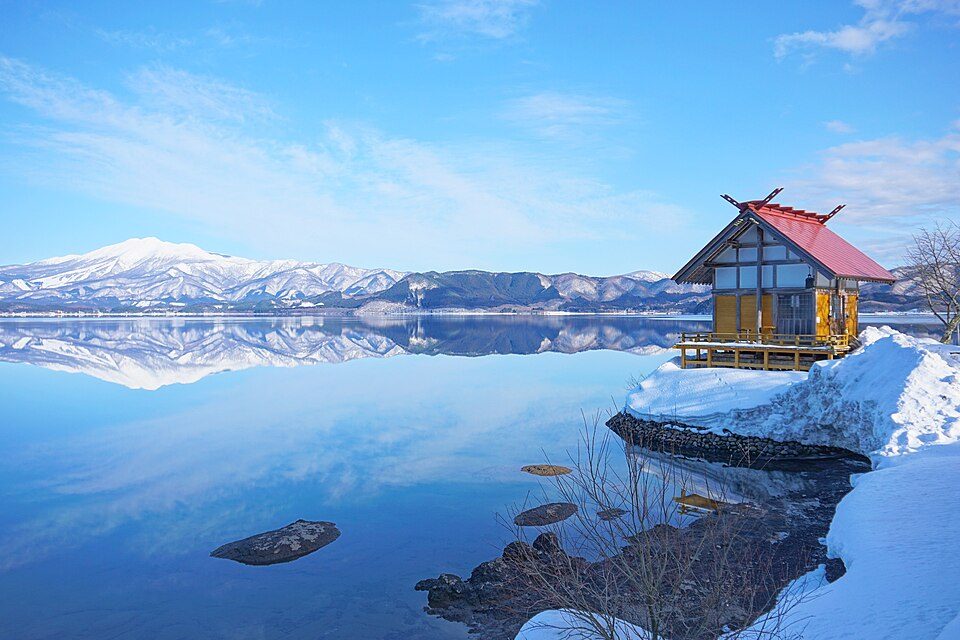
Akita, Japan: Submarine Cable Landing Point
Akita is a landing point for submarine cables located on the coast of Akita Prefecture, in the Tōhoku region of Honshu, Japan. The prefecture faces the Sea of Japan to the west, and its coastline provides the geographic basis for submarine cable infrastructure connecting to other points along Japan's domestic network. Two submarine cables land at Akita, both of which operate entirely within Japan, making this a domestically oriented landing point rather than an international gateway.
The two cables landing at Akita - the Japan Information Highway (JIH) and the Hokkaido-Akita Cable - together form a corridor that links the Tōhoku region to other parts of the Japanese island chain. This intra-national connectivity positions Akita as a node within Japan's domestic submarine cable grid, enabling data routing along the western coastal corridor of Honshu and northward toward Hokkaido.
Cables Landing at Akita
Japan Information Highway (JIH) is a submarine cable system with a total length of 5,150 km that reached ready-for-service (RFS) status in 1999. The cable connects multiple landing points within Japan, making it a domestic ring or trunk system. Akita is one of the landing points along this route, which links it to other Japanese coastal locations served by the same system.
Hokkaido-Akita Cable is a more recent system, measuring 770 km in length and achieving RFS status in 2023. Like the JIH, this cable connects landing points exclusively within Japan. As its name suggests, the cable runs between Hokkaido and Akita, providing a dedicated submarine link between Japan's northernmost main island and the Tōhoku region of Honshu.
Regional Context
Within Japan's submarine cable landscape - which spans 51 cables across 68 landing points - Akita ranks in the top 90% of landing points by cable count, hosting 2 cables. This places it well behind major hubs such as Shima (12 cables), Maruyama (9 cables), and Chikura (8 cables), which serve as Japan's primary international and high-capacity landing points. Akita's role is more modest, focused on domestic connectivity rather than high-density international traffic.
Network Role
Akita functions as a domestic submarine cable terminus, serving as an anchor point for two intra-Japan cable systems. The Japan Information Highway provides broad domestic reach along the Japanese coastline, while the Hokkaido-Akita Cable offers a more targeted link between Honshu and Hokkaido. Together, these systems mean Akita contributes to redundant north-south submarine connectivity within Japan's national network.
As a two-cable landing point dedicated entirely to domestic routing, Akita represents a category of landing point that supports regional data resilience within Japan rather than international traffic exchange. In the broader Japanese submarine cable graph, it serves as a regional node that helps distribute connectivity across the Tōhoku coast and northward into Hokkaido.
What next: Akita, Japan in the global directory of cable landing points; see surrounding routes on the interactive submarine cable map or follow live network monitoring.
Other Landing Points in Japan
Landing Point
- CountryJP Japan
- Coordinates39.7167°N 140.1167°E
- Connected Cables2
See Real Cable Routes
View actual submarine cable routing from Akita, Japan - with backbone nodes, distance calculations, and latency estimates
Open Calculator →