Blaabjerg, Denmark
Point d'atterrissage · DK Denmark
Câbles connectés
| Câble | Statut |
|---|---|
| Aurora | Actif |
| CANTAT-3 | Actif |
| DANICE | Actif |
| Havfrue/AEC-2 | Actif |
| IOEMA | Planifié |
| IOEMA-1 | Planifié |
Performance en direct
Mesures RTT vers ce point du 2026-03-03 au 2026-09-01 - RTT ICMP en direct via nos sondes de mesure. Recalculé quotidiennement. ✓ Aucune anomalie détectée sur la période.
Sources de mesure
| Sonde | Emplacement | Mesures | Moy. |
|---|---|---|---|
| #27746 | control probe | 47 | 53.6 ms |
| sonde propre | Minsk BY | 30 | 80.0 ms |
| #64769 | control probe | 27 | 125.8 ms |
| #4429 | control probe | 19 | 177.7 ms |
| sonde propre | Tbilisi GE | 19 | 59.1 ms |
| sonde propre | Almaty KZ | 18 | 103.3 ms |
| sonde propre | Jerusalem IL | 13 | 79.7 ms |
| #6427 sonde propre | Sydney AU | 10 | 268.8 ms |
| sonde propre | Saint Petersburg RU | 7 | 39.0 ms |
| #7102 | control probe | 5 | 182.7 ms |
| #6410 sonde propre | Sao Paulo BR | 4 | 214.1 ms |
| sonde propre | Kyiv UA | 4 | 42.1 ms |
| sonde propre | Moscow RU | 3 | 48.1 ms |
À propos Blaabjerg, Denmark
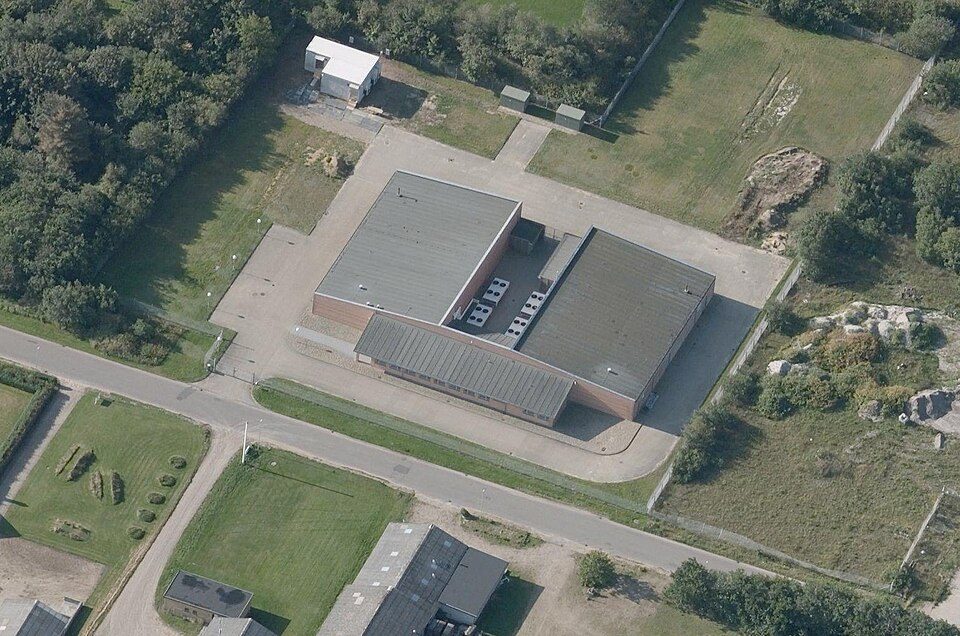
Blaabjerg, Danemark est un point d'atterrissement de câbles sous-marins situé au Danemark (coordonnées 55.7517°, 8.3292°). Il dessert 5 systèmes de câbles sous-marins, ce qui en fait un nœud important dans l'infrastructure de connectivité internationale du Danemark.
Jusqu'au 1er janvier 2007, Blaabjerg était une municipalité du comté de Ribe, sur la côte ouest de la péninsule du Jutland, dans le sud-ouest du Danemark. La municipalité couvrait une superficie de 254 km2 et comptait une population totale de 6 509 habitants (2005). Son dernier maire était Preben Olesen. Le siège de son conseil municipal se trouvait dans la ville de Nørre Nebel. Wikipedia
Câbles sous-marins connectés
| Câble | Mise en service | Longueur | Propriétaires |
|---|---|---|---|
| IOEMA | 2028 | 1 620 km | IOEMA Fibre |
| Havfrue/AEC-2 | 2020 | 7 650 km | Bulk Infrastructure, EXA Infrastructure, Google, … |
| DANICE | 2009 | 2 304 km | Farice |
| CANTAT-3 | 1994 | 270 km | Shefa |
| IOEMA-1 | - | - | - |
Opérateurs présents à Blaabjerg, Danemark
Les câbles atterrissant à Blaabjerg, Danemark, sont exploités par 7 partenaires de consortium et opérateurs distincts, notamment Bulk Infrastructure, EXA Infrastructure, Farice, Google, IOEMA Fibre, Meta, Shefa. Chaque câble est généralement détenu conjointement par un consortium de transporteurs de premier rang et d'opérateurs hyperscale qui partagent les coûts de construction et la capacité ; la composition des opérateurs reflète à la fois des acteurs régionaux et des acteurs mondiaux ayant un intérêt pour les routes desservies par ce point d'atterrissement.
Profil de connectivité
Depuis Blaabjerg, Danemark, le trafic international peut atteindre 8 pays via 5 systèmes de câbles. Les destinations incluent le Danemark, l'Allemagne, l'Islande, l'Irlande, les Pays-Bas, la Norvège, le Royaume-Uni, les États-Unis. Grâce à de multiples chemins redondants, le trafic à ce point d'atterrissement peut être redirigé via des câbles alternatifs en cas de panne d'un système unique.
Statut de surveillance
Aucun incident de surveillance n'a été enregistré sur les câbles desservant Blaabjerg, Danemark, au cours des 90 derniers jours - tous les systèmes connectés sont restés dans les seuils de latence normaux. Notre réseau de surveillance échantillonne en continu la latence à partir de sondes externes vers des cibles accessibles via ces câbles.
À propos des câbles
- IOEMA (2028) - IOEMA est un câble sous-marin régional desservant 5 pays : Danemark, Royaume-Uni, Pays-Bas, Norvège, Allemagne. Avec des points d'atterrissement à Blaabjerg, Broadstairs, Domburg, Eemshaven, Houstrup, et 5 autres, il renforce la résilience de l'internet régional et offre une diversité de routes - essentielle en cas de défaillance des câbles voisins. En savoir plus →
- Havfrue/AEC-2 (2020) - Havfrue/AEC-2 est un câble sous-marin interrégional reliant le Danemark, la Norvège, l'Irlande, les États-Unis. Ses 4 points d'atterrissement à Blaabjerg, Kristiansand, Lecanvey, Wall Township relient les réseaux d'Europe et d'Amérique du Nord, offrant un chemin important pour le trafic de données international. En savoir plus →
- DANICE (2009) - DANICE est un câble sous-marin point à point reliant le Danemark et l'Islande. Avec des points d'atterrissement à Blaabjerg et Landeyjar, il fournit un chemin direct en fibre optique entre les deux pays, servant à la fois de route principale pour les données et d'option de redondance pour les systèmes de câbles voisins. En savoir plus →
- CANTAT-3 (1994) - CANTAT-3 est un réseau de câbles sous-marins domestiques au Danemark, reliant 4 localités côtières et insulaires, notamment Blaabjerg, South Arne, Tyra, Valdemar. Ce système fournit une infrastructure de télécommunications essentielle pour des communautés qui, autrement, dépendraient entièrement des liaisons par satellite ou micro-ondes. En savoir plus →
- IOEMA-1 - IOEMA-1 est un câble sous-marin régional desservant 5 pays : Danemark, Royaume-Uni, Pays-Bas, Norvège, Allemagne. Avec des points d'atterrissement à Blaabjerg, Dumpton Gap, Eemshaven, Kristiansand, Leiston, et 2 autres, il renforce la résilience de l'internet régional et offre une diversité de routes - essentielle en cas de défaillance des câbles voisins. En savoir plus →
Et ensuite : Blaabjerg, Denmark dans l'annuaire mondial des points d'atterrissage; visualisez les routes environnantes sur la carte interactive des câbles ou suivez la surveillance réseau en direct.
Autres points d'atterrissage en Denmark
Point d'atterrissage
- PaysDK Denmark
- Coordonnées55.7517°N 8.3292°E
- Câbles connectés6
Voir les routes réelles
Visualisez le routage réel des câbles sous-marins depuis Blaabjerg, Denmark - avec nœuds, distances et latence
Ouvrir le calculateur →