Esbjerg, Denmark
Landing Point · DK Denmark
1
Connected Cables
DK
Country
55.47°
Latitude
8.46°
Longitude
Ctrl + Scroll to zoom
Connected Cables
| Cable | Status |
|---|---|
| Verena | Planned |
Live Performance
126
measurements
11
probes
219
days monitored
81.7
ms avg RTT
0
anomalies
RTT measurements to this landing point from 2026-03-05 through 2026-10-11 - live ICMP round-trip time via our monitoring probes. Recomputed daily. ✓ No anomalies detected in the monitored period.
Measurement sources
| Probe | Location | Samples | Avg |
|---|---|---|---|
| #30270 | control probe | 45 | 37.2 ms |
| own probe | Minsk BY | 19 | 89.6 ms |
| own probe | Almaty KZ | 11 | 103.3 ms |
| own probe | Tbilisi GE | 11 | 59.5 ms |
| #6427 own probe | Sydney AU | 8 | 283.2 ms |
| own probe | Jerusalem IL | 8 | 70.8 ms |
| #6410 own probe | Sao Paulo BR | 6 | 222.7 ms |
| own probe | Kyiv UA | 6 | 42.0 ms |
| own probe | Moscow RU | 5 | 48.7 ms |
| own probe | Saint Petersburg RU | 5 | 65.3 ms |
| own probe | Sevastopol UA | 2 | 69.7 ms |
About Esbjerg, Denmark
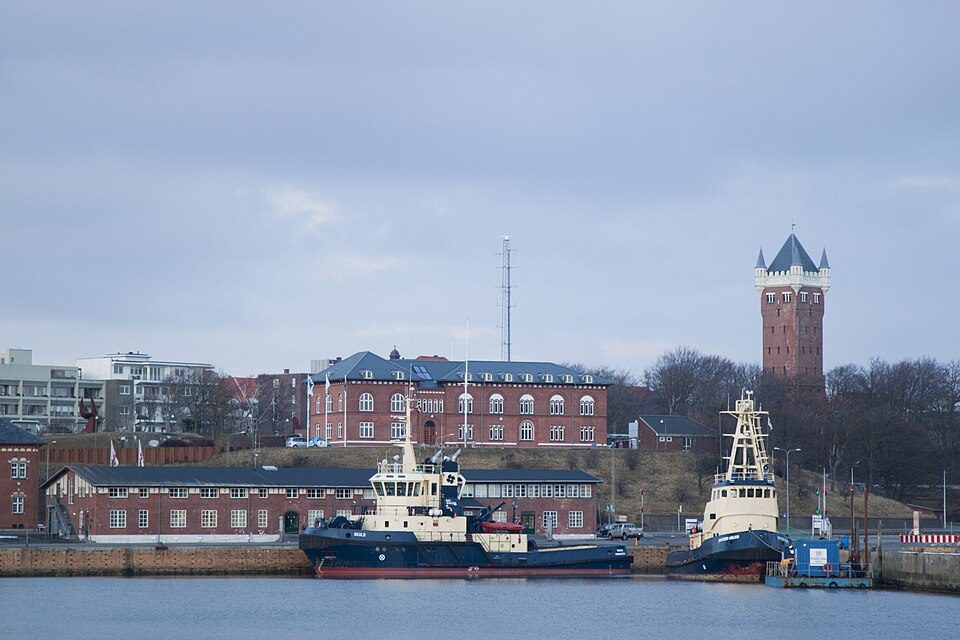
Esbjerg: Denmark's Gateway to the Verena Cable
Esbjerg, situated on the west coast of Denmark's Jutland peninsula, is a city with a rich maritime heritage. Known as Denmark's largest west coast port and the fifth-largest city in the country, Esbjerg has long been a hub for shipping, fishing, and offshore energy. Now, it is poised to play a new role in global connectivity with the landing of the Verena submarine cable.The Verena Cable: Connecting Denmark to the United Kingdom
The Verena cable, scheduled to be ready for service in 2028, is a 630-kilometer submarine cable linking Esbjerg to Scarborough in the United Kingdom. This direct connection will serve as a critical link between Denmark and the UK, facilitating faster and more reliable data exchange between the two countries. While Esbjerg hosts only one cable, it represents an important piece of Denmark's broader submarine cable infrastructure, which includes 30 cables landing at 34 points across the nation. Esbjerg's single cable contrasts sharply with other landing points in Denmark, such as Blaabjerg (hosting five cables) and Gedser (four cables). Despite this, Esbjerg's strategic location on the west coast makes it an ideal site for international connectivity, particularly to the UK. The Verena cable adds a layer of importance to Esbjerg's role in Denmark's digital landscape, even though it ranks in the top 74% of Danish landing points by cable count.Latency Insights: Esbjerg's Performance
GeoCables' monitoring of Esbjerg reveals an average round-trip latency of 72 milliseconds across 106 completed checks from 14 source cities, with the best observed latency being 36 milliseconds. These measurements highlight Esbjerg's potential to deliver consistent and competitive connectivity, making it a reliable node for international data traffic.Esbjerg's Local and Global Significance
Esbjerg's importance extends beyond its role as a cable landing point. As a major seaport, the city has long been a center for offshore industries, including wind energy and oil exploration. Its connectivity via the Verena cable will further enhance its ability to support these industries, enabling faster communication and data transfer with partners abroad. The Verena cable also positions Esbjerg as a key link in Denmark's international connectivity chain. While other landing points in Denmark host more cables, Esbjerg's direct connection to the UK offers unique advantages for businesses and institutions that rely on cross-border data exchange.Conclusion
Esbjerg may host just one submarine cable, but its strategic location and connection to the Verena cable make it an essential part of Denmark's digital infrastructure. As the cable becomes operational in 2028, Esbjerg will strengthen its role as a gateway for international connectivity, bridging Denmark and the United Kingdom in the fast-moving world of global data traffic.What next: Esbjerg, Denmark in the global directory of cable landing points; see surrounding routes on the interactive submarine cable map or follow live network monitoring.
Other Landing Points in Denmark
DK Alsgarde, Denmark
56.0749°N 12.5369°E
DK Blaabjerg, Denmark
55.7517°N 8.3292°E
DK Bogense, Denmark
55.5678°N 10.0914°E
DK Brondby, Denmark
55.6472°N 12.4149°E
DK Dragor, Denmark
55.5935°N 12.6702°E
DK Endrup, Denmark
55.5231°N 8.7184°E
DK Fano, Denmark
55.4485°N 8.4069°E
DK Gedser, Denmark
54.5763°N 11.9290°E
DK Hanstholm, Denmark
57.1116°N 8.6162°E
DK Hasle, Denmark
55.1826°N 14.7082°E
DK Helsingør, Denmark
56.0304°N 12.5922°E
DK Hirtshals, Denmark
57.5882°N 9.9593°E
Landing Point
- CountryDK Denmark
- Coordinates55.4652°N 8.4569°E
- Connected Cables1
See Real Cable Routes
View actual submarine cable routing from Esbjerg, Denmark - with backbone nodes, distance calculations, and latency estimates
Open Calculator →
Submarine cables
Land fiber
Live probes