Minamiboso, Japan
Landing Point · JP Japan
Connected Cables
| Cable | Status |
|---|---|
| Apricot | Active |
| I-AM Cable | Planned |
| Japan-Guam-Australia North (JGA-N) | Active |
| JUNO | Active |
Live Performance
RTT measurements to this landing point from 2026-03-04 through 2026-10-16 - live ICMP round-trip time via our monitoring probes. Recomputed daily.
Measurement sources
| Probe | Location | Samples | Avg |
|---|---|---|---|
| #6681 | control probe | 300 | 100.5 ms |
| #329 | control probe | 48 | 146.8 ms |
| #4429 | control probe | 38 | 103.1 ms |
| own probe | Almaty KZ | 26 | 292.7 ms |
| #6410 own probe | Sao Paulo BR | 22 | 275.5 ms |
| #6487 | control probe | 21 | 79.4 ms |
| #28151 | control probe | 7 | 279.3 ms |
| #61587 | control probe | 6 | 309.7 ms |
| own probe | Minsk BY | 4 | 282.6 ms |
| own probe | Tbilisi GE | 4 | 302.6 ms |
| own probe | Jerusalem IL | 3 | 310.4 ms |
| #6923 | control probe | 1 | 36.6 ms |
| #7275 | control probe | 1 | 86.7 ms |
| own probe | Moscow RU | 1 | 220.2 ms |
About Minamiboso, Japan
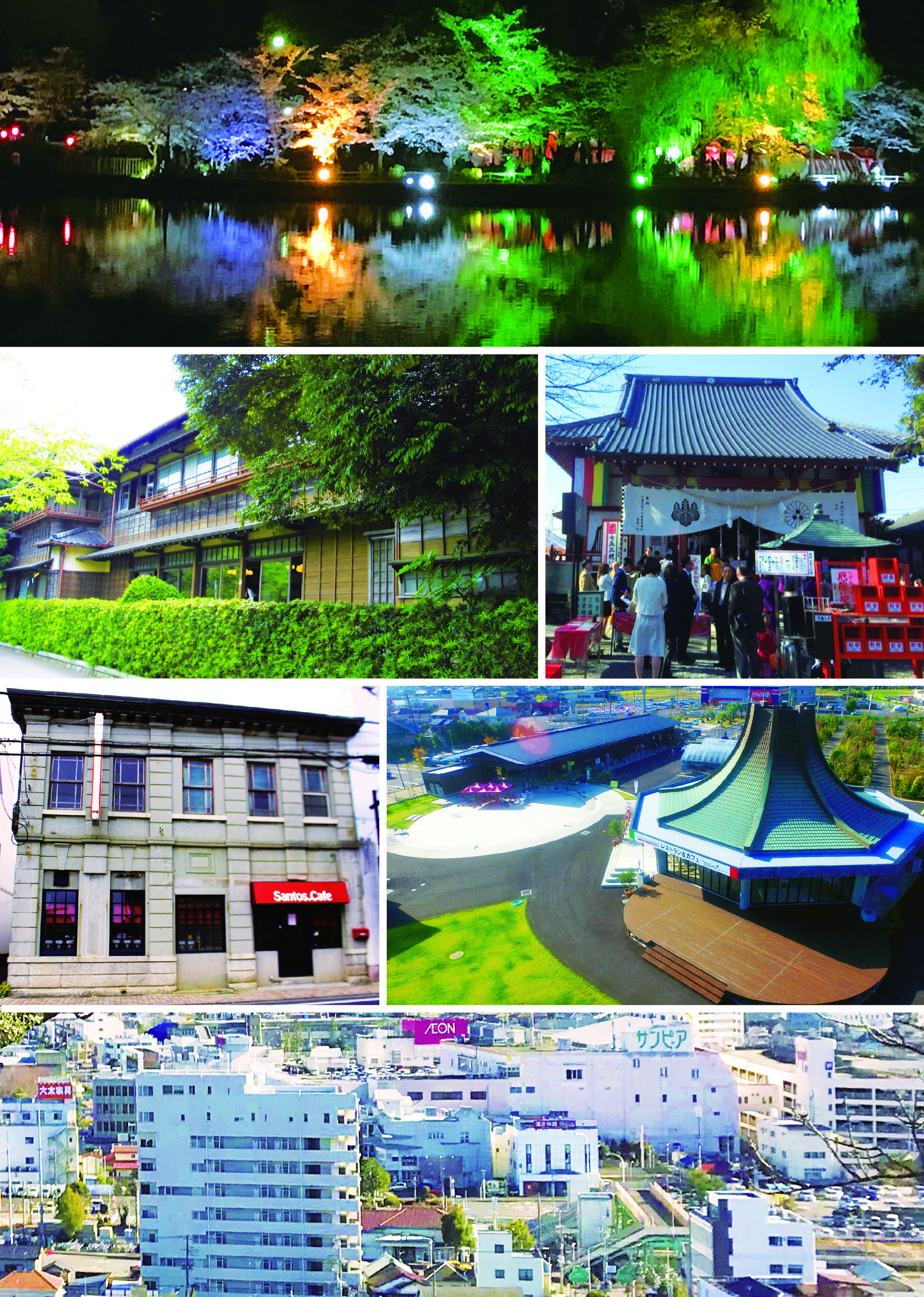
Minamiboso: Submarine Cable Landing Point
Minamiboso is a landing point located in Japan, situated along the country's Pacific-facing coastline. Four submarine cables land at Minamiboso, connecting Japan to a wide range of destinations across the Asia-Pacific region and extending to the United States. This concentration of cables positions Minamiboso as a notable node within Japan's broader submarine cable infrastructure, which spans 51 cables across 68 landing points nationwide.
The cables at Minamiboso enable both intercontinental and regional connectivity. The Apricot and JUNO systems extend Japan's reach toward Southeast Asia, the Pacific, and North America, while the Japan-Guam-Australia North (JGA-N) cable establishes a shorter Pacific corridor to Guam. The forthcoming I-AM Cable will further deepen regional ties with Malaysia, Singapore, and South Korea. Together, these systems make Minamiboso a multi-directional landing point serving several distinct submarine cable corridors.
Cables Landing at Minamiboso
Apricot is an 11,972-kilometre cable with a ready-for-service (RFS) date of 2025. In addition to Minamiboso, it connects to landing points in Guam, Indonesia, the Philippines, Singapore, and Taiwan, forming a broad intra-Asia and trans-Pacific network segment.
JUNO spans 11,710 kilometres and also carries an RFS date of 2025. The cable links Japan - with Minamiboso as one of its Japanese landing points - to the United States, representing a direct trans-Pacific connection from this location.
I-AM Cable is an 8,100-kilometre system currently in the draft stage with a projected RFS date of 2029. Beyond its landing at Minamiboso, the cable connects to other points in Japan as well as to Malaysia, Singapore, and South Korea, reinforcing regional intra-Asian connectivity.
Japan-Guam-Australia North (JGA-N) is a 2,600-kilometre cable that reached RFS in 2020. It links Minamiboso to Guam, forming one of the shorter Pacific cable segments served by this landing point.
Regional Context
Among Japan's submarine cable landing points, Minamiboso sits alongside Hachijo and Naha, each of which also hosts four cables. It trails larger hubs such as Shima (12 cables), Maruyama (9 cables), and Chikura (8 cables), while hosting more cables than Fukuoka (3 cables). With four cables, Minamiboso ranks in the top 96% of Japan's 68 landing points by cable count, placing it within a mid-to-upper tier of the country's cable landing geography.
Network Role
Minamiboso functions as a multi-cable hub rather than a single-cable terminus, terminating four submarine systems that collectively reach destinations across Southeast Asia, the western Pacific, and North America. The JGA-N cable establishes a Pacific stepping-stone route via Guam, while Apricot broadens access to the Philippines, Indonesia, Singapore, and Taiwan. JUNO provides a direct trans-Pacific link to the United States, and the I-AM Cable will add further regional depth toward South Korea, Malaysia, and Singapore upon its completion in 2029.
Within Japan's submarine cable graph, Minamiboso represents a landing point where multiple long-haul and regional systems converge, connecting the Japanese coast to an arc of destinations stretching from Southeast Asia through the Pacific to North America.
What next: Minamiboso, Japan in the global directory of cable landing points; see surrounding routes on the interactive submarine cable map or follow live network monitoring.
Incident history
Significant incidents on cables landing here, each with its own report.
Other Landing Points in Japan
FAQ
Landing Point
- CountryJP Japan
- Coordinates34.9741°N 139.9610°E
- Connected Cables4
See Real Cable Routes
View actual submarine cable routing from Minamiboso, Japan - with backbone nodes, distance calculations, and latency estimates
Open Calculator →