Chennai, India
Punto de amarre · IN India
Cables conectados
| Cable | Estado |
|---|---|
| Bay of Bengal Gateway (BBG) | Activo |
| Chennai-Andaman & Nicobar Islands Cable (CANI) | Activo |
| I-2SEA | Planificado |
| i2i Cable Network (i2icn) | Activo |
| India Asia Xpress (IAX) | Activo |
| MIST | Activo |
| Project Waterworth | Planificado |
| SeaMeWe-4 | Activo |
| SeaMeWe-6 | Activo |
| Tata TGN-Tata Indicom | Activo |
Rendimiento en vivo
Mediciones RTT a este punto de 2026-03-07 a 2026-09-11 - RTT ICMP en vivo mediante nuestras sondas. Recalculado diariamente.
Fuentes de medición
| Sonda | Ubicación | Muestras | Prom. |
|---|---|---|---|
| #4429 | control probe | 185 | 95.1 ms |
| #1014589 sonda propia | Almaty KZ | 61 | 235.8 ms |
| #6410 sonda propia | Sao Paulo BR | 56 | 334.9 ms |
| #6487 sonda propia | Singapore SG | 49 | 69.4 ms |
| #1033 | control probe | 46 | 83.8 ms |
| #1014597 sonda propia | Tbilisi GE | 17 | 204.7 ms |
| #1014473 sonda propia | Minsk BY | 6 | 198.0 ms |
| #1014969 sonda propia | Jerusalem IL | 4 | 244.8 ms |
| #6427 sonda propia | Sydney AU | 2 | 164.8 ms |
| #6477 | control probe | 1 | 40.0 ms |
Acerca de Chennai, India
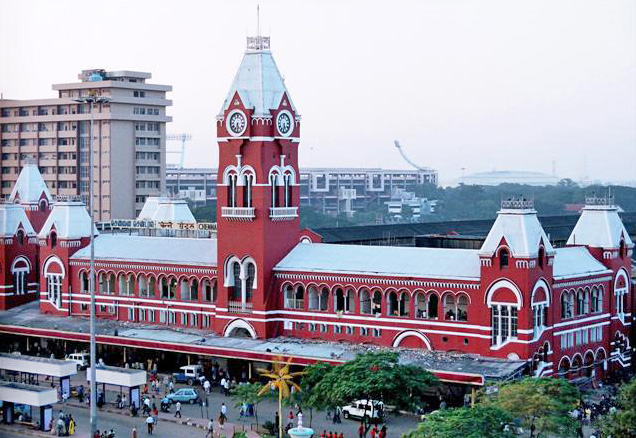
Posición en la infraestructura regional
Chennai es la capital del estado de Tamil Nadu e importante punto de amarre de cables submarinos en la costa este de India, a las coordenadas 13.063485°N, 80.243084°E en el Golfo de Bengala. La ciudad es una de las tres principales centrales subacuáticas del país —al lado de Mumbai (costa de la Bahía de Omán) y Cochin/Tuticorin más al sur— y sirve como puerta hacia el este de Asia y el sudeste asiático para India. Varios cables importantes aterrizan en Chennai, conectando a India con Singapur, Malasia, Tailandia, Indonesia, Sri Lanka, Maldivas y otros puntos de aterrizaje regionales.
El papel de Chennai es estructuralmente distinto del de Mumbai: los cables de Mumbai predominantemente se dirigen al Medio Oriente y Europa a través del corredor Suez/Mar Rojo, mientras que los cables de Chennai se dirigen hacia el este hacia el sudeste asiático. Esta especialización oriental/oidental proporciona a India redundancia geográfica a nivel nacional —un fallo que afecte a los cables de Mumbai en la Bahía de Omán no afectará directamente a los cables de Chennai en el Golfo de Bengala.
Cables submarinos que aterrizan en Chennai
Project Waterworth es un sistema de 50,000 km construido por Meta, planeado para estar listo para la puesta en servicio. De Chennai llega a Australia (Darwin), Brasil (Fortaleza), India (Mumbai), Malasia (Penang), Sudáfrica (Amanzimtoti, Ciudad del Cabo) y Estados Unidos (Los Ángeles, Myrtle Beach). Waterworth es uno de los cables más largos en desarrollo globalmente.
SeaMeWe-6 es un cable submarino de 21,700 km programado para la puesta en servicio en 2026, propiedad de una consorcio de 16 miembros que incluye Microsoft. De Chennai llega a Bahrein, Bangladesh, Djibouti, Egipto, Francia (Marseille), India (Mumbai), Maldivas, Malasia, Omán, Pakistán, Qatar, Arabia Saudita, Singapur, Sri Lanka, Emiratos Árabes Unidos.
India-Asia Xpress (IAX) es un cable submarino de 5,791 km en servicio desde 2024, propiedad de China Mobile y Reliance Jio. De Chennai llega a India (Digha, Machilipatnam, Mumbai), Malasia (Morib), Maldivas, Singapur (Tuas), Sri Lanka, Tailandia.
MIST es un cable submarino de 8,100 km en servicio desde 2024, propiedad de Orient Link. De Chennai llega a Mumbai, Malasia, Singapur, Tailandia.
Bay of Bengal Gateway (BBG) es un cable submarino de 8,100 km en servicio desde 2016. De Chennai llega a Mumbai, Malasia, Omán, Sri Lanka, Emiratos Árabes Unidos.
SeaMeWe-4 es un cable submarino de 20,000 km en servicio desde 2005. De Chennai llega a un camino de 16 países que incluye Francia, Egipto, Arabia Saudita, Emiratos Árabes Unidos, Pakistán, Bangladesh, Singapur, Malasia, Tailandia.
Cable Chennai-Andaman & Nicobar Islands (CANI) es un cable submarino de 2,300 km en servicio desde 2020, propiedad de BSNL. Cable doméstico indio que conecta Chennai con siete puntos de aterrizaje en las islas Andaman y Nicobar (Sri Vijaya Puram, Havelock, Long Island, Rangat, Kamorta, Little Andaman, Car Nicobar, Great Nicobar).
i2i Cable Network (i2icn) es un cable submarino de 3,200 km en servicio desde 2002, propiedad de Bharti Airtel. De Chennai llega a Tuas (Singapur) —uno de los primeros enlaces directos de fibra óptica entre India y Singapur.
Tata TGN-Tata Indicom es un cable submarino de 3,175 km en servicio desde 2004, propiedad de Tata Communications. De Chennai llega a Changi North (Singapur).
Toque de conexión y redundancia
El portafolio de Chennai proporciona a India una fuerte redundancia para la conectividad del sudeste asiático: varios cables (BBG, IAX, MIST, SeaMeWe-4) llegan a Singapur por diferentes rutas; varios cables también llegan a Malasia, Sri Lanka y Emiratos Árabes Unidos. La mezcla de cables propiedad de consorcios (SeaMeWe-4/6, BBG) y cables operados por una sola empresa (IAX de Reliance Jio + China Mobile, MIST de Orient Link, i2icn de Bharti Airtel) proporciona diversidad a nivel de operador más allá del simple conteo de cables.
El cable doméstico CANI hacia las islas Andaman y Nicobar es un activo específico de la infraestructura nacional —sin él, el Territorio de Unión Nacional de Andaman y Nicobar dependería completamente de la conectividad por satélite. La puesta en servicio en 2024 de IAX y MIST (ambos nuevos cables modernos hacia Singapur) refleja la inversión continua en la capacidad de fibra óptica oriental de Chennai, apoyando el creciente footprint de centros de datos de India en Tamil Nadu y Karnataka.
Geografía e coordenadas
El punto de amarre del cable submarino de Chennai se encuentra a 13.063485°N, 80.243084°E (13°03'48"N, 80°14'35"E), en la costa coromandel del estado de Tamil Nadu en el sureste de India. La posición de Chennai frente al Golfo de Bengala proporciona corredores directos de aterrizaje hacia el sudeste asiático sin sombra peninsular indiana intermedia.
Preguntas frecuentes
¿Qué cables submarinos aterrizan en Chennai, India?
Varios cables aterrizan en Chennai incluyendo Bay of Bengal Gateway (BBG, 2016), India-Asia Xpress (IAX, 2024), MIST (2024), SeaMeWe-4 (2005), CANI (2020), i2icn (2002), Tata TGN-Tata Indicom (2004). Planeados: SeaMeWe-6 (2026), Project Waterworth (Meta).
¿Cuáles son las coordenadas del punto de amarre de Chennai?
El punto de amarre de Chennai es a 13.063485°N, 80.243084°E (13°03'48"N, 80°14'35"E), en la costa coromandel del estado de Tamil Nadu, sureste de India.
¿A qué países conecta India a través de Chennai?
Através de los cables de Chennai, India llega a Singapur, Malasia, Tailandia, Indonesia (planeado), Sri Lanka, Maldivas, Bangladesh, Emiratos Árabes Unidos, Omán, Arabia Saudita, Qatar, Bahrein, Pakistán, Egipto, Djibouti, Francia y (mediante el planeado Waterworth) Australia, Brasil, Sudáfrica y EE.UU.
¿Cuándo se puso en servicio por primera vez un cable submarino en Chennai?
El primer aterrizaje de cable submarino documentado en Chennai en los datos de GeoCables es i2i Cable Network (i2icn), en servicio desde 2002, seguido por Tata TGN-Tata Indicom en 2004 y SeaMeWe-4 en 2005.
¿Quiénes operan los cables que aterrizan en Chennai?
Los operadores de Chennai incluyen empresas indias (Bharti Airtel, Tata Communications, Reliance Jio, BSNL), el operador de Singapur Singtel como parte de consorcios, China Mobile (IAX), Orient Link (MIST), los consorcios multi-operador SeaMeWe (16-18 operadores) y el consorcio Bay of Bengal Gateway.
Qué más: Chennai, India en el directorio global de puntos de amarre; vea las rutas cercanas en el mapa interactivo de cables o siga la supervisión de red en vivo.
Otros puntos de amarre en India
FAQ
Punto de amarre
- PaísIN India
- Coordenadas13.0635°N 80.2431°E
- Cables conectados10
Ver rutas reales
Visualice el enrutamiento real de cables submarinos desde Chennai, India - con nodos, distancias y latencia
Abrir calculadora →