Zafarana, Egypt
Point d'atterrissage · EG Egypt
Câbles connectés
| Câble | Statut |
|---|---|
| 2Africa | Actif |
| Asia Africa Europe-1 (AAE-1) | Actif |
| Europe India Gateway (EIG) | Actif |
| India Europe Xpress (IEX) | Actif |
| Middle East North Africa (MENA) Cable System/Gulf Bridge International | Planifié |
| Middle East North Africa (MENA) Cable System/Gulf Bridge International | Actif |
| PEACE Cable | Actif |
| Red2Med | Actif |
| SEACOM/Tata TGN-Eurasia | Actif |
| SeaMeWe-5 | Actif |
Performance en direct
Mesures RTT vers ce point du 2026-03-02 au 2026-09-06 - RTT ICMP en direct via nos sondes de mesure. Recalculé quotidiennement. ✓ Aucune anomalie détectée sur la période.
Sources de mesure
| Sonde | Emplacement | Mesures | Moy. |
|---|---|---|---|
| #1014597 sonde propre | Tbilisi GE | 15 | 125.5 ms |
| #1014969 sonde propre | Jerusalem IL | 13 | 116.4 ms |
| #1014589 sonde propre | Almaty KZ | 10 | 185.0 ms |
| #1014473 sonde propre | Minsk BY | 9 | 127.5 ms |
| #6410 sonde propre | Sao Paulo BR | 6 | 251.7 ms |
| #6427 sonde propre | Sydney AU | 6 | 303.9 ms |
| #1015984 sonde propre | Balancer IL | 6 | 98.9 ms |
| #1015313 sonde propre | Sevastopol UA | 4 | 123.6 ms |
| #1015523 sonde propre | Moscow RU | 3 | 207.5 ms |
| #1033 | control probe | 1 | 294.2 ms |
| #4429 | control probe | 1 | 280.5 ms |
| #1015932 sonde propre | Odessa UA | 1 | 84.5 ms |
À propos Zafarana, Egypt
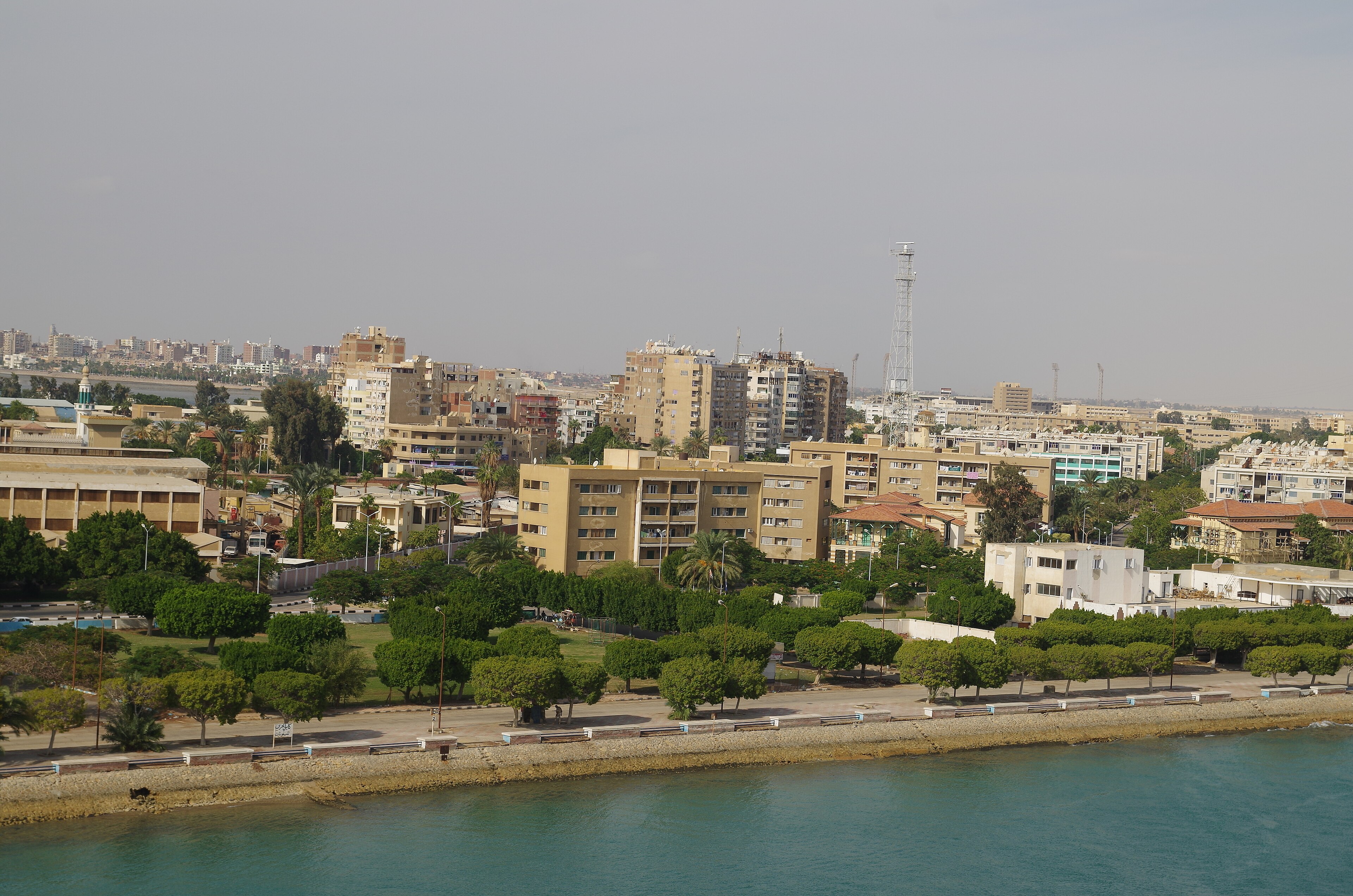
Position dans l'infrastructure régionale
Zafarana est une ville côtière sur la côte ouest du golfe de Suez en Égypte, aux coordonnées 29.116687°N, 32.649856°E. Pour l'infrastructure des câbles sous-marins, Zafarana est structuralement critique : elle est l'un des principaux points d'atterrissage égyptiens du golfe rouge de l'Asie vers l'Europe par le canal de Suez. La côte égyptienne du golfe rouge — Zafarana, Suez, Ras Ghareb, Sidi Kerir, Port Said, Alexandrie — forme collectivement un bottleneck à travers lequel une fraction substantielle du trafic internet Asie-Europe passe. Neuf grands câbles sous-marins atterrissent à Zafarana.
L'embouchure du canal de Suez est régulièrement citée comme l'un des risques les plus concentrés dans l'infrastructure mondiale d'internet : un dysfonctionnement sur le corridor sous-marin égyptien du golfe rouge affecte simultanément le trafic entre l'Europe, le Moyen-Orient, l'Inde, l'Asie du Sud-Est et l'Asie orientale, nécessitant des redirigés d'urgence coûteux par des chemins plus longs autour de l'Afrique ou par voie terrestre via la Russie/Mongolie. Le rôle de Zafarana comme point de concentration de câbles à l'intérieur de ce corridor en fait à la fois un actif d'infrastructure clé et un risque systémique documenté.
Câbles sous-marins atterrissant à Zafarana
2Africa est un câble sous-marin de 45 000 km en service depuis 2024, appartenant à une consortium d'8 membres comprenant Meta, Vodafone, Orange, Bayobab, China Mobile et autres. D'Zafarana, il atteint une route côtière africaine complète, ainsi que des atterrissages en Europe, au Moyen-Orient et en Inde — 46 atterrissages totaux.
Asia Africa Europe-1 (AAE-1) est un câble sous-marin de 25 000 km en service depuis 2017, appartenant à une consortium d'19 membres. D'Zafarana, il atteint le Cambodge, la Chine (Hong Kong), Djibouti, l'Égypte (Abu Talat), la France (Marseille), la Grèce (Chania), l'Inde (Mumbai), l'Italie (Bari), la Malaisie (Penang), le Myanmar, l'Oman, le Pakistan, le Qatar, la Arabie Saoudite, la Thaïlande, les Émirats arabes unis (Fujairah), le Vietnam, le Yémen.
PEACE Cable est un câble sous-marin de 25 000 km en service depuis 2022, appartenant à Peace Cable International Network Co. Ltd. D'Zafarana, il atteint la Chypre, l'Égypte (Abu Talat), la France (Marseille), le Kenya, les Maldives, Malte, le Pakistan, l'Arabie Saoudite, Seychelles, Singapour, la Somalie, la Tunisie, les Émirats arabes unis.
SeaMeWe-5 est un câble sous-marin de 20 000 km en service depuis 2016. D'Zafarana, il atteint le Bangladesh, Djibouti, l'Égypte, la France, l'Indonésie, l'Italie, la Malaisie, le Myanmar, l'Oman, le Pakistan, l'Arabie Saoudite, Singapour, Ceylan, la Turquie, les Émirats arabes unis, le Yémen.
Europe India Gateway (EIG) est un câble sous-marin de 15 000 km en service depuis 2011. D'Zafarana, il atteint le Royaume-Uni, la France (Marseille), Monaco, l'Égypte (Abu Talat), Gibraltar, l'Arabie Saoudite, Djibouti, l'Inde, la Libye, l'Oman, les Émirats arabes unis.
India Europe Xpress (IEX) est un câble sous-marin de 9 775 km prévu à la mise en service en 2026, appartenant à China Mobile et Reliance Jio. D'Zafarana, il atteindra Djibouti, l'Égypte (Sidi Kerir), la France (Marseille), la Grèce, l'Inde (Mumbai), l'Italie (Savona), l'Oman, l'Arabie Saoudite.
Middle East North Africa (MENA) Cable System / Gulf Bridge International est un câble sous-marin de 8 000 km en service depuis 2014, appartenant à Gulf Bridge International et Telecom Egypt. D'Zafarana, il atteint l'Égypte (Abu Talat), l'Italie (Mazara del Vallo), l'Oman, l'Arabie Saoudite.
SEACOM/Tata TGN-Eurasia est un câble sous-marin de 15 000 km en service depuis 2009, appartenant à SEACOM et Tata Communications. D'Zafarana, il atteint le Djibouti, l'Inde (Mumbai), le Kenya, la Mozambique, l'Oman, l'Afrique du Sud, le Tanzanie.
Red2Med est un câble sous-marin de 420 km en service depuis 2023, appartenant à Telecom Egypt. Un câble égyptien domestique reliant Zafarana avec Port Said, Ras Ghareb et Suez — fournissant une routage interne au golfe rouge en Égypte.
Topologie de connexion et redondance
Les neuf câbles à Zafarana offrent une capacité considérable pour le transit Asie-Europe via le canal de Suez, mais partagent le risque géographique concentré du corridor égyptien du golfe rouge. Les scénarios d'échec à Zafarana elle-même sont partiellement atténués par les autres points d'atterrissage égyptiens du golfe rouge (Suez, Sidi Kerir, Ras Ghareb, Abu Talat, Port Said) — la plupart des câbles atterrissant à Zafarana ont également des atterrissages parallèles à l'un ou plusieurs de ces sites égyptiens, fournissant une diversité d'atterrissage à l'extrémité en Égypte.
Le risque systémique plus profond est que tous les points d'atterrissage du golfe rouge égyptien dépendent du canal de Suez comme la seule voie courte unique Asie-Europe. Des incidents d'ancre, des attaques terroristes ou des conflits régionaux affectant ce corridor ont historiquement causé des coupures importantes — le plus notoirement en 2022 affectant AAE-1 et autres. La concentration opérationnelle est également significative : l'opérateur égyptien d'État Telecom Egypt est impliqué (ou co-propriétaire) dans de nombreux câbles atterrissant à Zafarana, y compris 2Africa, MENA, Red2Med et autres.
Géographie et coordonnées
Le point d'atterrissage du câble sous-marin à Zafarana se situe aux 29.116687°N, 32.649856°E (29°07'00"N, 32°38'59"E), sur la côte ouest du golfe de Suez en Égypte. Le golfe de Suez est l'embouchure nord-ouest du golfe rouge qui mène au canal de Suez — les câbles sous-marins ici utilisent le golfe comme une approche sous-marine vers la continuation par le canal (fibres terrestres) ou à des manholes côtières égyptiens pour un routage terrestre ultérieur.
Questions fréquemment posées
Quels câbles sous-marins atterrissent-ils à Zafarana, Égypte ?
Nine grands câbles sous-marins atterrissent à Zafarana : 2Africa (RFS 2024), AAE-1 (2017), PEACE Cable (2022), SeaMeWe-5 (2016), EIG (2011), IEX (prévu pour 2026), MENA/GBI (2014), SEACOM/Tata TGN-Eurasia (2009), Red2Med (2023).
Quelles sont les coordonnées du point d'atterrissage de Zafarana ?
Le point d'atterrissage de Zafarana est aux 29.116687°N, 32.649856°E (29°07'00"N, 32°38'59"E), sur la côte ouest du golfe de Suez en Égypte.
Pourquoi est-ce que Zafarana est stratégiquement important pour les câbles sous-marins ?
Zafarana fait partie du corridor égyptien du golfe rouge par lequel une fraction substantielle du trafic internet Asie-Europe passe. L'embouchure du canal de Suez est l'un des risques les plus concentrés dans l'infrastructure mondiale d'internet, et Zafarana est l'un des principaux points d'atterrissage à l'intérieur de ce corridor.
Quand a-t-on posé le premier câble sous-marin à Zafarana ?
L'époque la plus ancienne documentée de Zafarana dans les données GeoCables est SEACOM/Tata TGN-Eurasia, en service depuis 2009. EIG a suivi en 2011, MENA/GBI en 2014, avec des câbles ultérieurs progressivement élargissant le rôle de Zafarana comme point d'atterrissage majeur Asie-Europe.
Qui opère les câbles atterrissant à Zafarana ?
Les opérateurs de Zafarana comprennent l'opérateur égyptien d'État Telecom Egypt (impliqué dans de nombreux câbles y compris 2Africa, MENA, Red2Med), les consortiums multi-opérateurs de 2Africa (Meta, Vodafone, Orange, Bayobab et autres), AAE-1 (19 membres), SeaMeWe-5 (18 membres), Peace Cable International, China Mobile et Reliance Jio (IEX), SEACOM et Tata Communications, et Gulf Bridge International.
Et ensuite : Zafarana, Egypt dans l'annuaire mondial des points d'atterrissage; visualisez les routes environnantes sur la carte interactive des câbles ou suivez la surveillance réseau en direct.
Autres points d'atterrissage en Egypt
FAQ
Point d'atterrissage
- PaysEG Egypt
- Coordonnées29.1167°N 32.6499°E
- Câbles connectés10
Voir les routes réelles
Visualisez le routage réel des câbles sous-marins depuis Zafarana, Egypt - avec nœuds, distances et latence
Ouvrir le calculateur →