Tseung Kwan O, China
Landing Point · CN China
Connected Cables
| Cable | Status |
|---|---|
| Asia Pacific Gateway (APG) | Active |
| Asia Submarine-cable Express (ASE)/Cahaya Malaysia | Active |
| EAC-C2C | Active |
| SEA-H2X | Active |
| Sihanoukville-Hong Kong (SHV-HK) | Active |
| TKO Connect | Active |
Live Performance
RTT measurements to this landing point from 2026-03-28 through 2026-10-17 - live ICMP round-trip time via our monitoring probes. Recomputed daily.
Measurement sources
| Probe | Location | Samples | Avg |
|---|---|---|---|
| #61587 | control probe | 580 | 361.3 ms |
| #52476 | control probe | 104 | 362.3 ms |
| #7460 | control probe | 80 | 358.5 ms |
| #1033 | control probe | 69 | 222.5 ms |
| #11257 | control probe | 67 | 368.8 ms |
| #6410 own probe | Sao Paulo BR | 53 | 326.6 ms |
| own probe | Almaty KZ | 52 | 303.0 ms |
| #6568 own probe | Singapore SG | 36 | 32.9 ms |
| #7791 | control probe | 29 | 91.7 ms |
| own probe | Tbilisi GE | 11 | 339.7 ms |
| #6487 | control probe | 6 | 127.0 ms |
| #6477 | control probe | 3 | 293.1 ms |
| #6652 | control probe | 2 | 307.2 ms |
| own probe | Minsk BY | 2 | 190.6 ms |
| own probe | Jerusalem IL | 2 | 228.2 ms |
| own probe | Moscow RU | 2 | 174.6 ms |
| own probe | Rostov RU | 1 | 247.0 ms |
About Tseung Kwan O, China
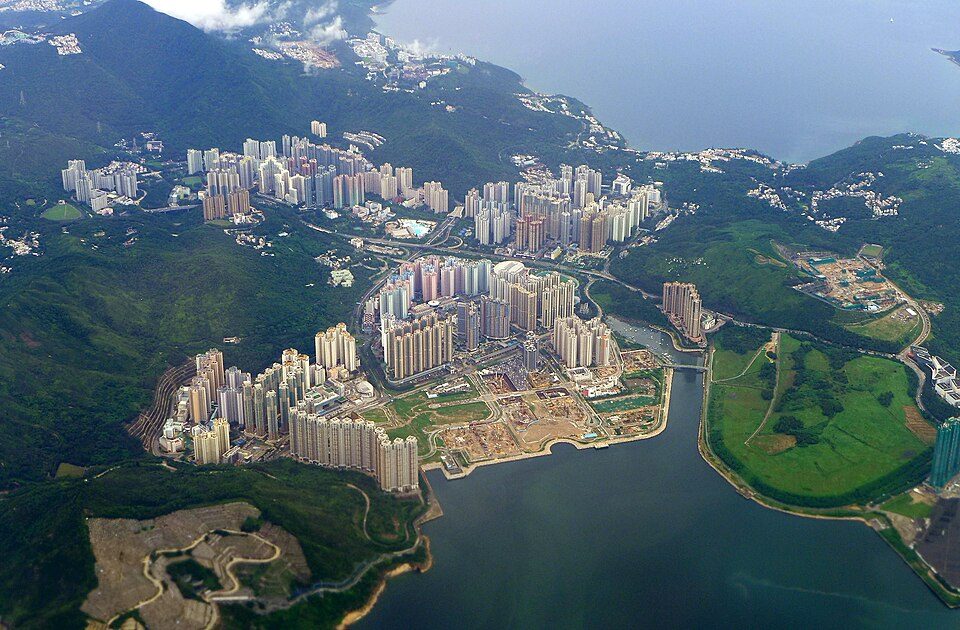
Tseung Kwan O, China: Submarine Cable Landing Point
Tseung Kwan O is a new town in Hong Kong, situated in the southeastern New Territories on reclaimed land along Junk Bay. As a coastal location, it has developed into a significant submarine cable landing point, with six submarine cables coming ashore here. This places Tseung Kwan O among the most cable-dense landing points in China, tied at the top alongside Chung Hom Kok.
The cables landing at Tseung Kwan O connect to destinations across a broad sweep of the Asia-Pacific region, including Japan, South Korea, the Philippines, Malaysia, Singapore, Taiwan, Thailand, and Cambodia. This mix of long-haul transoceanic systems and shorter regional links establishes Tseung Kwan O as a hub serving both intra-Asian and wider Asia-Pacific submarine cable corridors. Notable among the systems here are EAC-C2C, one of the longer cables at 36,500 km with connections spanning East and Southeast Asia, and the Asia Pacific Gateway (APG), a 10,400 km system linking multiple major economies in the region.
Cables Landing at Tseung Kwan O
EAC-C2C is a 36,500 km submarine cable that reached ready-for-service status in 2002. It connects landing points in China, Japan, the Philippines, Singapore, South Korea, and Taiwan, forming one of the region's broader transoceanic ring configurations across East and Southeast Asia.
Asia Pacific Gateway (APG) spans 10,400 km and entered service in 2016. The cable links China, Japan, Malaysia, Singapore, South Korea, and Taiwan, providing a multi-country connection across the key economic corridors of Northeast and Southeast Asia.
Asia Submarine-cable Express (ASE)/Cahaya Malaysia is an 8,148 km system that became ready for service in 2012. It connects Tseung Kwan O with landing points in Japan, Malaysia, the Philippines, and Singapore, extending regional connectivity southward through Southeast Asia.
SEA-H2X is a 6,000 km cable with a projected ready-for-service date of 2026. It will link landing points in China, Malaysia, the Philippines, Singapore, and Thailand, adding another Southeast Asian corridor to Tseung Kwan O's portfolio of connections.
Sihanoukville-Hong Kong (SHV-HK) spans 2,938 km and is also scheduled for service in 2026. This cable connects Tseung Kwan O with a landing point in Cambodia, establishing a dedicated bilateral link between the two locations.
TKO Connect is a notably short cable at just 6 km, which reached ready-for-service status in 2023. It connects Tseung Kwan O with another landing point in China, functioning as a local interconnection link rather than a long-distance international system.
Regional Context
Among China's 24 cable landing points, Tseung Kwan O stands alongside Chung Hom Kok as one of the two most cable-dense locations in the country, each hosting six submarine cables. Chongming and Nanhui follow with four cables each, while Shantou hosts three and Lantau Island and Lingang each host two. Tseung Kwan O's combination of long-haul international systems, regional cables, and a local interconnection link distinguishes its profile within this national landscape.
Network Role
Tseung Kwan O functions as a multi-cable hub, hosting six systems that collectively reach nine countries and territories across East Asia, Southeast Asia, and beyond. Its cable mix spans both transoceanic scales - represented by EAC-C2C at 36,500 km - and short local interconnections such as TKO Connect at 6 km, demonstrating a layered role in the regional cable graph. With two additional cables scheduled to enter service in 2026, the landing point's reach will extend further into Southeast Asia, adding Thailand and Cambodia to its direct submarine connections.
Within the Asia-Pacific submarine cable network, Tseung Kwan O's position as a point where cables from Northeast Asia, Southeast Asia, and intra-China routes converge makes it one of the more interconnected nodes along China's southern coastline.
What next: Tseung Kwan O, China in the global directory of cable landing points; see surrounding routes on the interactive submarine cable map or follow live network monitoring.
Incident history
Significant incidents on cables landing here, each with its own report.
- Asia Submarine-cable Express (ASE)/Cahaya Malaysia: latency up to 3× normal, 9 Sep 2026 (resolved)
- Asia Pacific Gateway (APG) cable: latency up to 2.3× normal, 17 Apr 2026 (resolved)
- Asia Pacific Gateway (APG) cable: latency up to 2.5× normal, 17 Apr 2026 (resolved)
Other Landing Points in China
FAQ
Landing Point
- CountryCN China
- Coordinates22.3183°N 114.2587°E
- Connected Cables6
See Real Cable Routes
View actual submarine cable routing from Tseung Kwan O, China - with backbone nodes, distance calculations, and latency estimates
Open Calculator →