Deep Water Bay, China
Landing Point · CN China
Connected Cables
| Cable | Status |
|---|---|
| Tata TGN-Intra Asia (TGN-IA) | Active |
Live Performance
RTT measurements to this landing point from 2026-04-12 through 2026-09-06 - live ICMP round-trip time via our monitoring probes. Recomputed daily. ✓ No anomalies detected in the monitored period.
Measurement sources
| Probe | Location | Samples | Avg |
|---|---|---|---|
| #6410 own probe | Sao Paulo BR | 3 | 314.7 ms |
| #7062 own probe | Cape Town ZA | 3 | 234.1 ms |
| own probe | Almaty KZ | 3 | 200.3 ms |
| own probe | Tbilisi GE | 3 | 295.7 ms |
| #6487 | control probe | 2 | 93.0 ms |
| own probe | Rostov RU | 2 | 299.9 ms |
| #6427 own probe | Sydney AU | 1 | 389.7 ms |
| #1008152 | control probe | 1 | 314.6 ms |
| #1008299 | control probe | 1 | 32.3 ms |
| #1009151 | control probe | 1 | 34.9 ms |
| own probe | Minsk BY | 1 | 179.2 ms |
| own probe | Jerusalem IL | 1 | 196.9 ms |
| own probe | Moscow RU | 1 | 228.5 ms |
About Deep Water Bay, China
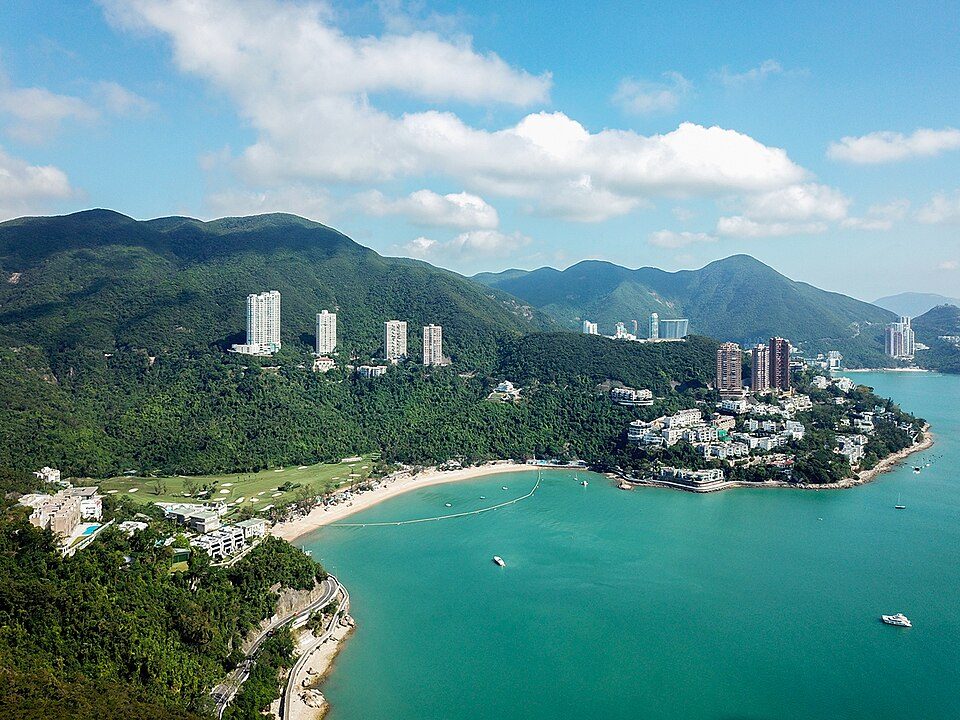
Deep Water Bay: Submarine Cable Landing Point
Deep Water Bay is located on the southern shore of Hong Kong Island in Hong Kong, China. As a coastal location, it serves as a submarine cable landing point connecting China to a broader regional network across Southeast Asia. One submarine cable lands at Deep Water Bay, linking China to the Philippines, Singapore, and Vietnam.
The single cable landing here, the Tata TGN-Intra Asia (TGN-IA), establishes Deep Water Bay as a point of connectivity within the Southeast Asian submarine cable corridor. While smaller in cable count than several other Hong Kong and Chinese landing points, Deep Water Bay participates in a network that spans multiple countries across the region.
Cables Landing at Deep Water Bay
The Tata TGN-Intra Asia (TGN-IA) is the sole submarine cable landing at Deep Water Bay. The cable spans approximately 6,700 kilometres and reached its ready-for-service date in 2009. In addition to Deep Water Bay in China, the TGN-IA connects to landing points in the Philippines, Singapore, and Vietnam, forming a multi-country intra-Asian route. The cable was in draft status at the time of recording.
Regional Context
Within China's submarine cable infrastructure, Deep Water Bay hosts one cable, placing it among the smaller landing points in the country. China has 24 submarine cable landing points in total, with more active hubs such as Chung Hom Kok and Tseung Kwan O each hosting six cables, and Chongming and Nanhui each hosting four. Deep Water Bay ranks in the top 63 percent of Chinese landing points by cable count, sitting alongside Lantau Island, which also hosts two cables, though Deep Water Bay itself hosts only one.
Network Role
Deep Water Bay functions as a single-cable terminus rather than a multi-cable hub. Through the TGN-IA, it provides a direct connection between China and three Southeast Asian countries - the Philippines, Singapore, and Vietnam - along a route measuring 6,700 kilometres. This positions Deep Water Bay as a contributor to the intra-Asian segment of the regional submarine cable graph, where shorter regional routes complement the longer intercontinental connections that characterise many of China's other landing points.
Within the broader submarine cable geography of China, where the average cable length across all landing points is approximately 10,860 kilometres, the TGN-IA's regional focus distinguishes Deep Water Bay as a node oriented toward near-regional connectivity in Southeast Asia. Its presence in the network reflects the diversity of cable types and corridors that together make up China's coastal submarine cable infrastructure.
What next: Deep Water Bay, China in the global directory of cable landing points; see surrounding routes on the interactive submarine cable map or follow live network monitoring.
Other Landing Points in China
Landing Point
- CountryCN China
- Coordinates22.2494°N 114.1840°E
- Connected Cables1
See Real Cable Routes
View actual submarine cable routing from Deep Water Bay, China - with backbone nodes, distance calculations, and latency estimates
Open Calculator →