Fuzhou, China
Landing Point · CN China
1
Connected Cables
CN
Country
25.78°
Latitude
119.62°
Longitude
Ctrl + Scroll to zoom
Connected Cables
| Cable | Status |
|---|---|
| Taiwan Strait Express-1 (TSE-1) | Active |
Live Performance
11,247
measurements
17
probes
221
days monitored
246.2
ms avg RTT
1
anomalies
RTT measurements to this landing point from 2026-03-08 through 2026-10-16 - live ICMP round-trip time via our monitoring probes. Recomputed daily.
Measurement sources
| Probe | Location | Samples | Avg |
|---|---|---|---|
| #6818 | control probe | 1136 | 181.5 ms |
| #6410 own probe | Sao Paulo BR | 811 | 319.9 ms |
| #6427 own probe | Sydney AU | 806 | 384.0 ms |
| #6487 | control probe | 802 | 155.6 ms |
| #7062 own probe | Cape Town ZA | 769 | 321.8 ms |
| own probe | Minsk BY | 761 | 197.3 ms |
| own probe | Almaty KZ | 756 | 188.3 ms |
| own probe | Jerusalem IL | 746 | 223.4 ms |
| own probe | Moscow RU | 728 | 173.5 ms |
| own probe | Odessa UA | 717 | 175.4 ms |
| own probe | Balancer IL | 709 | 318.3 ms |
| own probe | Kyiv UA | 701 | 317.3 ms |
| own probe | Tbilisi GE | 680 | 316.9 ms |
| own probe | Saint Petersburg RU | 586 | 187.9 ms |
| own probe | Rostov RU | 387 | 283.1 ms |
| own probe | Sevastopol UA | 146 | 172.0 ms |
| #6907 | control probe | 6 | 240.0 ms |
About Fuzhou, China
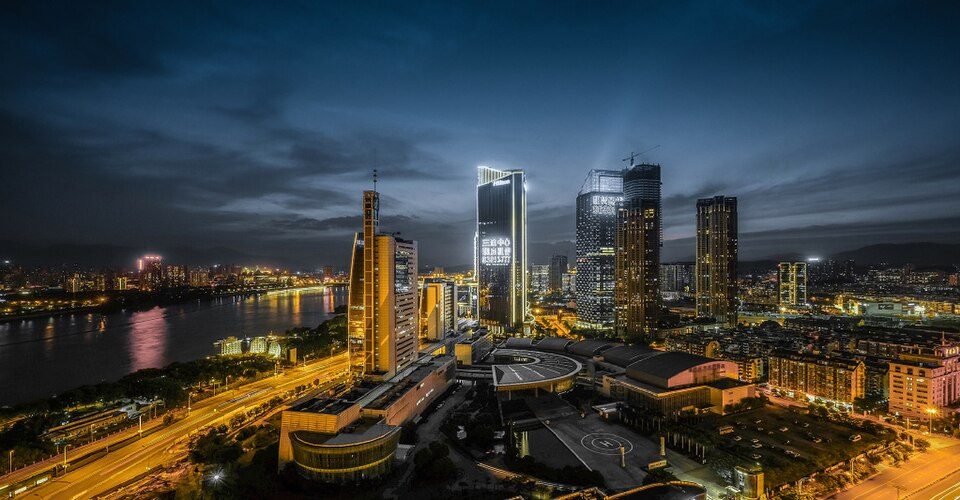
Fuzhou: A Strategic Gateway Across the Taiwan Strait
Fuzhou, the capital of Fujian province in southeastern China, is a city steeped in history and culture. Situated along the Min River estuary, it has long been a hub for trade and connection, bridging the mainland with neighboring regions. Today, Fuzhou plays a modern role in connectivity through its single submarine cable landing point, the Taiwan Strait Express-1 (TSE-1).The Taiwan Strait Express-1: Linking Fuzhou to Taiwan
The Taiwan Strait Express-1 (TSE-1), operational since 2013, spans 260 kilometers and connects Fuzhou to Tanshui, Taiwan. This cable is unique in its direct focus on cross-strait communication, serving as a direct link between the Chinese mainland and Taiwan. While many landing points in China host multiple cables-such as Chung Hom Kok and Tseung Kwan O, each with six cables-Fuzhou stands apart with just one. Despite its modest infrastructure, the TSE-1 reflects the strategic importance of Fuzhou as a gateway to Taiwan. Unlike other landing points in China that serve broader international or domestic networks, the TSE-1 is a focused, bilateral connection. This specificity underscores Fuzhou's role as a connector between two closely tied yet politically distinct regions.Connectivity Performance: GeoCables Latency Insights
GeoCables' monitoring reveals that Fuzhou's connectivity through the TSE-1 performs reliably, with an average round-trip latency of 106 milliseconds across 110 checks from 10 global cities. The best observed latency, an impressive 18 milliseconds, highlights the efficiency of this direct link. These measurements demonstrate that the TSE-1 is not only a geographically strategic cable but also a technically robust one.Fuzhou's Regional Context
Fuzhou's single cable contrasts sharply with other landing points in China. Coastal hubs like Chung Hom Kok and Tseung Kwan O boast six cables each, serving as major nodes in China's extensive submarine cable network. Even Chongming and Nanhui, with four cables each, play larger roles in the national infrastructure. Fuzhou's position, however, is distinct-it is not a sprawling hub but rather a focused link in the chain, connecting the mainland to Taiwan. This specialized role aligns with Fuzhou's geographic and cultural identity. As part of the Mindong region, Fuzhou has historically been a crossroads of trade and communication. The TSE-1 continues this tradition, albeit in a modern, digital form.The Importance of Fuzhou's Connectivity
While Fuzhou may not rival China's larger cable landing points in scale, its connection via the TSE-1 is significant. The cable facilitates cross-strait communication, supporting economic, cultural, and personal exchanges between China and Taiwan. For Fuzhou itself, this connectivity complements its role as a regional capital and economic center, ensuring the city remains plugged into broader networks despite its single cable. In the vast landscape of China's submarine cable infrastructure, Fuzhou stands out not for the number of cables it hosts but for the strategic importance of its singular connection. The Taiwan Strait Express-1 is a reminder that sometimes, one focused link can be as impactful as many.What next: Fuzhou, China in the global directory of cable landing points; see surrounding routes on the interactive submarine cable map or follow live network monitoring.
Incident history
Significant incidents on cables landing here, each with its own report.
Other Landing Points in China
CN Beihai, China
21.4845°N 109.1053°E
CN Cape D’Aguilar, China
22.2081°N 114.2603°E
CN Chai Wan, China
22.2689°N 114.2394°E
CN Chongming, China
31.6199°N 121.3952°E
CN Chung Hom Kok, China
22.2221°N 114.2030°E
CN Dadeng Island, China
24.5567°N 118.3010°E
CN Dalian, China
38.9438°N 121.5765°E
CN Deep Water Bay, China
22.2494°N 114.1840°E
CN Guanyin Mountain, China
24.4939°N 118.1890°E
CN Lantau Island, China
22.2715°N 113.9483°E
CN Lingang, China
30.9357°N 121.8961°E
CN Lingao, China
19.9048°N 109.6776°E
Landing Point
- CountryCN China
- Coordinates25.7801°N 119.6186°E
- Connected Cables1
See Real Cable Routes
View actual submarine cable routing from Fuzhou, China - with backbone nodes, distance calculations, and latency estimates
Open Calculator →
Submarine cables
Land fiber
Live probes