Takahagi, Japan
Landing Point · JP Japan
Connected Cables
| Cable | Status |
|---|---|
| Taihei | Planned |
| Topaz | Active |
Live Performance
RTT measurements to this landing point from 2026-03-05 through 2026-09-14 - live ICMP round-trip time via our monitoring probes. Recomputed daily. ✓ No anomalies detected in the monitored period.
Measurement sources
| Probe | Location | Samples | Avg |
|---|---|---|---|
| #1010871 | control probe | 16 | 168.7 ms |
| own probe | Almaty KZ | 12 | 296.5 ms |
| own probe | Moscow RU | 8 | 256.9 ms |
| #6410 own probe | Sao Paulo BR | 7 | 270.8 ms |
| #7062 own probe | Cape Town ZA | 7 | 390.4 ms |
| #6487 | control probe | 6 | 98.2 ms |
| own probe | Minsk BY | 5 | 282.4 ms |
| own probe | Tbilisi GE | 5 | 303.9 ms |
| #7433 | control probe | 4 | 16.4 ms |
| #52844 | control probe | 4 | 29.9 ms |
| #55091 | control probe | 4 | 7.4 ms |
| own probe | Jerusalem IL | 3 | 289.7 ms |
| own probe | Sevastopol UA | 2 | 295.5 ms |
| own probe | Saint Petersburg RU | 1 | 254.8 ms |
About Takahagi, Japan
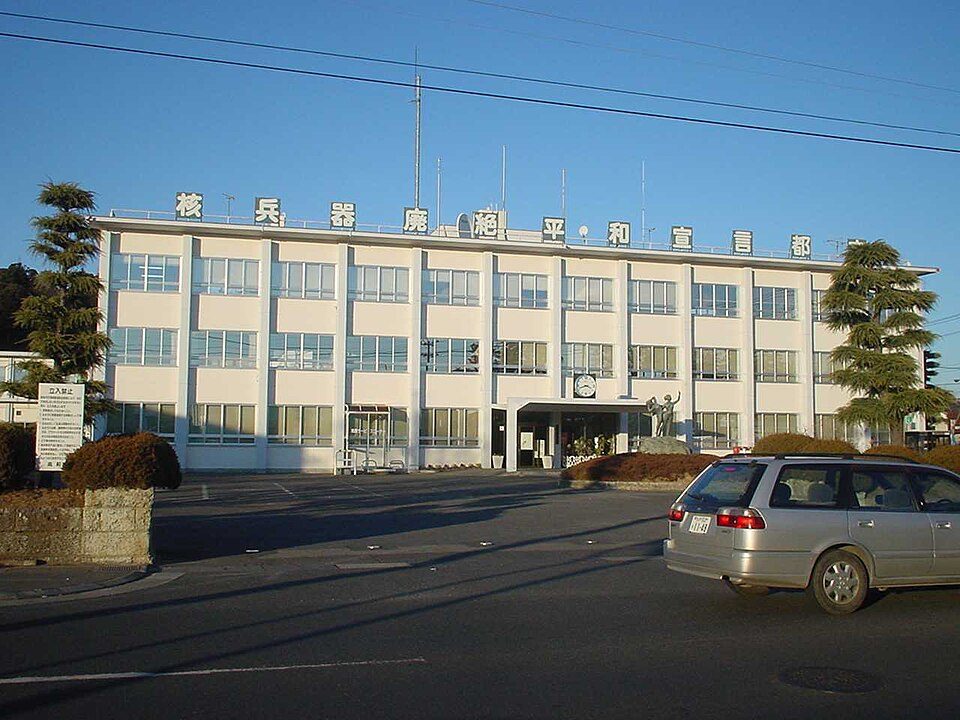
Takahagi, Japan: Submarine Cable Landing Point
Takahagi is a city in Ibaraki Prefecture, on the Pacific coast of Japan's main island of Honshu. As a submarine cable landing point, it connects Japan to both North America and Taiwan, serving as a terminus for transpacific and trans-Pacific regional routes. Two submarine cables land at Takahagi, linking it to the United States, Canada, and Taiwan.
The cables landing at Takahagi establish it as part of Japan's broader transpacific corridor. One cable connects Japan directly to the United States, while a second extends the reach of the landing point to include Canada and Taiwan, enabling both bilateral and multi-destination connectivity across the Pacific Ocean.
Cables Landing at Takahagi
Taihei is a submarine cable spanning approximately 7,000 km, with a ready-for-service date scheduled for 2027 and currently at draft status. The cable links Takahagi, Japan with the United States, forming a direct transpacific connection between the two countries.
Topaz is a submarine cable with a ready-for-service date of 2023, also at draft status. The Topaz cable connects Japan - including the Takahagi landing point - with Canada and Taiwan, creating a multi-country Pacific route that spans both the North American continent and East Asia. No length information is available for this cable.
Regional Context
Within Japan's submarine cable infrastructure - which comprises 51 cables across 68 landing points - Takahagi ranks in the top 90% of landing points by cable count, hosting 2 cables. The busiest landing points in Japan include Shima with 12 cables, Maruyama with 9, and Chikura with 8, while Takahagi is comparable to peers such as Hachijo and Minamiboso, each of which also host 4 cables. Takahagi's two cables position it as a smaller but distinct node within the national network.
Network Role
Takahagi functions as a focused transpacific landing point rather than a broad multi-cable hub. Its two cables - Taihei and Topaz - collectively connect Japan to three countries: the United States, Canada, and Taiwan. This gives Takahagi an outward-facing role oriented primarily toward the North American and East Asian Pacific corridors, with both of its cables directed away from Japanese domestic inter-island routes.
As a two-cable landing point, Takahagi represents a concentrated but internationally oriented presence on Japan's Pacific coastline. Its position within the regional submarine cable graph adds redundancy to transpacific routes by distributing landing infrastructure across multiple points along the Honshu coast rather than concentrating all Pacific connectivity at a single node.
What next: Takahagi, Japan in the global directory of cable landing points; see surrounding routes on the interactive submarine cable map or follow live network monitoring.
Other Landing Points in Japan
FAQ
Landing Point
- CountryJP Japan
- Coordinates36.7131°N 140.7183°E
- Connected Cables2
See Real Cable Routes
View actual submarine cable routing from Takahagi, Japan - with backbone nodes, distance calculations, and latency estimates
Open Calculator →