Miyazaki, Japan
Landing Point · JP Japan
Connected Cables
| Cable | Status |
|---|---|
| Japan Information Highway (JIH) | Active |
| Miyazaki-Okinawa Cable (MOC) | Active |
Live Performance
RTT measurements to this landing point from 2026-03-21 through 2026-10-02 - live ICMP round-trip time via our monitoring probes. Recomputed daily. ✓ No anomalies detected in the monitored period.
Measurement sources
| Probe | Location | Samples | Avg |
|---|---|---|---|
| own probe | Almaty KZ | 7 | 285.5 ms |
| own probe | Moscow RU | 6 | 256.5 ms |
| #6410 own probe | Sao Paulo BR | 4 | 279.0 ms |
| #7062 own probe | Cape Town ZA | 4 | 388.7 ms |
| own probe | Minsk BY | 4 | 305.2 ms |
| own probe | Tbilisi GE | 4 | 294.2 ms |
| own probe | Jerusalem IL | 4 | 296.2 ms |
| #6487 | control probe | 3 | 83.1 ms |
| #19107 | control probe | 2 | 31.1 ms |
| #54893 | control probe | 2 | 26.1 ms |
| #1011110 | control probe | 2 | 23.4 ms |
About Miyazaki, Japan
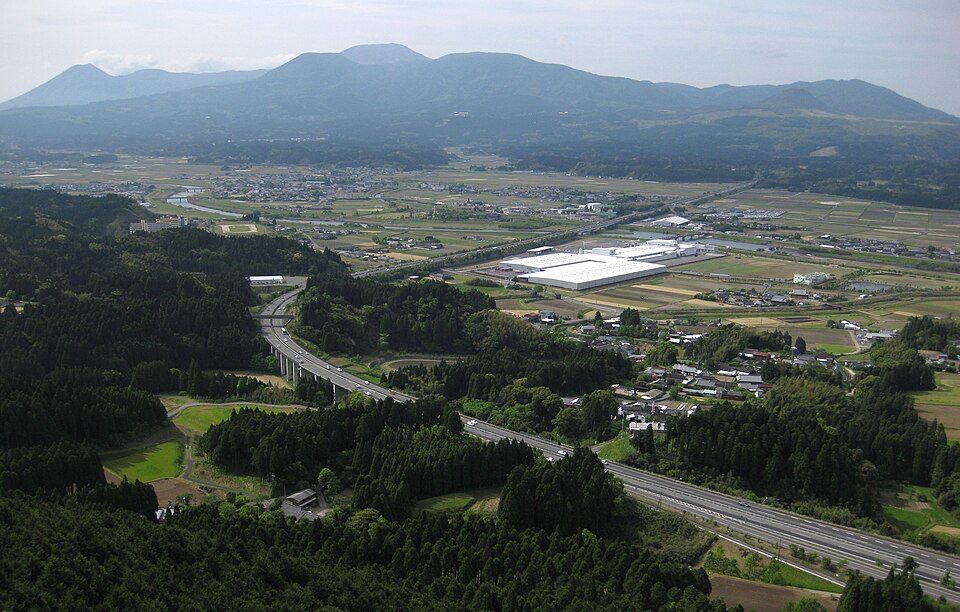
Miyazaki, Japan: Submarine Cable Landing Point
Miyazaki is a landing point for submarine cables located on the island of Kyūshū, Japan. The prefecture faces the Pacific Ocean along its eastern coastline, a position that makes it a natural terminus for domestic submarine cable routes. Two submarine cables land at Miyazaki, connecting it to other points within Japan and enabling intra-national data connectivity along the Japanese archipelago.
Both cables landing at Miyazaki serve domestic routes, linking this Kyūshū location to other Japanese endpoints. The Japan Information Highway (JIH) and the Miyazaki-Okinawa Cable (MOC) collectively represent Miyazaki's role in Japan's internal submarine cable network, providing connectivity between different parts of the country rather than bridging international corridors.
Cables Landing at Miyazaki, Japan
The Japan Information Highway (JIH) is a submarine cable system spanning 5,150 km that reached ready-for-service status in 1999. The cable connects landing points entirely within Japan, forming part of the domestic high-capacity cable infrastructure that links various coastal locations across the Japanese archipelago.
The Miyazaki-Okinawa Cable (MOC) reached ready-for-service status in 1997, making it one of the earlier domestic submarine cable systems in Japan. Like the JIH, the MOC connects landing points within Japan, with its name indicating a route between the Miyazaki region and Okinawa. This cable predates the JIH by two years, establishing Miyazaki as a submarine cable landing point before the end of the twentieth century.
Regional Context
Within Japan's submarine cable infrastructure, which spans 51 cables across 68 landing points, Miyazaki hosts 2 cables and ranks within the top 90% of Japanese landing points by cable count. Major hubs such as Shima with 12 cables, Maruyama with 9 cables, and Chikura with 8 cables handle significantly higher cable volumes, while Miyazaki's count places it in a tier shared with smaller domestic landing points. Compared to peers such as Hachijo, Minamiboso, and Naha, each of which hosts 4 cables, Miyazaki serves a more narrowly focused domestic routing function.
Network Role
Miyazaki functions as a domestic submarine cable terminus rather than an international or intercontinental hub. Its two cables, both connecting endpoints solely within Japan, contribute to the internal network that knits together the Japanese archipelago's various coastal regions. The Miyazaki-Okinawa Cable in particular suggests a routing function that ties the Kyūshū coastline to the southwestern island chain of Okinawa, while the Japan Information Highway extends Miyazaki's domestic reach further across the country's cable grid.
As a two-cable landing point dedicated entirely to intra-Japanese routes, Miyazaki represents a node that supports domestic network redundancy and regional connectivity within Japan's broader submarine cable graph, where the density of landing points across the archipelago distributes traffic across multiple coastal termini.
What next: Miyazaki, Japan in the global directory of cable landing points; see surrounding routes on the interactive submarine cable map or follow live network monitoring.
Other Landing Points in Japan
Landing Point
- CountryJP Japan
- Coordinates32.0977°N 131.2946°E
- Connected Cables2
See Real Cable Routes
View actual submarine cable routing from Miyazaki, Japan - with backbone nodes, distance calculations, and latency estimates
Open Calculator →