Makurazaki, Japan
Landing Point · JP Japan
Connected Cables
| Cable | Status |
|---|---|
| Mishima Village | Active |
Live Performance
RTT measurements to this landing point from 2026-03-23 through 2026-09-20 - live ICMP round-trip time via our monitoring probes. Recomputed daily. ✓ No anomalies detected in the monitored period.
Measurement sources
| Probe | Location | Samples | Avg |
|---|---|---|---|
| own probe | Almaty KZ | 10 | 307.9 ms |
| own probe | Moscow RU | 9 | 250.2 ms |
| own probe | Tbilisi GE | 7 | 285.6 ms |
| own probe | Jerusalem IL | 6 | 285.0 ms |
| #6410 own probe | Sao Paulo BR | 5 | 280.9 ms |
| #7062 own probe | Cape Town ZA | 5 | 401.5 ms |
| own probe | Minsk BY | 5 | 281.0 ms |
| #19107 | control probe | 4 | 28.0 ms |
| #54893 | control probe | 4 | 24.4 ms |
| #1011110 | control probe | 4 | 20.0 ms |
| own probe | Sevastopol UA | 4 | 304.6 ms |
| #6487 | control probe | 2 | 80.0 ms |
| #6427 own probe | Sydney AU | 1 | 184.9 ms |
| own probe | Rostov RU | 1 | 300.4 ms |
About Makurazaki, Japan
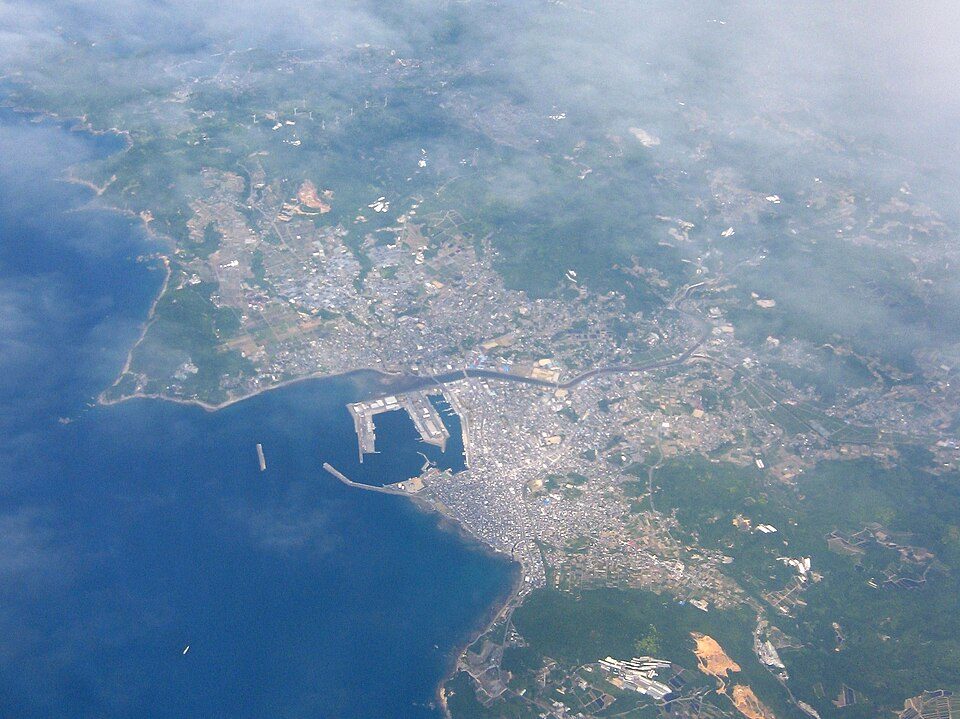
Makurazaki, Japan: Submarine Cable Landing Point
Makurazaki is a city in Kagoshima Prefecture, on the southern coast of Japan's Kyushu island. As a submarine cable landing point, it serves as the terrestrial terminus for one submarine cable connecting it to other parts of the Japanese island chain. That single cable, the Mishima Village system, links Makurazaki to other Japanese endpoints, making this a domestically oriented landing point rather than an intercontinental gateway.
Japan hosts 51 submarine cables across 68 landing points, and Makurazaki's single cable places it among the more lightly connected of those locations. Its role is nonetheless defined by the inter-island corridor it supports within the Japanese archipelago, providing submarine connectivity that complements terrestrial networks in a country where island geography makes subsea links a practical necessity.
Cables Landing at Makurazaki
Mishima Village is a 192-kilometre submarine cable with a ready-for-service date of 2010, currently listed in draft status. The cable connects endpoints entirely within Japan, linking Makurazaki to other Japanese landing points. At 192 kilometres, it is a short-haul domestic system, consistent with the role of connecting coastal or island communities along the Japanese coast rather than spanning ocean basins. No additional technical specifications, such as fiber pairs or design capacity, are recorded for this system.
Regional Context
Within Japan's submarine cable infrastructure, Makurazaki sits at the lower end of the connectivity spectrum when compared to major landing points such as Shima, which hosts 12 cables, Maruyama with 9, and Chikura with 8. Even among mid-tier peers such as Hachijo, Minamiboso, and Naha, each of which serves four cables, Makurazaki's single system represents a more modest footprint. Its function is correspondingly focused on domestic inter-island connectivity rather than serving as a convergence point for multiple international or regional systems.
Network Role
Makurazaki functions as a single-cable terminus within Japan's domestic submarine cable network. The Mishima Village cable extends 192 kilometres to connect communities within the Japanese island chain, supporting the kind of short-haul, intra-national connectivity that is particularly relevant in an archipelago setting where terrestrial alternatives may be limited or absent. This landing point does not currently serve as a hub for international traffic or as a junction between multiple cable systems.
In the broader Japanese submarine cable graph, Makurazaki represents one of the more specialised nodes: a coastal city whose submarine cable infrastructure is oriented toward domestic inter-island communication rather than global routing. Its presence among Japan's 68 landing points illustrates how the country's submarine cable network extends beyond major international hubs to serve regional and community-level connectivity needs.
What next: Makurazaki, Japan in the global directory of cable landing points; see surrounding routes on the interactive submarine cable map or follow live network monitoring.
Other Landing Points in Japan
Landing Point
- CountryJP Japan
- Coordinates31.2803°N 130.2939°E
- Connected Cables1
See Real Cable Routes
View actual submarine cable routing from Makurazaki, Japan - with backbone nodes, distance calculations, and latency estimates
Open Calculator →