Lahaina, HI, United States
Landing Point · US United States
Connected Cables
| Cable | Status |
|---|---|
| Paniolo Cable Network | Active |
Live Performance
RTT measurements to this landing point from 2026-07-13 through 2026-09-09 - live ICMP round-trip time via our monitoring probes. Recomputed daily. ✓ No anomalies detected in the monitored period.
Measurement sources
| Probe | Location | Samples | Avg |
|---|---|---|---|
| #6427 own probe | Sydney AU | 5 | 186.0 ms |
| #7062 own probe | Cape Town ZA | 5 | 264.8 ms |
| own probe | Almaty KZ | 5 | 222.8 ms |
| own probe | Jerusalem IL | 5 | 154.7 ms |
| #6487 | control probe | 4 | 217.2 ms |
| #14720 | control probe | 3 | 89.6 ms |
| #61465 | control probe | 3 | 143.1 ms |
| own probe | Saint Petersburg RU | 2 | 117.9 ms |
| #1016563 | control probe | 2 | 107.1 ms |
| own probe | Moscow RU | 1 | 141.1 ms |
| #1015927 | control probe | 1 | 92.2 ms |
About Lahaina, HI, United States
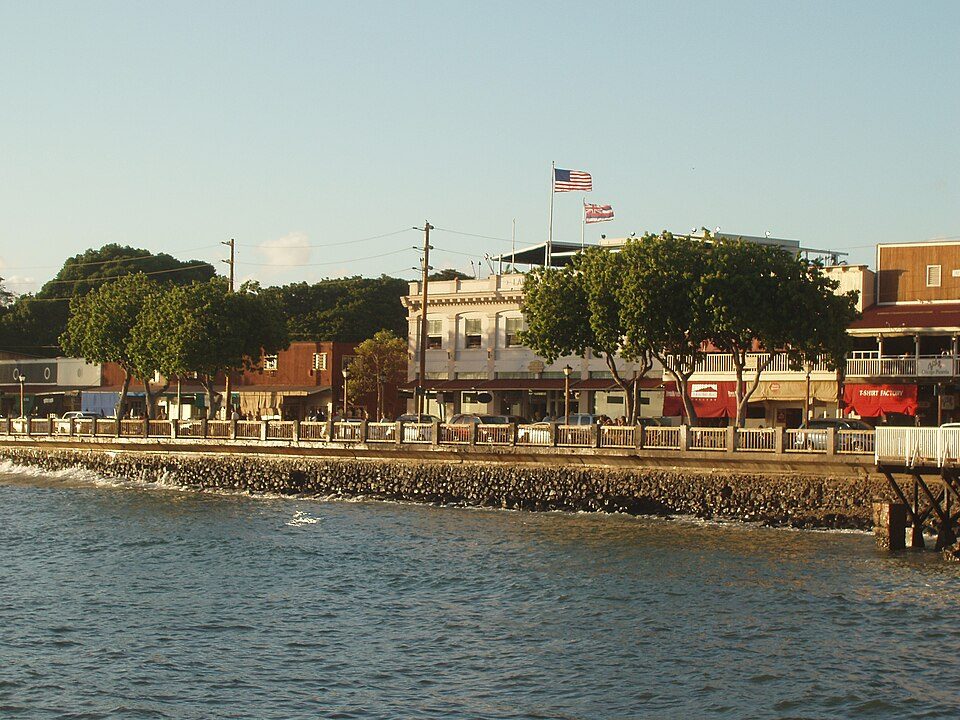
Lahaina, HI: Submarine Cable Landing Point
Lahaina is a census-designated place situated on the northwest coast of the island of Maui, in Maui County, Hawaii, United States. As an island community in the Pacific, Lahaina's connectivity to the broader United States telecommunications network depends in part on submarine cable infrastructure. One submarine cable lands at Lahaina, linking it to other points within the Hawaiian island chain and the wider United States domestic network.
The single cable serving Lahaina is the Paniolo Cable Network, an intra-United States system that connects locations across Hawaii. The corridor enabled by this cable is a domestic inter-island one, joining Maui to other Hawaiian islands rather than reaching across intercontinental distances.
Cables Landing at Lahaina, HI
The Paniolo Cable Network is a 576-kilometer submarine cable that reached ready-for-service status in 2009. All endpoints on this cable are within the United States, making it a domestic system oriented toward inter-island connectivity within Hawaii. The cable spans a relatively modest distance consistent with the geographic scale of the Hawaiian archipelago, providing a dedicated submarine link between Hawaiian island communities including Maui, where Lahaina serves as the landing point.
Regional Context
Within the United States, submarine cables land across 160 points, with the country hosting 113 cables in total. Lahaina, serving a single cable, ranks within the top 69 percent of United States landing points by cable count. Compared to high-density peers such as Boca Raton, FL, and San Juan, PR, each hosting eight cables, or Hawaiian peer Kapolei, HI, which hosts five cables, Lahaina represents a more modest node in the national submarine cable landscape. Its Hawaiian location places it in a regionally significant island environment, even if its cable count remains limited.
Network Role
Lahaina functions as a single-cable terminus rather than a multi-cable hub, serving as Maui's connection point on the Paniolo Cable Network. This domestic system addresses the fundamental requirement of linking island communities that cannot rely on terrestrial alternatives for inter-island data transmission. Within the Hawaiian submarine cable graph, Lahaina complements other island landing points, including the more heavily served Kapolei on Oahu, by extending dedicated submarine capacity to Maui's northwest coast.
The presence of even one submarine cable at a geographically isolated island location carries tangible significance: it provides Lahaina and the surrounding Maui communities served by this landing point with a direct, physically distinct pathway into the broader United States network. In the regional submarine cable graph, Lahaina's role as a single-cable domestic terminus illustrates how inter-island systems distribute connectivity across the Hawaiian archipelago beyond the primary hub landing points.
What next: Lahaina, HI, United States in the global directory of cable landing points; see surrounding routes on the interactive submarine cable map or follow live network monitoring.
Other Landing Points in United States
Landing Point
- CountryUS United States
- Coordinates20.9009°N 156.6845°W
- Connected Cables1
See Real Cable Routes
View actual submarine cable routing from Lahaina, HI, United States - with backbone nodes, distance calculations, and latency estimates
Open Calculator →