Kota Mappi, Indonesia
Landing Point · ID Indonesia
Connected Cables
| Cable | Status |
|---|---|
| Palapa Ring East | Active |
Live Performance
RTT measurements to this landing point from 2026-04-18 through 2026-09-05 - live ICMP round-trip time via our monitoring probes. Recomputed daily. ✓ No anomalies detected in the monitored period.
Measurement sources
| Probe | Location | Samples | Avg |
|---|---|---|---|
| own probe | Almaty KZ | 4 | 260.9 ms |
| #6410 own probe | Sao Paulo BR | 3 | 360.8 ms |
| #6427 own probe | Sydney AU | 3 | 160.5 ms |
| #7062 own probe | Cape Town ZA | 3 | 315.8 ms |
| #6487 | control probe | 2 | 19.9 ms |
| own probe | Tbilisi GE | 2 | 264.4 ms |
| own probe | Minsk BY | 1 | 210.4 ms |
| own probe | Jerusalem IL | 1 | 224.6 ms |
| own probe | Sevastopol UA | 1 | 229.6 ms |
About Kota Mappi, Indonesia
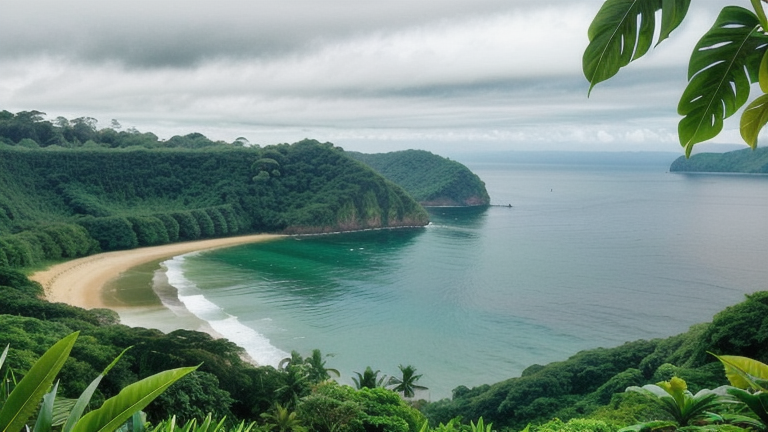
Kota Mappi, Indonesia is a submarine cable landing point in Indonesia. One international cable system comes ashore here.
Why cable lands at Kota Mappi
All 1 systems landing here are domestic: they tie Kota Mappi into Indonesia's national network rather than crossing a border. The gap they close is internal reach, not international capacity, which is why none of them touches a foreign shore.
The systems in detail
Documented capacity and vintage vary across the roster: Palapa Ring East (6,300 km and in service since 2019). Facts for every system are on its own cable page.
What the concentration means for resilience
A single system lands here, so this point is a genuine dependency rather than a redundant one. Because these systems share the same short stretch of coast and shore infrastructure, a localized event at the landing zone can reach far more capacity than the cable count alone suggests. GeoCables tracks each of these systems individually for exactly this reason.
What our monitoring has recorded
GeoCables watches these systems continuously rather than describing them once. Since 2026-03-10 we have logged 154 route anomalies across 86 cable systems worldwide. None of the systems landing here has triggered a route anomaly in that window, a stability signal in its own right for a hub of this size. This section updates automatically the moment that changes, as it already has for the 86 other systems flagged across our coverage.
Latency, measured
From the GeoCables probe network, best-case round-trip time to Indonesia endpoints runs about 291 ms from Sao Paulo, about 1 ms from Singapore and about 38 ms from Sydney. These are paths into Indonesia from our own vantage points, not a global average, and they shift as operators re-route.
Who depends on it
The largest access networks in Indonesia sit behind this coastal capacity: PT. Telekomunikasi Selular (23.1% of users), PT Telekomunikasi Indonesia (18.4% of users), INDOSAT Internet Network Provider (13.3% of users) and PT XL Axiata (6.1% of users). See the full national picture for Indonesia.
The coast around Kota Mappi
This landing point is part of a wider shoreline of connectivity. Within roughly 200 kilometres, the coast also hosts Merauke (191 km away, 2 cable systems). Each of these sites brings its own cables ashore, and together they define how much independent capacity, and how much redundancy, this stretch of Indonesia really has: if one landing fails or a cable needs maintenance, traffic can often be carried through a neighbour.
The physical environment here is monitored too: the GeoCables event feed has logged Green forest fire notification in Indonesia (Aug 2026) and Green forest fire notification in Indonesia (Aug 2026) near this coastline, and our latency measurements are checked against every such event to see whether the local cables were affected.
What next: Kota Mappi, Indonesia in the global directory of cable landing points; see surrounding routes on the interactive submarine cable map or follow live network monitoring.
Other Landing Points in Indonesia
Landing Point
- CountryID Indonesia
- Coordinates7.1025°S 139.3965°E
- Connected Cables1
See Real Cable Routes
View actual submarine cable routing from Kota Mappi, Indonesia - with backbone nodes, distance calculations, and latency estimates
Open Calculator →