Kitakyushu, Japan
Landing Point · JP Japan
Connected Cables
| Cable | Status |
|---|---|
| Guam Okinawa Kyushu Incheon (GOKI) | Active |
| Korea-Japan Cable Network (KJCN) | Active |
Live Performance
RTT measurements to this landing point from 2026-03-06 through 2026-10-16 - live ICMP round-trip time via our monitoring probes. Recomputed daily.
Measurement sources
| Probe | Location | Samples | Avg |
|---|---|---|---|
| #329 | control probe | 126 | 91.7 ms |
| #1004371 | control probe | 95 | 22.9 ms |
| own probe | Almaty KZ | 27 | 301.2 ms |
| #6487 | control probe | 23 | 102.3 ms |
| #6410 own probe | Sao Paulo BR | 22 | 278.2 ms |
| #50802 | control probe | 17 | 90.1 ms |
| #64216 | control probe | 14 | 117.9 ms |
| #1017752 | control probe | 11 | 68.7 ms |
| #6923 | control probe | 9 | 67.7 ms |
| own probe | Moscow RU | 8 | 259.9 ms |
| own probe | Tbilisi GE | 6 | 293.2 ms |
| own probe | Minsk BY | 5 | 302.2 ms |
| own probe | Jerusalem IL | 5 | 307.4 ms |
| #7062 own probe | Cape Town ZA | 4 | 409.1 ms |
| #34380 | control probe | 3 | 34.6 ms |
| #53502 | control probe | 3 | 25.9 ms |
| #1014959 | control probe | 3 | 27.3 ms |
| #1005043 | control probe | 1 | 59.1 ms |
| own probe | Sevastopol UA | 1 | 298.9 ms |
About Kitakyushu, Japan
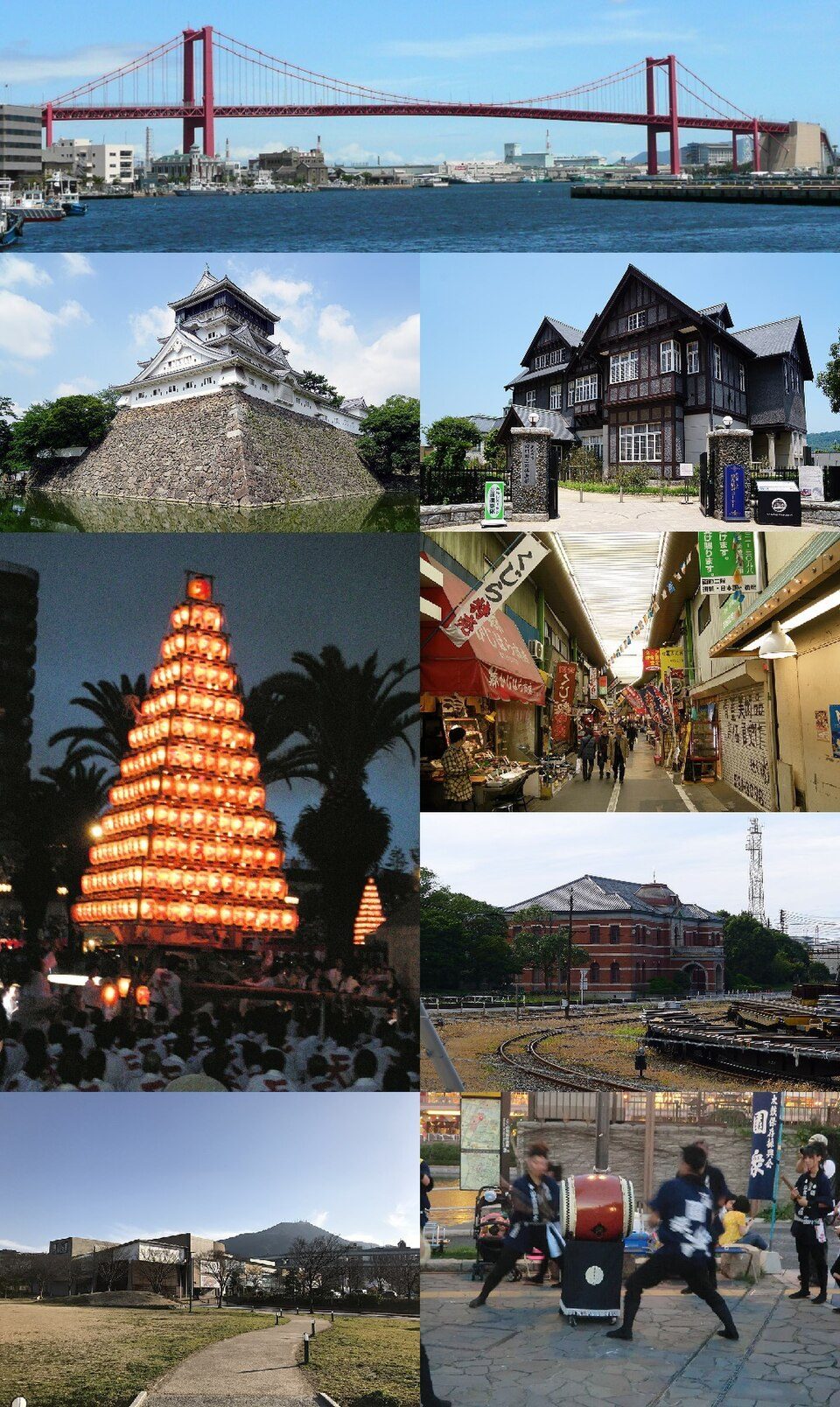
Kitakyushu: Submarine Cable Landing Point
Kitakyushu is a city in Fukuoka Prefecture, located on the northern tip of the island of Kyushu, Japan. As a coastal city positioned along the Korea Strait, it serves as a natural anchor for submarine cable connections linking Japan to the Korean Peninsula and onward into the Pacific. Two submarine cables land at Kitakyushu, making it an active, if modestly scaled, node within Japan's broader submarine cable infrastructure.
The two cables serving Kitakyushu connect the city to destinations across the Asia-Pacific corridor. The Korea-Japan Cable Network (KJCN) provides a short regional link between Japan and South Korea, while the Guam Okinawa Kyushu Incheon (GOKI) cable extends the reach of this landing point further into the Pacific via Guam and through Okinawa and Incheon. Together, these cables give Kitakyushu a presence in both short-range regional connectivity and longer trans-Pacific routing.
Cables Landing at Kitakyushu
Korea-Japan Cable Network (KJCN) is a 500-kilometre cable with a ready-for-service (RFS) date of 2002. It connects Japan and South Korea, forming one of the shorter bilateral submarine links in the region. KJCN is classified as a draft-status cable. Its compact length reflects the narrow strait separating the two countries, and Kitakyushu's position on the Kyushu coast makes it a geographically logical terminus for this Japan-South Korea segment.
Guam Okinawa Kyushu Incheon (GOKI) is a 4,244-kilometre cable with an RFS date of 2013, also carrying draft status. The cable connects Guam, Japan, and South Korea (Incheon), routing through Okinawa and Kyushu before reaching Incheon. Kitakyushu serves as one of the Japanese landing points along this route. With its length more than eight times that of KJCN, GOKI extends Kitakyushu's connectivity into the broader Pacific alongside the shorter bilateral Korea-Japan link.
Regional Context
Within Japan's 68 submarine cable landing points, Kitakyushu's two cables place it in the upper 90 percent of landing points by cable count, though it sits well behind major Japanese hubs such as Shima (12 cables), Maruyama (9 cables), and Chikura (8 cables). Compared to similarly scaled peers like Hachijo, Minamiboso, and Naha, each of which hosts four cables, Kitakyushu is a smaller but active participant in Japan's distributed submarine cable network.
Network Role
Kitakyushu functions as a dual-cable terminus rather than a large multi-cable hub, connecting Japan to South Korea through two separate systems that differ substantially in length and scope. The KJCN handles the direct Japan-South Korea bilateral link, while GOKI broadens that reach to include Guam and Okinawa within a single cable system. This combination gives the landing point relevance in both short-range Northeast Asian connectivity and the longer Pacific routing represented by GOKI.
In the regional submarine cable graph, Kitakyushu represents one of the western Kyushu-facing entry points into Japan's cable network, complementing the country's more heavily concentrated landing points further east. Its position on Kyushu's northern coast, facing the Korea Strait, establishes it as a distinct geographical anchor for Japan-South Korea submarine cable infrastructure.
What next: Kitakyushu, Japan in the global directory of cable landing points; see surrounding routes on the interactive submarine cable map or follow live network monitoring.
Our measurements to Kitakyushu
Traceroutes from our own measurement points over the last 30 days: usual delay and number of network hops on the way to Kitakyushu.
- From RIPE Atlas probes: 54 ms, 10 hops, 53 traces
Last trace: 2026-10-16. Live network map
Other Landing Points in Japan
FAQ
Landing Point
- CountryJP Japan
- Coordinates33.8393°N 131.0320°E
- Connected Cables2
See Real Cable Routes
View actual submarine cable routing from Kitakyushu, Japan - with backbone nodes, distance calculations, and latency estimates
Open Calculator →