Kitaibaraki, Japan
Landing Point · JP Japan
Connected Cables
| Cable | Status |
|---|---|
| APCN-2 | Active |
Live Performance
RTT measurements to this landing point from 2026-03-02 through 2026-10-06 - live ICMP round-trip time via our monitoring probes. Recomputed daily. ✓ No anomalies detected in the monitored period.
Measurement sources
| Probe | Location | Samples | Avg |
|---|---|---|---|
| #1033 | control probe | 49 | 107.9 ms |
| own probe | Almaty KZ | 13 | 322.0 ms |
| own probe | Minsk BY | 8 | 296.7 ms |
| own probe | Tbilisi GE | 8 | 303.6 ms |
| own probe | Jerusalem IL | 6 | 298.9 ms |
| #6410 own probe | Sao Paulo BR | 5 | 269.1 ms |
| own probe | Moscow RU | 4 | 248.1 ms |
| #6487 | control probe | 3 | 89.9 ms |
| #7062 own probe | Cape Town ZA | 3 | 397.7 ms |
| #7433 | control probe | 2 | 12.0 ms |
| #52844 | control probe | 2 | 28.0 ms |
| own probe | Sevastopol UA | 2 | 317.3 ms |
| #6568 own probe | Singapore SG | 1 | 76.0 ms |
| own probe | Ekaterinburg RU | 1 | 296.6 ms |
About Kitaibaraki, Japan
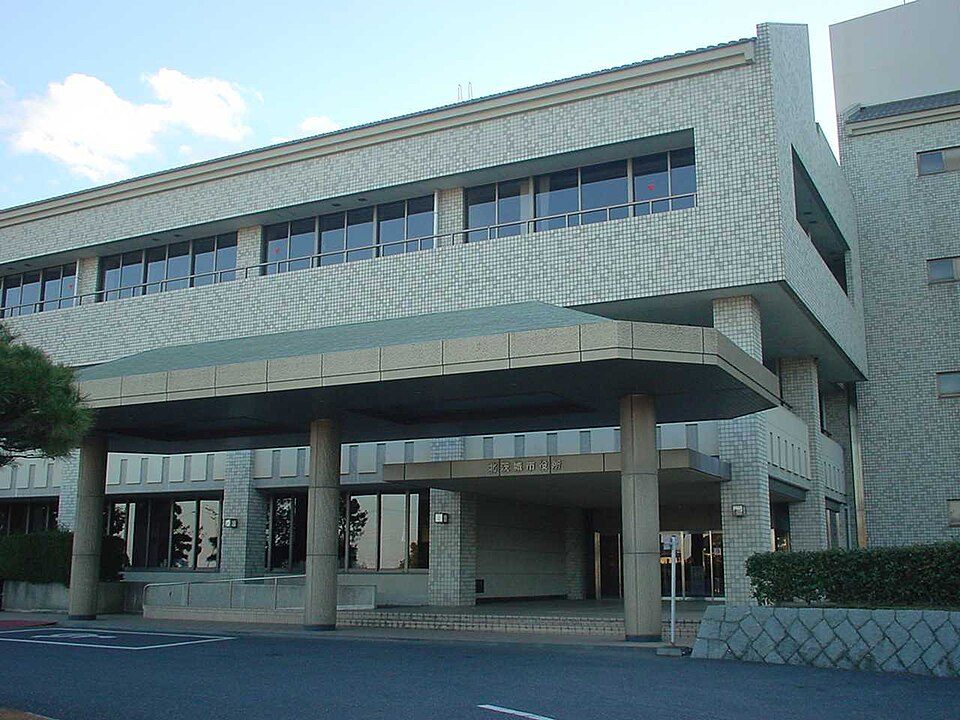
Kitaibaraki, Japan: Submarine Cable Landing Point
Kitaibaraki is a city in Ibaraki Prefecture, on the Pacific coast of Japan's main island of Honshu. As a submarine cable landing point, it hosts one international submarine cable that connects Japan to a network of countries across the Asia-Pacific region. Though modest in cable count relative to Japan's busiest landing hubs, Kitaibaraki participates in one of the most significant regional cable systems in East and Southeast Asia.
The single cable landing at Kitaibaraki, the APCN-2, spans an extensive 19,000 kilometres and links together multiple nations across the Asia-Pacific corridor. This positions Kitaibaraki as a terminus point within a broad intercontinental network connecting East Asian economies with Southeast Asian ones, running through the South China Sea and surrounding maritime regions.
Cables Landing at Kitaibaraki
APCN-2 (Asia Pacific Cable Network 2) is a submarine cable system measuring 19,000 kilometres in length, with a ready-for-service date of 2001. In addition to Kitaibaraki in Japan, the cable lands in China, Malaysia, the Philippines, Singapore, and South Korea, as well as at other landing points within Japan itself. The system forms a looped network across the Asia-Pacific, connecting East Asian and Southeast Asian nations in a single integrated cable infrastructure. Japan's participation on this cable extends to multiple domestic landing points, of which Kitaibaraki is one.
Regional Context
Within Japan's submarine cable geography, Kitaibaraki ranks among the more lightly served of the country's 68 landing points. Japan as a whole hosts 51 submarine cables across those 68 sites, and leading hubs such as Shima (12 cables), Maruyama (9 cables), and Chikura (8 cables) serve considerably more systems than Kitaibaraki. With a single cable, Kitaibaraki falls in the lower tier of Japan's landing point hierarchy by cable count, though it remains part of the country's distributed coastal infrastructure.
Network Role
Kitaibaraki functions as a single-cable terminus, serving as one of the Japanese endpoints of the APCN-2 system. Through this connection, the city participates in an Asia-Pacific corridor that spans China, South Korea, the Philippines, Malaysia, and Singapore, enabling connectivity across both East and Southeast Asia from a point on Japan's Pacific-facing coastline. The APCN-2 system, entering service in 2001, represents one of the earlier generation of high-capacity regional cable rings in the Asia-Pacific.
As a one-cable landing point, Kitaibaraki does not serve the aggregation function that Japan's larger hubs do, but it contributes to the geographic distribution of cable landings along the Honshu coast. In the broader submarine cable graph of the Asia-Pacific, this distributed model of landing infrastructure - spreading international cable touchpoints across multiple coastal cities - supports the resilience and reach of the region's subsea network.
What next: Kitaibaraki, Japan in the global directory of cable landing points; see surrounding routes on the interactive submarine cable map or follow live network monitoring.
Other Landing Points in Japan
Landing Point
- CountryJP Japan
- Coordinates36.8018°N 140.7510°E
- Connected Cables1
See Real Cable Routes
View actual submarine cable routing from Kitaibaraki, Japan - with backbone nodes, distance calculations, and latency estimates
Open Calculator →