Joetsu, Japan
Landing Point · JP Japan
Connected Cables
| Cable | Status |
|---|---|
| Russia-Japan Cable Network (RJCN) | Active |
Live Performance
RTT measurements to this landing point from 2026-03-07 through 2026-10-16 - live ICMP round-trip time via our monitoring probes. Recomputed daily. ✓ No anomalies detected in the monitored period.
Measurement sources
| Probe | Location | Samples | Avg |
|---|---|---|---|
| #4428 | control probe | 53 | 44.9 ms |
| #27925 | control probe | 19 | 232.3 ms |
| own probe | Almaty KZ | 13 | 303.6 ms |
| #6410 own probe | Sao Paulo BR | 10 | 280.8 ms |
| #6487 | control probe | 7 | 72.8 ms |
| own probe | Minsk BY | 3 | 270.8 ms |
| own probe | Tbilisi GE | 3 | 300.1 ms |
| own probe | Moscow RU | 3 | 238.6 ms |
| #7062 own probe | Cape Town ZA | 2 | 387.3 ms |
| #14390 | control probe | 1 | 18.7 ms |
| #30306 | control probe | 1 | 19.9 ms |
| #60782 | control probe | 1 | 18.4 ms |
| own probe | Jerusalem IL | 1 | 278.3 ms |
| own probe | Sevastopol UA | 1 | 290.5 ms |
About Joetsu, Japan
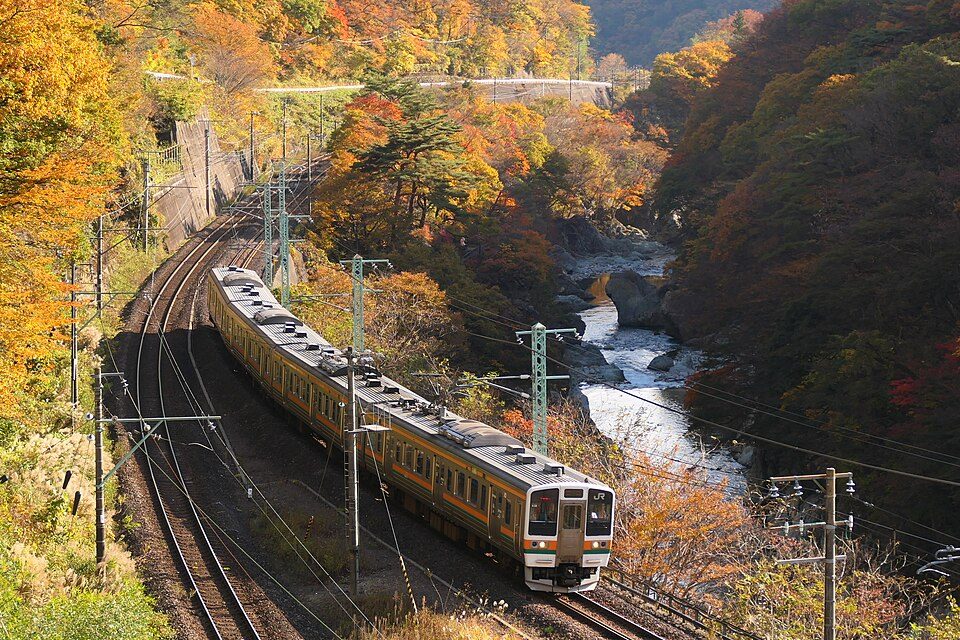
Joetsu, Japan: Submarine Cable Landing Point
Joetsu is a landing point located on the Sea of Japan coast of Japan, positioned along the northwestern coastal corridor that faces the Russian Far East across the sea. As a submarine cable landing point, Joetsu hosts one submarine cable, the Russia-Japan Cable Network (RJCN), which directly connects Japan to Russia. This single connection places Joetsu within a relatively distinct bilateral corridor, linking the Japanese coast to the Russian mainland rather than serving the broader transoceanic routes more commonly associated with Japan's cable infrastructure.
The cable landing at Joetsu enables a direct Japan-Russia link, a corridor that is geographically compact by international submarine cable standards. With a cable length of 1,800 kilometres, the Russia-Japan Cable Network is considerably shorter than the average submarine cable landing in Japan, reflecting the relatively close proximity of the two endpoints across the Sea of Japan. This makes Joetsu a focused terminus for a specific bilateral connection rather than a multi-corridor hub.
Cables Landing at Joetsu
The Russia-Japan Cable Network (RJCN) is the sole submarine cable landing at Joetsu. Spanning 1,800 kilometres, the cable reached ready-for-service status in 2008, currently listed with a draft status. The RJCN connects Japan and Russia, with Joetsu serving as the Japanese terminus of this bilateral link. The cable represents a direct Sea of Japan crossing between the two neighbouring countries.
Regional Context
Within Japan's submarine cable landscape, Joetsu hosts one cable across 68 landing points nationally, placing it among the more modestly connected landing points in the country. By comparison, Shima hosts 12 cables, Maruyama 9, and Chikura 8, while even the smaller hubs at Hachijo, Minamiboso, and Naha each host four cables. Joetsu's single-cable configuration reflects a specialised rather than aggregated role within Japan's broader submarine cable network.
Network Role
Joetsu functions as a single-cable terminus, serving exclusively as the Japanese endpoint of the Russia-Japan Cable Network. Its role is defined by this direct bilateral connection to Russia, a corridor that is geographically distinct from the transpacific and intra-Asian routes that characterise many of Japan's larger landing points. Rather than aggregating multiple international or regional cables, Joetsu provides a dedicated path between the two countries across the Sea of Japan.
Japan's overall submarine cable infrastructure encompasses 51 cables across 68 landing points, and within that network each terminus contributes to geographic diversity and route redundancy. Joetsu's position on the Sea of Japan coast, hosting a link specifically oriented toward Russia, adds a northwestward dimension to the broader pattern of Japan's international submarine connectivity.
What next: Joetsu, Japan in the global directory of cable landing points; see surrounding routes on the interactive submarine cable map or follow live network monitoring.
Our measurements to Joetsu
Traceroutes from our own measurement points over the last 30 days: usual delay and number of network hops on the way to Joetsu.
- From RIPE Atlas probes: 134 ms, 18 hops, 6 traces
Last trace: 2026-10-15. Live network map
Other Landing Points in Japan
Landing Point
- CountryJP Japan
- Coordinates37.1478°N 138.2361°E
- Connected Cables1
See Real Cable Routes
View actual submarine cable routing from Joetsu, Japan - with backbone nodes, distance calculations, and latency estimates
Open Calculator →