Hollis, AK, United States
Landing Point · US United States
1
Connected Cables
US
Country
55.51°
Latitude
133.02°
Longitude
Ctrl + Scroll to zoom
Connected Cables
| Cable | Status |
|---|---|
| SEALink South | Active |
Live Performance
20
measurements
9
probes
93
days monitored
153.7
ms avg RTT
0
anomalies
RTT measurements to this landing point from 2026-06-15 through 2026-09-16 - live ICMP round-trip time via our monitoring probes. Recomputed daily. ✓ No anomalies detected in the monitored period.
Measurement sources
| Probe | Location | Samples | Avg |
|---|---|---|---|
| #6427 own probe | Sydney AU | 3 | 184.0 ms |
| #7062 own probe | Cape Town ZA | 3 | 259.8 ms |
| own probe | Minsk BY | 3 | 190.9 ms |
| own probe | Moscow RU | 3 | 144.2 ms |
| #1012538 | control probe | 2 | 89.2 ms |
| #1012541 | control probe | 2 | 70.6 ms |
| #1012542 | control probe | 2 | 68.6 ms |
| own probe | Saint Petersburg RU | 1 | 134.8 ms |
| own probe | Kyiv UA | 1 | 145.6 ms |
About Hollis, AK, United States
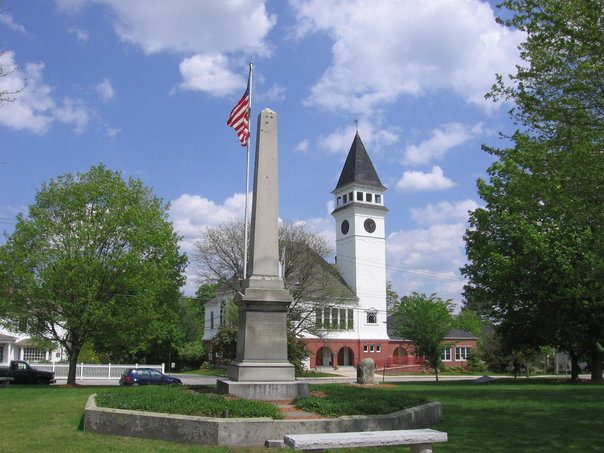
Hollis, AK: A Quiet Link in Alaska's Connectivity
Hollis, Alaska, may not be a household name in the world of submarine cable infrastructure, but its role in regional connectivity is quietly significant. This landing point hosts the SEALink South cable, a 159 km domestic connection that stitches together three locations in southeastern Alaska: Hollis, Coffman Cove, and Ketchikan. With a ready-for-service date of 2024, this cable represents a modern investment in local connectivity for a remote region.Regional Connectivity: Linking Hollis to Alaska's Coastline
Unlike major landing points across the United States, such as Boca Raton, FL, or Hermosa Beach, CA, which host multiple international cables, Hollis is part of a smaller domestic chain. The SEALink South cable does not extend beyond U.S. borders; instead, it serves as a critical link between communities in southeastern Alaska. This region, known for its rugged terrain and dispersed population, relies heavily on localized infrastructure to stay connected. Hollis's neighbors in this cable chain-Coffman Cove and Ketchikan-highlight the importance of regional connections. Ketchikan, the largest of the three, serves as a hub for commerce and transportation in the area. Hollis, by contrast, is a quieter spot, but its inclusion in the SEALink South network ensures that even smaller communities are part of Alaska's digital landscape.Latency and Performance: What GeoCables Observes
GeoCables has conducted 12 latency checks to Hollis from seven source cities, yielding an average round-trip latency of 103 ms. The best observed latency was an impressive 25 ms, showcasing the efficiency of this domestic cable. While these numbers are higher than those of major international hubs like Kapolei, HI, or San Juan, PR, they are well-suited to the needs of southeastern Alaska, where reliable connectivity is often more important than ultra-low latency.Hollis in Context
The United States hosts 113 submarine cables across 160 landing points, with an average cable length of 4,957 km. Hollis, with its single cable and relatively short connection of 159 km, ranks in the top 69% of U.S. landing points by cable count. While it may not rival larger hubs in scale, its role in the SEALink South chain ensures that southeastern Alaska remains connected to broader networks.A Modest but Meaningful Role
Hollis, AK, is not a bustling landing point with multiple international cables, nor does it serve as a gateway to global connectivity. Instead, it plays a modest but meaningful role in linking remote Alaskan communities. The SEALink South cable ensures that even in this rugged and isolated region, residents and businesses can access the digital tools they need to thrive. For Hollis, connectivity is not about global reach-it's about keeping Alaska connected to itself.What next: Hollis, AK, United States in the global directory of cable landing points; see surrounding routes on the interactive submarine cable map or follow live network monitoring.
Other Landing Points in United States
US Akutan, AK, United States
54.1356°N 165.7731°W
US Alakanuk, AK, United States
62.6847°N 164.6455°W
US Anchorage, AK, United States
61.2175°N 149.8584°W
US Angoon, AK, United States
57.5018°N 134.5823°W
US Bandon, OR, United States
43.1186°N 124.4082°W
US Barber’s Point, HI, United States
21.3138°N 158.0943°W
US Beaver Island, MI, United States
45.7409°N 85.5353°W
US Bellport, NY, United States
40.7555°N 72.9378°W
US Benton Harbor, MI, United States
42.1162°N 86.4545°W
US Boca Raton, FL, United States
26.3503°N 80.0889°W
US Brookhaven, NY, United States
40.7731°N 72.9123°W
US Buffalo, NY, United States
42.8854°N 78.8785°W
Landing Point
- CountryUS United States
- Coordinates55.5138°N 133.0219°W
- Connected Cables1
See Real Cable Routes
View actual submarine cable routing from Hollis, AK, United States - with backbone nodes, distance calculations, and latency estimates
Open Calculator →
Submarine cables
Land fiber
Live probes