Coffman Cove, AK, United States
Landing Point · US United States
Connected Cables
| Cable | Status |
|---|---|
| SEALink | Active |
| SEALink South | Active |
Live Performance
RTT measurements to this landing point from 2026-04-15 through 2026-08-21 - live ICMP round-trip time via our monitoring probes. Recomputed daily. ✓ No anomalies detected in the monitored period.
Measurement sources
| Probe | Location | Samples | Avg |
|---|---|---|---|
| own probe | Minsk BY | 7 | 145.3 ms |
| #6427 own probe | Sydney AU | 6 | 222.1 ms |
| own probe | Moscow RU | 6 | 132.5 ms |
| #7062 own probe | Cape Town ZA | 5 | 259.5 ms |
| own probe | Almaty KZ | 2 | 211.0 ms |
| own probe | Saint Petersburg RU | 2 | 135.2 ms |
| own probe | Tbilisi GE | 1 | 161.6 ms |
| own probe | Jerusalem IL | 1 | 158.1 ms |
| own probe | Sevastopol UA | 1 | 167.1 ms |
| own probe | Kyiv UA | 1 | 159.1 ms |
About Coffman Cove, AK, United States
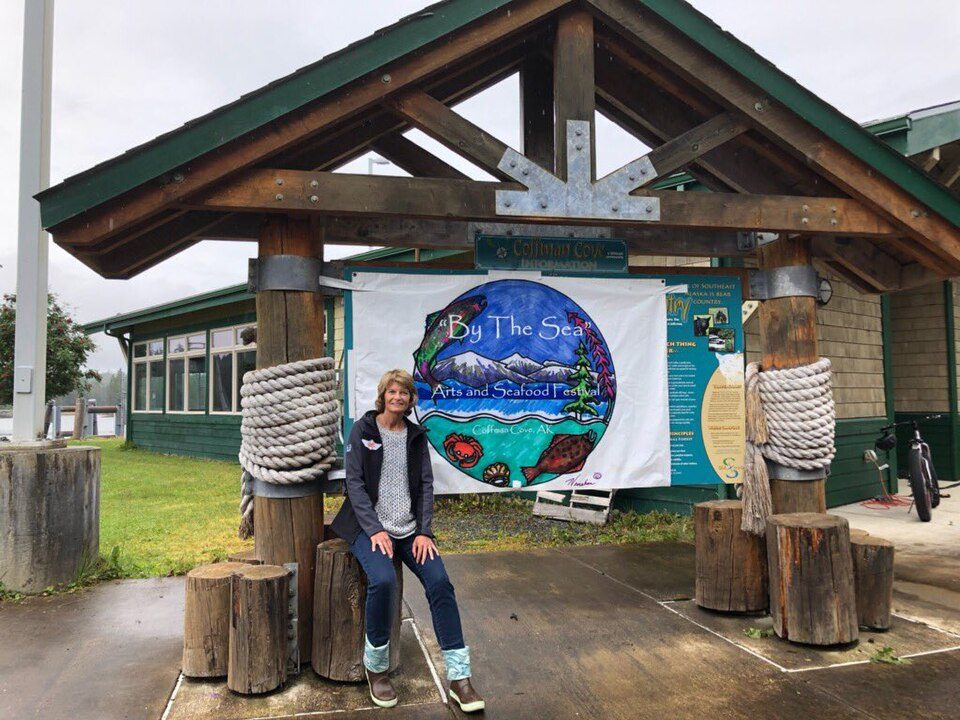
Coffman Cove, AK: Submarine Cable Landing Point
Coffman Cove is a small city located on Prince of Wales Island in the Prince of Wales-Hyder Census Area, Alaska, United States. Despite its modest size, with a population of 127 recorded at the 2020 census, it serves as a submarine cable landing point for two undersea cable systems. Both cables connecting here operate entirely within the United States, establishing Coffman Cove as a node in a domestic intra-national submarine cable corridor rather than an intercontinental or transoceanic one.
The two cables landing at Coffman Cove are SEALink and SEALink South. Both are relatively short systems by submarine cable standards, and both connect points within the United States, reflecting the geographic realities of Alaska's island communities, which rely on submarine fiber infrastructure to maintain connectivity with other parts of the state and country. Together, these two cables make Coffman Cove a meaningful point in Alaska's undersea network fabric.
Cables Landing at Coffman Cove
SEALink is a 345-kilometer submarine cable system with a ready-for-service (RFS) date of 2023, listed as draft status. All of its endpoints are located within the United States, reflecting its role as a domestic connectivity system serving Alaskan communities.
SEALink South is a 159-kilometer submarine cable system with an RFS date of 2024, also listed as draft status. Like SEALink, its endpoints are entirely within the United States. At approximately half the length of SEALink, SEALink South represents a shorter intra-national link, further reinforcing the domestic orientation of Coffman Cove's submarine cable infrastructure.
Regional Context
Within the United States, submarine cable landing points vary considerably in scale. Major hubs such as Boca Raton, FL and San Juan, PR each host eight cables, while Hermosa Beach, CA, Kapolei, HI, and Myrtle Beach, SC each host five. With two cables, Coffman Cove ranks in the top 84 percent of the country's 167 landing points by cable count, reflecting a modest but defined presence within the broader national submarine cable landscape.
Network Role
Coffman Cove functions as a two-cable domestic landing point, connecting Prince of Wales Island into the United States submarine cable network through the SEALink and SEALink South systems. Both cables are short by global standards and operate exclusively within the United States, placing Coffman Cove firmly within an intra-national corridor designed to serve Alaskan connectivity needs rather than international traffic routing.
As a landing point hosting two cables, Coffman Cove is not a single-terminus installation but a small multi-cable node. Its position in the regional submarine cable graph illustrates how island and remote communities within Alaska depend on dedicated undersea cable systems to establish and maintain connectivity that overland or satellite alternatives may not fully replicate.
What next: Coffman Cove, AK, United States in the global directory of cable landing points; see surrounding routes on the interactive submarine cable map or follow live network monitoring.
Other Landing Points in United States
Landing Point
- CountryUS United States
- Coordinates56.0152°N 132.8295°W
- Connected Cables2
See Real Cable Routes
View actual submarine cable routing from Coffman Cove, AK, United States - with backbone nodes, distance calculations, and latency estimates
Open Calculator →