Eureka, CA, United States
Landing Point · US United States
Connected Cables
| Cable | Status |
|---|---|
| Echo | Active |
| TPU | Active |
Live Performance
RTT measurements to this landing point from 2026-04-10 through 2026-10-16 - live ICMP round-trip time via our monitoring probes. Recomputed daily.
Measurement sources
| Probe | Location | Samples | Avg |
|---|---|---|---|
| #6681 | control probe | 172 | 213.6 ms |
| own probe | Moscow RU | 17 | 182.5 ms |
| #7062 own probe | Cape Town ZA | 16 | 296.6 ms |
| own probe | Minsk BY | 12 | 198.5 ms |
| own probe | Saint Petersburg RU | 7 | 162.4 ms |
| #18714 | control probe | 6 | 190.8 ms |
| #6487 | control probe | 1 | 228.9 ms |
| own probe | Almaty KZ | 1 | 194.7 ms |
| own probe | Tbilisi GE | 1 | 177.2 ms |
| own probe | Jerusalem IL | 1 | 159.5 ms |
About Eureka, CA, United States
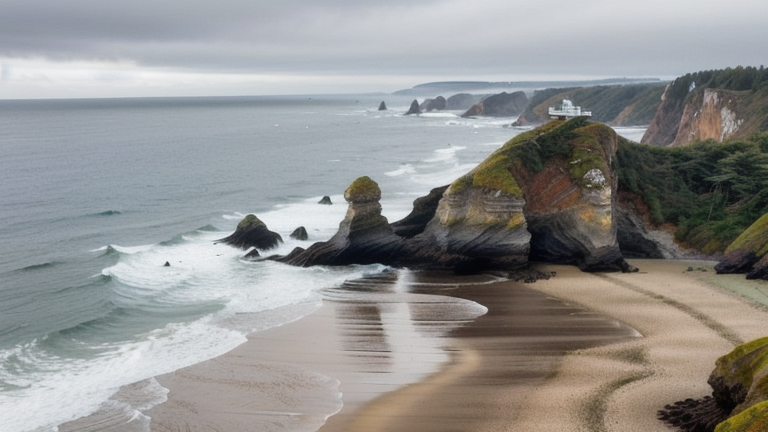
Eureka, CA: Submarine Cable Landing Point
Eureka, California sits on the northern coast of the United States, along the Pacific shore. As a submarine cable landing point, it hosts two international cables connecting the continental United States with destinations across the Pacific Ocean. These connections span vast transoceanic distances, linking Eureka to island territories, Southeast Asian nations, and East Asian economies.
Both cables landing at Eureka form part of trans-Pacific corridors, collectively reaching Guam, Indonesia, Palau, Singapore, the Northern Mariana Islands, the Philippines, and Taiwan. The combination of these two systems positions Eureka as a point of access to both Southeast Asia and Western Pacific island chains from the United States mainland.
Cables Landing at Eureka, CA
Echo is a submarine cable system measuring 17,184 km in length, with a ready-for-service date of 2025. In addition to Eureka, CA, Echo lands in Guam, Indonesia, Palau, and Singapore. The system spans a substantial portion of the Pacific Ocean, connecting the North American mainland to Southeast Asia and Pacific island territories.
TPU is a submarine cable system measuring 13,470 km in length, with a ready-for-service date of 2026. Alongside Eureka, CA, TPU lands in Guam, the Northern Mariana Islands, the Philippines, and Taiwan. This system extends trans-Pacific connectivity from the California coast northward and westward across the Pacific to East and Southeast Asian endpoints.
Regional Context
Within the United States, Eureka, CA hosts 2 submarine cables, placing it among the many landing points that serve the country's broader network of 113 cables across 160 landing points. Larger hubs in the United States include Boca Raton, FL and San Juan, PR, each with 8 cables, as well as Hermosa Beach, CA, Kapolei, HI, Myrtle Beach, SC, and Grover Beach, CA, which each host 4 to 5 cables. Eureka occupies a more focused role compared to these higher-density landing points, but its two cables are both long-haul trans-Pacific systems.
Network Role
Eureka, CA functions as a trans-Pacific gateway on the northern California coast, supporting two cable systems that together reach seven distinct international landing territories. With Echo entering service in 2025 and TPU scheduled for 2026, both systems represent recently developed or near-term capacity additions to the United States Pacific cable network. The cable routes from Eureka collectively serve island territories in the Western Pacific - Guam, Palau, and the Northern Mariana Islands - as well as major Southeast and East Asian economies including Singapore, Indonesia, the Philippines, and Taiwan.
Eureka is a two-cable terminus rather than a high-density hub, distinguishing it from multi-cable aggregation points elsewhere on the U.S. coast. Its presence in the submarine cable graph reflects the geographic value of northern California as a Pacific entry point, diversifying landfalls beyond the more concentrated cable clusters found further south along the same coastline.
What next: Eureka, CA, United States in the global directory of cable landing points; see surrounding routes on the interactive submarine cable map or follow live network monitoring.
Other Landing Points in United States
FAQ
Landing Point
- CountryUS United States
- Coordinates40.8033°N 124.1596°W
- Connected Cables2
See Real Cable Routes
View actual submarine cable routing from Eureka, CA, United States - with backbone nodes, distance calculations, and latency estimates
Open Calculator →