Network Pulse
Every natural event our monitoring has flagged near a submarine cable - newest first. Each entry shows what happened and whether our latency measurements detected any impact.
M4.5 earthquake · 75 km E of Hualien City, Taiwan

The submarine cable network remains stable, with 1844 latency checks conducted over the past 24 hours revealing no anomalies and zero active alerts. This indicates that the network is currently operating without any disruptions or issues.
As a point of reference, a M4.5 earthquake occurred on June 13, 2026, approximately 75 km east of Hualien City, Taiwan. All submarine cables with landing points within 350km of this event are functioning normally, as confirmed by our latency measurements which show no impact from the seismic activity.
M5.2 earthquake · 2 km WSW of Kablalan, Philippines

The submarine cable network remains stable with no anomalies detected over the past 24 hours from our 1842 latency checks across 647 cables. This confirms that the network is operating without issues.
On June 13, 2026, a M5.2 earthquake occurred near Kablalan, Philippines, within proximity to some of our monitored submarine cables. Despite this seismic event, all relevant cables with landing points within 350km are functioning normally and show no impact in our latency measurements.
M5 earthquake · 30 km SSW of Daliao, Philippines

The submarine cable network remains stable with 1876 latency checks conducted over the past 24 hours revealing no anomalies and zero active alerts. This ensures that data flows smoothly across our global network.
Contextually, a M5 earthquake occurred on June 12, 2026, near Daliao, Philippines. The cables with landing points within 350km of the event are operating normally, as indicated by our latency measurements which show no impact from the seismic activity.
M4.5 earthquake · 6 km SSE of Pangyan, Philippines

A magnitude 4.5 earthquake occurred on June 12, 2026, approximately 6 km southeast of Pangyan, Philippines. The event is located within a radius of 350km from several submarine cables with landing points in the region.
Our monitoring indicates that four submarine cables - Apricot, Asia Connect Cable-1 (ACC-1), Bifrost, and SEA-US - are potentially affected by the seismic activity. These cables land at Davao, Philippines, which is 163km from the epicenter. We have observed latency anomalies in these cables: Apricot has an average latency of ~160ms with 11 checks over a week, ACC-1 shows ~226ms with 92 checks, and Bifrost measures ~204ms with 41 checks. SEA-US also reports similar latency issues at ~203ms with 11 checks. The other cables in the vicinity - Palapa Ring Middle, PLDT Domestic Fiber Optic Network (DFON), Converge Domestic Submarine Cable Network (CDSCN), and Philippine Domestic Submarine Cable Network (PDSCN) - are not actively measured for latency changes due to their greater distance from the earthquake's epicenter.
M4.5 earthquake · 85 km S of Pýrgos, Greece

A magnitude 4.5 earthquake occurred on June 11, 2026, approximately 85 km south of Pýrgos, Greece. This event is within a range that could potentially impact submarine cable networks.
Our monitoring indicates that the 2Africa and India Europe Xpress (IEX) cables, which both land at Tympaki, Greece, are in close proximity to the earthquake's epicenter, being about 98 km away. Latency measurements for these cables show an average of ~189ms with 140 checks over seven days for 2Africa and ~134ms with 11 checks over seven days for IEX. No active alerts are currently in place, but we continue to monitor the situation closely.
M5.1 earthquake · 62 km S of Sarangani, Philippines

The submarine cable network remains stable with no anomalies detected over the past 24 hours from our extensive monitoring of 1810 latency checks across 648 cables.
On June 11, 2026, a M5.1 earthquake occurred near Sarangani, Philippines, affecting several cables within a 350km radius. However, all monitored submarine cables in the area are operating normally as indicated by our latency measurements, which show no impact from the seismic event.
M5.4 earthquake · 59 km S of Sarangani, Philippines

The submarine cable network remains stable with 1783 latency checks conducted over the past 24 hours, resulting in zero anomalies and no active alerts. This indicates that the global connectivity is uninterrupted and functioning as expected.
On June 11, 2026, a M5.4 earthquake occurred near Sarangani, Philippines. The submarine cables within 350km of this event are operating normally, with our latency measurements showing no impact from the seismic activity. All monitored cables in the vicinity continue to perform their functions without any changes in performance.
M5.5 earthquake · 58 km S of Sarangani, Philippines

On June 11, 2026, a M5.5 earthquake occurred approximately 58 km south of Sarangani, Philippines. Our monitoring currently shows no active alerts on the network but has identified one latency anomaly.
The affected submarine cables with landing points within 350km include Apricot, Asia Connect Cable-1 (ACC-1), Bifrost, and SEA-US, all landing at Davao, Philippines, which are approximately 246km from the earthquake's epicenter. Latency measurements show an average increase of about 140ms for Apricot, 181ms for ACC-1, 203ms for Bifrost, and 201ms for SEA-US over a period of seven days. These figures reflect potential impacts on network performance but do not indicate any active damage or outages.
M4.6 earthquake · 25 km ENE of Sibolga, Indonesia
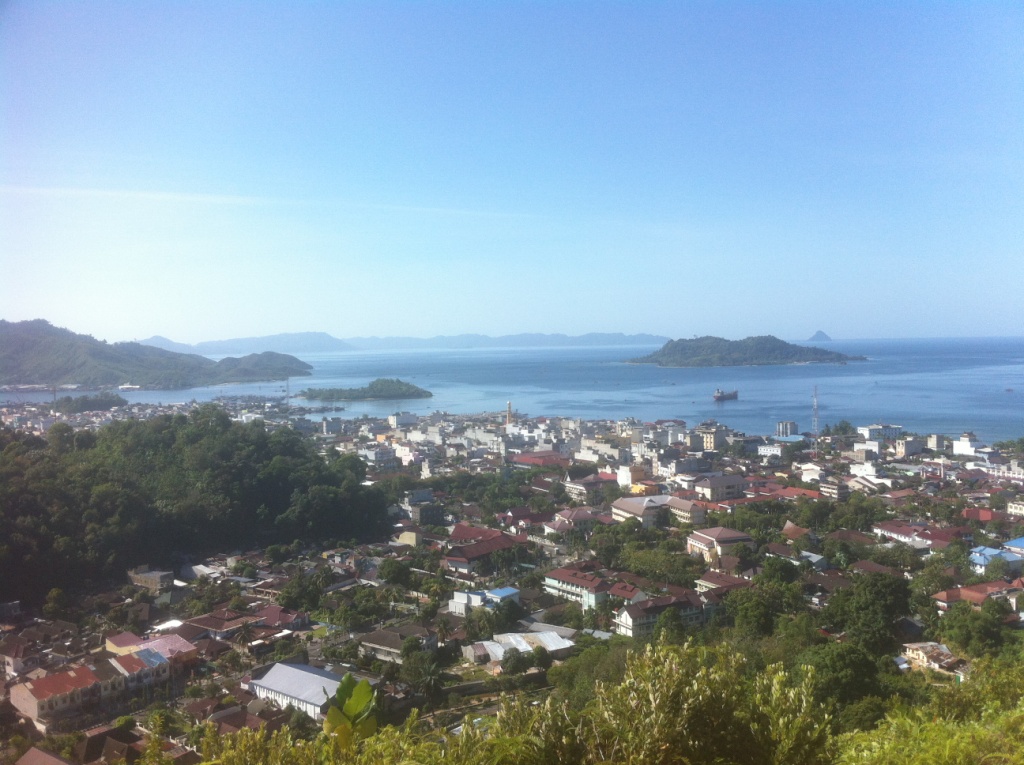
On June 10, 2026, a M4.6 earthquake occurred approximately 25 km ENE of Sibolga, Indonesia.
The affected submarine cables within 350km include SeaMeWe-5 and the Indonesia Global Gateway (IGG) System, both landing at Dumai, Indonesia, which are 276km from the event. Our latency measurements show that SeaMeWe-5 has an average latency of ~252ms with 5 checks per week, while the IGG System has an average latency of ~78ms with 30 checks per week. No active alerts have been triggered, and there is no evidence of damage or significant impact on these cables based on current monitoring.
M5 earthquake · 21 km SW of Balangonan, Philippines

On June 10, 2026, a magnitude 5 earthquake struck approximately 21 km southwest of Balangonan, Philippines. This event is located within 350km of several submarine cables, including the Apricot, Asia Connect Cable-1 (ACC-1), Bifrost, and SEA-US cables, which all land at Davao, Philippines.
Our latency monitoring indicates that these cables have experienced minor anomalies. Specifically, the average latency for the Apricot cable has increased by approximately 139ms over a period of seven days, while ACC-1 shows an increase of about 179ms. The Bifrost and SEA-US cables have seen increases of around 202ms and 201ms respectively. No active alerts are currently in place, indicating that the impact on these cables is minimal.
M4.71 earthquake · 23 km E of Pāpa‘ikou, Hawaii

A magnitude 4.71 earthquake occurred on June 10, 2026, approximately 23 km east of Pāpa‘ikou, Hawaii. The seismic event is located within a radius of 350km from several submarine cables that serve the Hawaiian Islands.
Our monitoring indicates latency anomalies for the Southern Cross Cable Network (SCCN), which has a landing point at Spencer Beach, HI, approximately 103 km from the earthquake's epicenter. The average latency increase measured is around 172ms with about 56 checks over seven days. Other cables in the vicinity, such as the Hawaiian Islands Fiber Link (HIFL) and Hawaii Inter-Island Cable System (HICS), are not actively monitored but could potentially be affected based on their proximity to the earthquake. For now, no active alerts have been triggered for these or other nearby submarine cables.
M5 earthquake · 6 km WSW of Burias, Philippines

The network remains stable with 1970 latency checks conducted across 645 submarine cables over the last 24 hours, revealing no anomalies or active alerts. This indicates that the global submarine cable system is functioning as expected. The recent M5 earthquake on June 10, 2026, near Burias, Philippines, did not affect the operations of the cables within the monitored range. All submarine cables with landing points within 350km from the epicenter are operating normally, and our latency measurements show no impact from the seismic event.