Tallinn, Estonia
Point d'atterrissage · EE Estonia
Câbles connectés
| Câble | Statut |
|---|---|
| Baltic Sea Submarine Cable | Actif |
| E-FINEST | Actif |
| Finland Estonia Connection 1 (FEC-1) | Actif |
| Finland Estonia Connection 2 (FEC-2) | Actif |
| Finland-Estonia 2 (EESF-2) | Actif |
| Mjolner East | Planifié |
| Sweden-Estonia (EE-S 1) | Actif |
Performance en direct
Mesures RTT vers ce point du 2026-04-10 au 2026-09-10 - RTT ICMP en direct via nos sondes de mesure. Recalculé quotidiennement. ✓ Aucune anomalie détectée sur la période.
Sources de mesure
| Sonde | Emplacement | Mesures | Moy. |
|---|---|---|---|
| sonde propre | Minsk BY | 22 | 42.7 ms |
| #6427 sonde propre | Sydney AU | 20 | 282.5 ms |
| sonde propre | Saint Petersburg RU | 20 | 22.0 ms |
| sonde propre | Moscow RU | 4 | 25.7 ms |
| sonde propre | Almaty KZ | 2 | 75.7 ms |
| sonde propre | Tbilisi GE | 2 | 80.8 ms |
| sonde propre | Jerusalem IL | 2 | 91.7 ms |
| #40 | control probe | 1 | 12.3 ms |
| #6410 sonde propre | Sao Paulo BR | 1 | 224.4 ms |
À propos Tallinn, Estonia
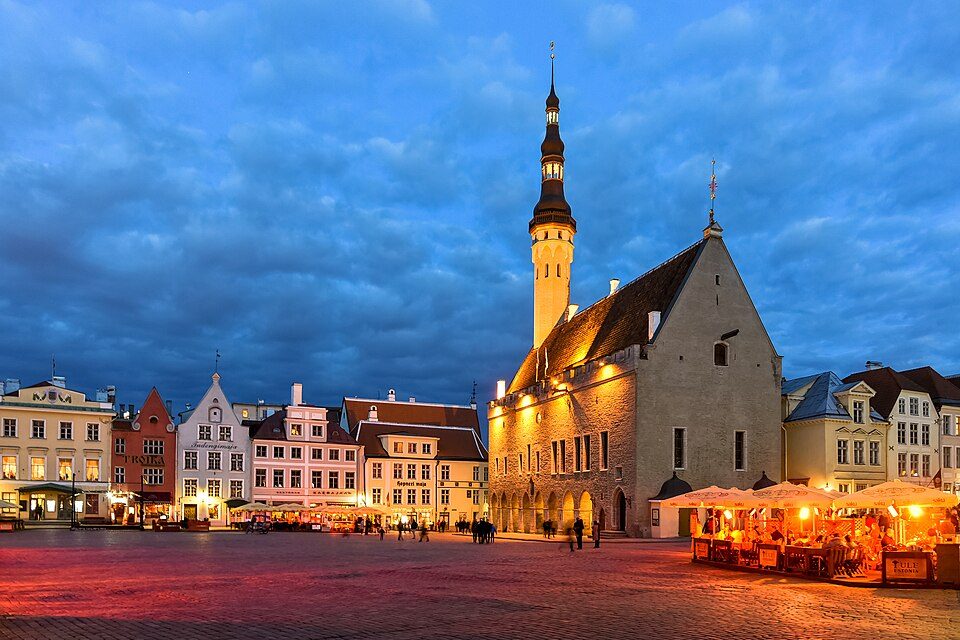
Tallinn, Estonie est un point d'atterrissement de câbles sous-marins en Estonie (coordonnées 59.4362°, 24.7524°). Il dessert 7 systèmes de câbles sous-marins, ce qui en fait un nœud important dans l'infrastructure de connectivité internationale de l'Estonie.
Tallinn est la capitale et la ville la plus peuplée d'Estonie. Située sur une baie au nord de l'Estonie, sur le rivage du golfe de Finlande dans la mer Baltique, elle compte une population de 456 518 habitants en 2025 et se trouve administrativement dans le comté de Harju. Tallinn est le principal centre gouvernemental, financier, industriel et culturel de l'Estonie. Elle est située à 187 kilomètres (116 mi) au nord-ouest de la deuxième plus grande ville du pays, Tartu, mais seulement à 80 kilomètres (50 mi) au sud d'Helsinki, Finlande. Elle se trouve également à 320 kilomètres (200 mi) à l'ouest de Saint-Pétersbourg, Russie, 300 kilomètres (190 mi) au nord de Riga, Lettonie, et 380 kilomètres (240 mi) à l'est de Stockholm, Suède. Du XIIIe siècle jusqu'à la première moitié du XXe siècle, Tallinn était connue dans la plupart du monde sous des variantes de son autre nom historique, Reval. Wikipedia
Câbles sous-marins connectés
| Câble | Mise en service | Longueur | Propriétaires |
|---|---|---|---|
| Mjolner East | 2027 | 450 km | GlobalConnect |
| E-FINEST | 2019 | -1 km | Elisa Corporation |
| Baltic Sea Submarine Cable | 2000 | 1 042 km | CITIC Telecom International |
| Finland Estonia Connection 1 (FEC-1) | 2000 | -1 km | Elisa Corporation |
| Finland Estonia Connection 2 (FEC-2) | 2000 | -1 km | Elisa Corporation |
| Sweden-Estonia (EE-S 1) | 1995 | 240 km | Arelion, GN Great Nordic, Telia Eesti (anciennement Eesti Telekom, … |
| Finland-Estonia 2 (EESF-2) | 1992 | 98 km | Arelion, Telia Eesti (anciennement Eesti Telekom, EMT, … |
Opérateurs présents à Tallinn, Estonie
Les câbles atterrissant à Tallinn, Estonie, sont exploités par 8 partenaires de consortium et opérateurs distincts, parmi lesquels Arelion, CITIC Telecom International, EMT, Elion), Elisa Corporation, GN Great Nordic, GlobalConnect, Telia Eesti (anciennement Eesti Telekom). Chaque câble est généralement détenu conjointement par un consortium d'opérateurs de premier rang et d'opérateurs hyperscales qui partagent les coûts de construction et la capacité ; la composition des opérateurs reflète à la fois les acteurs régionaux historiques et les acteurs mondiaux ayant un intérêt pour les routes desservies par ce point d'atterrissement.
Profil de connectivité
Depuis Tallinn, Estonie, le trafic international peut atteindre 3 pays via 7 systèmes de câbles. Les destinations incluent l'Estonie, la Finlande et la Suède. Grâce à de multiples chemins redondants, le trafic à ce point d'atterrissement peut être redirigé via des câbles alternatifs en cas de panne d'un système unique.
Statut de surveillance
Aucun incident de surveillance n'a été enregistré sur les câbles desservant Tallinn, Estonie, au cours des 90 derniers jours - tous les systèmes connectés sont restés dans les seuils de latence normaux. Notre réseau de surveillance échantillonne en continu la latence à partir de sondes externes vers des cibles accessibles via ces câbles.
À propos des câbles
- Mjolner East (2027) - Mjolner East est un câble sous-marin régional desservant 3 pays : Suède, Finlande, Estonie. Avec des points d'atterrissement à Farosund, Helsinki, Kihelkonna, Tallinn, il renforce la résilience de l'internet régional et offre une diversité de routes - essentielle en cas de défaillance des câbles voisins. En savoir plus →
- E-FINEST (2019) - E-FINEST est un câble sous-marin point à point reliant la Finlande et l'Estonie. Avec des points d'atterrissement à Espoo, Tallinn, il offre un chemin direct en fibre optique entre les deux pays, servant à la fois de route de données principale et d'option de redondance pour les systèmes de câbles voisins. En savoir plus →
- Baltic Sea Submarine Cable (2000) - Baltic Sea Submarine Cable est un câble sous-marin régional desservant 3 pays : Finlande, Suède, Estonie. Avec des points d'atterrissement à Helsinki, Stockholm, Tallinn, il renforce la résilience de l'internet régional et offre une diversité de routes - essentielle en cas de défaillance des câbles voisins. En savoir plus →
- Finland Estonia Connection 1 (FEC-1) (2000) - Finland Estonia Connection 1 (FEC-1) est un câble sous-marin point à point reliant la Finlande et l'Estonie. Avec des points d'atterrissement à Helsinki, Tallinn, il offre un chemin direct en fibre optique entre les deux pays, servant à la fois de route de données principale et d'option de redondance pour les systèmes de câbles voisins. En savoir plus →
- Finland Estonia Connection 2 (FEC-2) (2000) - Finland Estonia Connection 2 (FEC-2) est un câble sous-marin point à point reliant la Finlande et l'Estonie. Avec des points d'atterrissement à Helsinki, Tallinn, il offre un chemin direct en fibre optique entre les deux pays, servant à la fois de route de données principale et d'option de redondance pour les systèmes de câbles voisins. En savoir plus →
- Sweden-Estonia (EE-S 1) (1995) - Sweden-Estonia (EE-S 1) est un câble sous-marin point à point reliant l'Estonie et la Suède. Avec des points d'atterrissement à Kärdla, Stavsnas, Tallinn, il offre un chemin direct en fibre optique entre les deux pays, servant à la fois de route de données principale et d'option de redondance pour les systèmes de câbles voisins. En savoir plus →
- Finland-Estonia 2 (EESF-2) (1992) - Finland-Estonia 2 (EESF-2) est un câble sous-marin point à point reliant la Finlande et l'Estonie. Avec des points d'atterrissement à Helsinki, Tallinn, il offre un chemin direct en fibre optique entre les deux pays, servant à la fois de route de données principale et d'option de redondance pour les systèmes de câbles voisins. En savoir plus →
Et ensuite : Tallinn, Estonia dans l'annuaire mondial des points d'atterrissage; visualisez les routes environnantes sur la carte interactive des câbles ou suivez la surveillance réseau en direct.
Nos mesures vers Tallinn
Traceroutes depuis nos points de mesure sur les 30 derniers jours : délai habituel et nombre de sauts réseau jusqu'à Tallinn.
- Depuis les sondes RIPE Atlas : 20 ms, 9 sauts, 79 traces
- Depuis Minsk : 40 ms, 14 sauts, 58 traces
- Depuis Odessa : 40 ms, 12 sauts, 50 traces
- Depuis Kyiv : 42 ms, 6 sauts, 25 traces
- Depuis Moscou : 43 ms, 11 sauts, 58 traces
- Depuis Saint-Pétersbourg : 63 ms, 14 sauts, 50 traces
- Depuis Rostov : 66 ms, 13 sauts, 58 traces
- Depuis Sébastopol : 73 ms, 14 sauts, 57 traces
- Depuis Ekaterinbourg : 76 ms, 11 sauts, 22 traces
- Depuis Jérusalem : 86 ms, 13 sauts, 58 traces
- Depuis Tbilissi : 90 ms, 14 sauts, 58 traces
- Depuis Almaty : 95 ms, 15 sauts, 58 traces
Dernière trace : 2026-10-15. Carte réseau en direct
Autres points d'atterrissage en Estonia
Point d'atterrissage
- PaysEE Estonia
- Coordonnées59.4362°N 24.7524°E
- Câbles connectés7
Voir les routes réelles
Visualisez le routage réel des câbles sous-marins depuis Tallinn, Estonia - avec nœuds, distances et latence
Ouvrir le calculateur →