Sydney, NSW, Australia
Punto de amarre · AU Australia
Cables conectados
| Cable | Estado |
|---|---|
| APX East | Planificado |
| Coral Sea Cable System (CS²) | Activo |
| Gondwana-1 | Activo |
| Hawaiki | Activo |
| Hawaiki Nui 1 | Planificado |
| Honomoana | Activo |
| PIPE Pacific Cable-1 (PPC-1) | Activo |
| Sydney-Melbourne-Adelaide-Perth (SMAP) | Activo |
| Tabua | Activo |
| Tasman Ring Network | Planificado |
Rendimiento en vivo
Mediciones RTT a este punto de 2026-03-02 a 2026-10-16 - RTT ICMP en vivo mediante nuestras sondas. Recalculado diariamente.
Fuentes de medición
| Sonda | Ubicación | Muestras | Prom. |
|---|---|---|---|
| sonda propia | Minsk BY | 2402 | 303.3 ms |
| #6427 sonda propia | Sydney AU | 2401 | 0.2 ms |
| #6487 | control probe | 2241 | 93.0 ms |
| #7018 | control probe | 198 | 28.1 ms |
| #50365 | control probe | 141 | 47.6 ms |
| #7062 sonda propia | Cape Town ZA | 134 | 430.7 ms |
| #329 | control probe | 132 | 251.8 ms |
| #12721 | control probe | 100 | 177.1 ms |
| #4429 | control probe | 35 | 109.3 ms |
| #1132 | control probe | 30 | 185.2 ms |
| #32 | control probe | 24 | 179.6 ms |
| #6568 sonda propia | Singapore SG | 19 | 369.1 ms |
| sonda propia | Almaty KZ | 18 | 363.0 ms |
| sonda propia | Kyiv UA | 11 | 303.3 ms |
| sonda propia | Tbilisi GE | 8 | 343.6 ms |
| sonda propia | Jerusalem IL | 8 | 353.9 ms |
| #6410 sonda propia | Sao Paulo BR | 7 | 314.5 ms |
| sonda propia | Sevastopol UA | 7 | 356.7 ms |
| sonda propia | Moscow RU | 7 | 322.5 ms |
| sonda propia | Saint Petersburg RU | 7 | 348.8 ms |
Acerca de Sydney, NSW, Australia
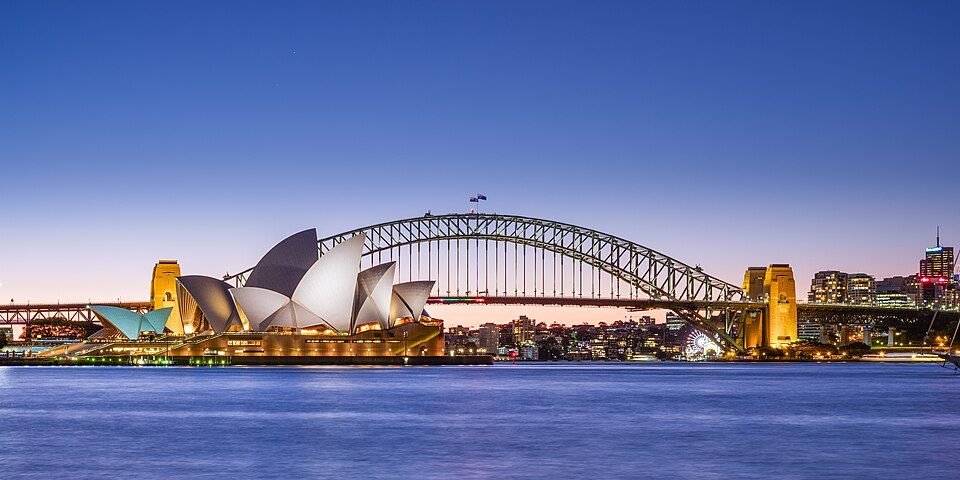
Posición en la infraestructura regional
Sydney es la ciudad más grande de Australia y el principal punto de amarre de cables submarinos del país, con instalaciones para el aterrizaje en coordenadas 33.869697°S, 151.207047°E en la costa de Nueva Gales del Sur. La ciudad se encuentra en el punto de convergencia de la infraestructura transpacífica de Australia: los cables que llegan a Estados Unidos (costa oeste y Hawái), Asia (Japón, Singapur, Guam), Nueva Zelanda, Polinesia Francesa y la red de islas del Pacífico más amplia. Sydney maneja una gran proporción del tráfico de internet entre Australia y el resto del mundo - su concentración de puntos de aterrizaje de cables hace que sea tanto un activo nacional crítico como un punto de congestión documentado para la conectividad australiana.
Beyond Sydney's role as a trans-Pacific gateway, the city anchors the eastern end of Australia's coastal submarine cable network reaching Melbourne, Adelaide, Perth, and Brisbane via the SMAP system. Cables here also extend northward into Papua New Guinea, the Coral Sea region, and ultimately onward to Pacific island states. Several major announced cables (Tabua, Honomoana, APX East, E2A, Hawaiki Nui 1, Tasman Ring) will land at Sydney in coming years, reinforcing rather than diluting Sydney's hub role.
Cables submarinos que aterrizan en Sydney
Hawaiki es un cable submarino de 14.000 km en servicio desde 2018, propiedad de BW Digital. Desde Sydney llega a Pago Pago (Samoa Americana), Mangawhai (Nueva Zelanda), Neiafu (Tonga) y Hillsboro y Kapolei en Estados Unidos - un importante camino transpacífico con paradas en islas del Pacífico.
PIPE Pacific Cable-1 (PPC-1) es un cable submarino de 6.900 km en servicio desde 2009, propiedad de Vocus Communications. Desde Sydney llega a Piti (Guam) y Madang (Papua Nueva Guinea) - proporcionando la conexión principal entre Papua Nueva Guinea y el resto del Asia-Pacífico.
Coral Sea Cable System (CS²) es un cable submarino de 4.700 km en servicio desde 2020, conjuntamente propiedad de PNG DataCo Limited y la Compañía Submarina de las Islas Salomón. Desde Sydney llega a Port Moresby (Papua Nueva Guinea) y cuatro puntos de aterrizaje en las Islas Salomón (Honiara, Auki, Noro, Taro).
Australia-Japan Cable (AJC) es un cable submarino de 12.700 km en servicio desde 2001, propiedad de una conjunción liderada por AT&T que incluye NTT, Softbank, Telstra y Verizon. Desde Sydney (puntos de aterrizaje en Oxford Falls y Paddington) llega a Guam (Punto Tanguisson y Bahía Tumon) y Japón (Maruyama y Shima) - un camino transpacífico de larga data.
Gondwana-1 es un cable submarino de 2.151 km en servicio desde 2008, propiedad de OPT (el incumbente de Nueva Caledonia). Desde Sydney llega a Noumea (Nueva Caledonia) - una conexión dedicada hacia la territorio francés del Pacífico.
Varios cables están programados para aterrizajes en Sydney en los próximos años: Honomoana (Google, RFS 2026, 15.215 km, hasta Polinesia Francesa y la costa oeste de Estados Unidos), Tabua (Google, RFS 2026, hacia Fiyi y Hawái y la costa oeste de Estados Unidos), APX East (SUBCO, RFS 2028, hacia Fiyi y Hawái y la costa oeste de Estados Unidos), Hawaiki Nui 1 (BW Digital, RFS 2027, sistema hiperscaler multi-landing entre Australia y Asia), Tasman Ring Network (Datagrid New Zealand, RFS 2027, hacia Melbourne y cuatro puntos de aterrizaje en Nueva Zelanda) y SMAP (SUBCO, RFS 2026, anillo costero australiano Sydney-Melbourne-Adelaide-Perth).
Tópologia de conexión y redundancia
El portafolio diverso de cables submarinos en Sydney da a Australia una fuerte redundancia internacional: Hawaiki y AJC proporcionan rutas transpacíficas hacia Asia/Estados Unidos por diferentes caminos; PPC-1 y Coral Sea dan rutas hacia Papua Nueva Guinea e Islas Salomón; Gondwana-1 proporciona una conexión dedicada a la Nueva Caledonia. La mezcla de operadores (BW Digital, Vocus, conjunción liderada por AT&T, OPT, PNG DataCo, etc.) proporciona diversidad operativa en este único punto de aterrizaje.
Las implementaciones programadas para 2026-2028 (Honomoana, Tabua, APX East, Hawaiki Nui 1, Tasman Ring, SMAP) expandirán dramáticamente el número de cables en Sydney, con múltiples nuevos sistemas hiperscaler propiedad de Google entre ellos. Esta inversión continuada en infraestructura refleja la importancia estructural de Sydney como la principal puerta submarina a Australia - y concentra el riesgo: una interrupción mayor en los manojos de playas o ductos en el extremo costero de Sydney afectaría la conexión de Australia con una gran proporción del tejido de cables transpacíficos.
Geografía e coordenadas
El área de aterrizaje de cables submarinos en Sydney se centra en 33.869697°S, 151.207047°E (33°52'10"S, 151°12'25"E), en la costa de Nueva Gales del Sur de Australia oriental. Los principales puntos de aterrizaje incluyen Oxford Falls y Paddington (usados por AJC y otros sistemas). El acceso profundo al Mar Tasman proporciona corredores apropiados para el aterrizaje de cables submarinos cerca de la costa, mientras que el estatus de Sydney como centro comercial importante respalda el ecosistema de centros de datos que impulsa la demanda de ancho de banda en la ciudad.
Preguntas frecuentes
¿Qué cables submarinos aterrizan en Sydney, Australia?
Sydney alberga varios cables principales en servicio: Hawaiki (RFS 2018), PPC-1 (RFS 2009), Coral Sea (CS², RFS 2020), Australia-Japan Cable (AJC, RFS 2001) y Gondwana-1 (RFS 2008). Varios cables principales adicionales están programados para aterrizajes en Sydney en los años 2026-2028: Honomoana, Tabua, APX East, Hawaiki Nui 1, Tasman Ring Network y SMAP.
¿Cuáles son las coordenadas del aterrizaje de cables submarinos en Sydney?
El principal área de aterrizaje de cables submarinos en Sydney se encuentra en 33.869697°S, 151.207047°E (33°52'10"S, 151°12'25"E), en la costa de Nueva Gales del Sur. Los puntos de aterrizaje específicos incluyen Oxford Falls y Paddington para varios sistemas de cables.
¿Qué países se conectan con Australia a través de Sydney?
Australia llega a los Estados Unidos (Hawaii y costa oeste de Estados Unidos vía Hawaiki, AJC, planes Tabua, APX East, Honomoana), Japón (vía AJC), Nueva Zelanda (vía Hawaiki, Tasman Ring), Guam (vía PPC-1, AJC), Papua Nueva Guinea (vía PPC-1, Coral Sea), las Islas Salomón (vía Coral Sea), Nueva Caledonia (vía Gondwana-1), Samoa Americana (vía Hawaiki), Tonga (vía Hawaiki), Fiyi (vía planes Tabua, APX East) y Polinesia Francesa (vía planes Honomoana).
¿Cuándo se colocó el primer cable submarino en Sydney?
El primer aterrizaje de cables submarinos actualmente en servicio en la base de datos GeoCables es el Australia-Japan Cable (AJC), desde 2001. Cables anteriores de cobre y generaciones tempranas de fibra óptica predecesores de AJC ya no son los principales portadores del tráfico transpacífico australiano.
¿Quiénes operan los cables que aterrizan en Sydney?
Sydney's cables are operated by a diverse mix of operators: BW Digital (Hawaiki), Vocus Communications (PPC-1), the AT&T-led AJC consortium, OPT (Gondwana-1), PNG DataCo and Solomon Island Submarine Cable Company (Coral Sea), with announced future cables operated by Google (Honomoana, Tabua), SUBCO (APX East, SMAP), and Datagrid New Zealand (Tasman Ring).
Qué más: Sydney, NSW, Australia en el directorio global de puntos de amarre; vea las rutas cercanas en el mapa interactivo de cables o siga la supervisión de red en vivo.
Otros puntos de amarre en Australia
FAQ
Punto de amarre
- PaísAU Australia
- Coordenadas33.8697°S 151.2070°E
- Cables conectados10
Ver rutas reales
Visualice el enrutamiento real de cables submarinos desde Sydney, NSW, Australia - con nodos, distancias y latencia
Abrir calculadora →