Cape Jervis, SA, Australia
Landing Point · AU Australia
Connected Cables
| Cable | Status |
|---|---|
| Kangaroo Island 2 | Active |
Live Performance
RTT measurements to this landing point from 2026-04-17 through 2026-08-26 - live ICMP round-trip time via our monitoring probes. Recomputed daily. ✓ No anomalies detected in the monitored period.
Measurement sources
| Probe | Location | Samples | Avg |
|---|---|---|---|
| #6427 own probe | Sydney AU | 20 | 6.3 ms |
| #6487 | control probe | 20 | 37.7 ms |
| own probe | Minsk BY | 20 | 315.1 ms |
| #7062 own probe | Cape Town ZA | 8 | 392.6 ms |
| own probe | Saint Petersburg RU | 5 | 300.8 ms |
| own probe | Almaty KZ | 2 | 297.6 ms |
| own probe | Tbilisi GE | 2 | 285.2 ms |
| own probe | Jerusalem IL | 2 | 298.8 ms |
| own probe | Moscow RU | 2 | 268.2 ms |
| own probe | Sevastopol UA | 1 | 278.4 ms |
| own probe | Odessa UA | 1 | 264.1 ms |
About Cape Jervis, SA, Australia
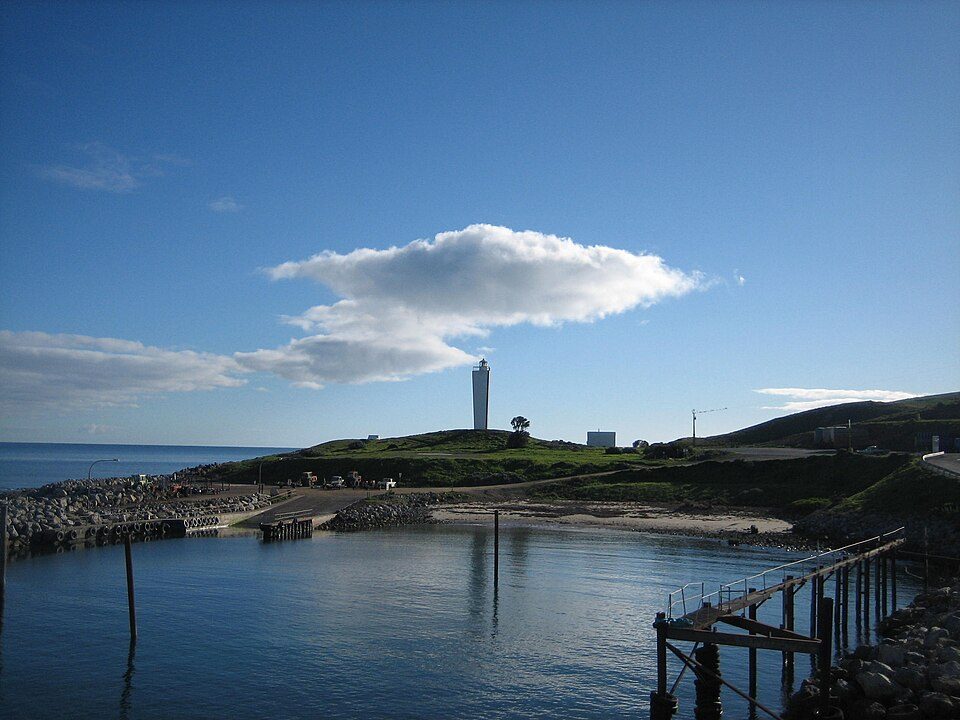
Cape Jervis, SA, Australia: Submarine Cable Landing Point
Cape Jervis is a town in South Australia, situated near the western tip of the Fleurieu Peninsula approximately 88 kilometres south of Adelaide. Located on the southern coastline of the Australian mainland, it serves as a submarine cable landing point within Australia's broader network of 31 submarine cables spread across 27 landing points. One submarine cable currently lands at Cape Jervis, connecting it to another location within Australia and placing it within the category of domestic, intra-national cable infrastructure.
The single cable landing at Cape Jervis, the Kangaroo Island 2, operates entirely within Australian territory, making this landing point a node in a regional rather than intercontinental corridor. This positions Cape Jervis as a domestically oriented landing point, focused on providing connectivity between the South Australian mainland and Kangaroo Island.
Cables Landing at Cape Jervis
Kangaroo Island 2 is the submarine cable landing at Cape Jervis. Scheduled for readiness in 2024 as a draft system, this cable links Cape Jervis with another landing point in Australia, forming an intra-national submarine connection. As both endpoints of the Kangaroo Island 2 cable are located within Australia, the cable serves a domestic connectivity function. No further technical specifications regarding cable length or capacity are available for this system.
Regional Context
Within Australia's submarine cable landscape, Cape Jervis hosts one cable, placing it among the smaller landing points in the country. Major hubs such as Sydney, NSW, with ten cables, and Darwin, NT, and Perth, WA, each with five cables, handle significantly greater volumes of submarine cable traffic. Cape Jervis nonetheless falls within the top 63 percent of Australia's 27 landing points by cable count, reflecting that many Australian landing points also serve narrow, specialised connectivity roles.
Network Role
Cape Jervis functions as a single-cable terminus, with the Kangaroo Island 2 system providing a dedicated submarine link between the South Australian mainland and the island it serves. Unlike multi-cable hubs such as Sydney or Melbourne, Cape Jervis does not aggregate international or intercontinental traffic; its role is defined entirely by the domestic corridor established through Kangaroo Island 2. This specialisation is characteristic of landing points that exist to solve a specific geographic connectivity challenge - in this case, extending reliable submarine cable infrastructure across a body of water separating an island community from the mainland.
Within the broader Australian submarine cable graph, Cape Jervis represents the kind of localised, purpose-built landing point that complements the major international gateways by addressing intra-national connectivity needs that terrestrial networks cannot easily fulfil.
What next: Cape Jervis, SA, Australia in the global directory of cable landing points; see surrounding routes on the interactive submarine cable map or follow live network monitoring.
Other Landing Points in Australia
Landing Point
- CountryAU Australia
- Coordinates35.6032°S 138.1037°E
- Connected Cables1
See Real Cable Routes
View actual submarine cable routing from Cape Jervis, SA, Australia - with backbone nodes, distance calculations, and latency estimates
Open Calculator →