Puerto Cabello, Venezuela
Landing Point · VE Venezuela
1
Connected Cables
VE
Country
10.48°
Latitude
68.01°
Longitude
Ctrl + Scroll to zoom
Connected Cables
| Cable | Status |
|---|---|
| Venezuelan Festoon | Active |
Live Performance
38
measurements
13
probes
171
days monitored
150.4
ms avg RTT
0
anomalies
RTT measurements to this landing point from 2026-04-11 through 2026-09-30 - live ICMP round-trip time via our monitoring probes. Recomputed daily. ✓ No anomalies detected in the monitored period.
Measurement sources
| Probe | Location | Samples | Avg |
|---|---|---|---|
| own probe | Minsk BY | 6 | 144.4 ms |
| #6410 own probe | Sao Paulo BR | 4 | 115.8 ms |
| #6427 own probe | Sydney AU | 4 | 274.2 ms |
| #6487 | control probe | 3 | 255.5 ms |
| #62001 | control probe | 3 | 93.5 ms |
| #62891 | control probe | 3 | 4.7 ms |
| own probe | Almaty KZ | 3 | 152.5 ms |
| own probe | Saint Petersburg RU | 3 | 143.9 ms |
| own probe | Tbilisi GE | 2 | 174.7 ms |
| own probe | Jerusalem IL | 2 | 161.4 ms |
| own probe | Moscow RU | 2 | 235.7 ms |
| #1016696 | control probe | 2 | 8.1 ms |
| own probe | Sevastopol UA | 1 | 178.4 ms |
About Puerto Cabello, Venezuela
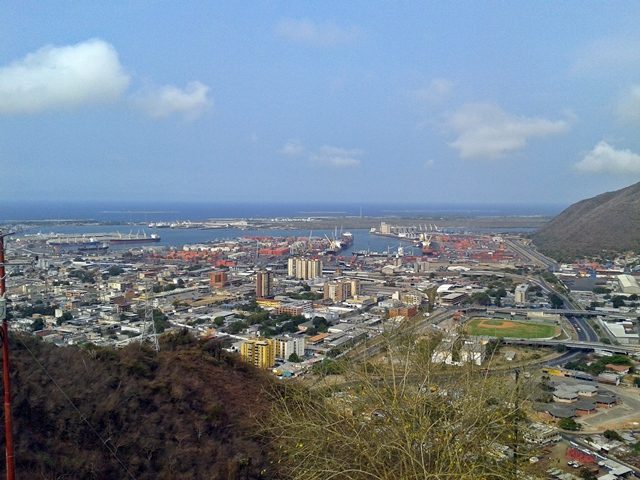
Puerto Cabello: A Key Connection on Venezuela's Coast
Puerto Cabello, located on Venezuela's north coast in Carabobo State, serves as a landing point for the Venezuelan Festoon cable. This cable, operational since 1998, forms part of a domestic network connecting 12 locations across Venezuela. While Puerto Cabello hosts just one cable, its strategic importance lies in its role as a link in this nationwide chain.The Venezuelan Festoon Cable
The Venezuelan Festoon spans 1200 km and exclusively serves Venezuela, connecting coastal cities such as Cabimas, Camuri, Carúpano, and others. Puerto Cabello is one of these 12 landing points, positioned alongside peers like Punto Fijo (which hosts two cables) and Chichiriviche (which hosts one). Despite hosting only one cable, Puerto Cabello ranks in the top 93% of Venezuela's landing points by cable count, underscoring the relatively even distribution of connectivity across the country.Latency and Performance
GeoCables' unique latency measurements show an average round-trip latency of 189 ms from Puerto Cabello to nine source cities, with the best observed latency at 141 ms. These figures highlight the efficiency of the Venezuelan Festoon cable in maintaining stable connectivity for local and regional networks.A City Anchored by Industry
Puerto Cabello is home to Venezuela's largest and busiest port, making it a hub for the country's oil industry and international trade. The city's economic activity depends heavily on reliable communications, whether for coordinating logistics or supporting the broader infrastructure tied to its port operations. The Venezuelan Festoon cable ensures that Puerto Cabello remains connected to the rest of the country, enabling the flow of data critical for its industries.Connectivity in Context
Venezuela hosts five submarine cables across 15 landing points, with Puerto Cabello playing its part in this network. While it does not connect internationally, the Venezuelan Festoon cable stitches together the country's coastal cities, ensuring that places like Puerto Cabello remain integrated into the national communications framework. This domestic focus reflects the cable's design as a key element for Venezuela's internal connectivity.Conclusion
Puerto Cabello may host only one submarine cable, but its role within the Venezuelan Festoon network is significant. As a city with a bustling port and a connection to Venezuela's oil industry, reliable domestic connectivity is essential. The Venezuelan Festoon cable ensures that Puerto Cabello remains linked to the rest of the country, supporting its industries and maintaining its position as a key node in Venezuela's coastal network.What next: Puerto Cabello, Venezuela in the global directory of cable landing points; see surrounding routes on the interactive submarine cable map or follow live network monitoring.
Other Landing Points in Venezuela
VE Cabimas, Venezuela
10.3960°N 71.4511°W
VE Camuri, Venezuela
10.6065°N 66.8782°W
VE Carúpano, Venezuela
10.6668°N 63.2505°W
VE Chichiriviche, Venezuela
10.9286°N 68.2845°W
VE Coro, Venezuela
11.4028°N 69.6778°W
VE Cumaná, Venezuela
10.4543°N 64.1821°W
VE Higuerote, Venezuela
10.4803°N 66.0981°W
VE La Guaira, Venezuela
10.6032°N 66.8896°W
VE Maiquetia, Venezuela
10.5994°N 66.9603°W
VE Maracaibo, Venezuela
10.6882°N 71.5984°W
VE Porlamar, Venezuela
10.9553°N 63.8476°W
VE Puerto La Cruz, Venezuela
10.2025°N 64.6449°W
Landing Point
- CountryVE Venezuela
- Coordinates10.4781°N 68.0096°W
- Connected Cables1
See Real Cable Routes
View actual submarine cable routing from Puerto Cabello, Venezuela - with backbone nodes, distance calculations, and latency estimates
Open Calculator →
Submarine cables
Land fiber
Live probes