Porto Velho, Brazil
Landing Point · BR Brazil
Connected Cables
| Cable | Status |
|---|---|
| Norte Conectado (Infovia 05) | Planned |
Live Performance
RTT measurements to this landing point from 2026-05-06 through 2026-10-08 - live ICMP round-trip time via our monitoring probes. Recomputed daily. ✓ No anomalies detected in the monitored period.
Measurement sources
| Probe | Location | Samples | Avg |
|---|---|---|---|
| #6410 own probe | Sao Paulo BR | 62 | 4.8 ms |
| #7062 own probe | Cape Town ZA | 57 | 358.5 ms |
| #1014589 own probe | Almaty KZ | 38 | 324.9 ms |
| #6487 | control probe | 25 | 342.5 ms |
| #1014473 own probe | Minsk BY | 11 | 274.4 ms |
| #6568 own probe | Singapore SG | 3 | 394.4 ms |
| #6427 own probe | Sydney AU | 1 | 315.3 ms |
| #1014597 own probe | Tbilisi GE | 1 | 291.1 ms |
| #1014969 own probe | Jerusalem IL | 1 | 283.7 ms |
| #1015523 own probe | Moscow RU | 1 | 257.1 ms |
| #1015563 own probe | Saint Petersburg RU | 1 | 277.0 ms |
About Porto Velho, Brazil
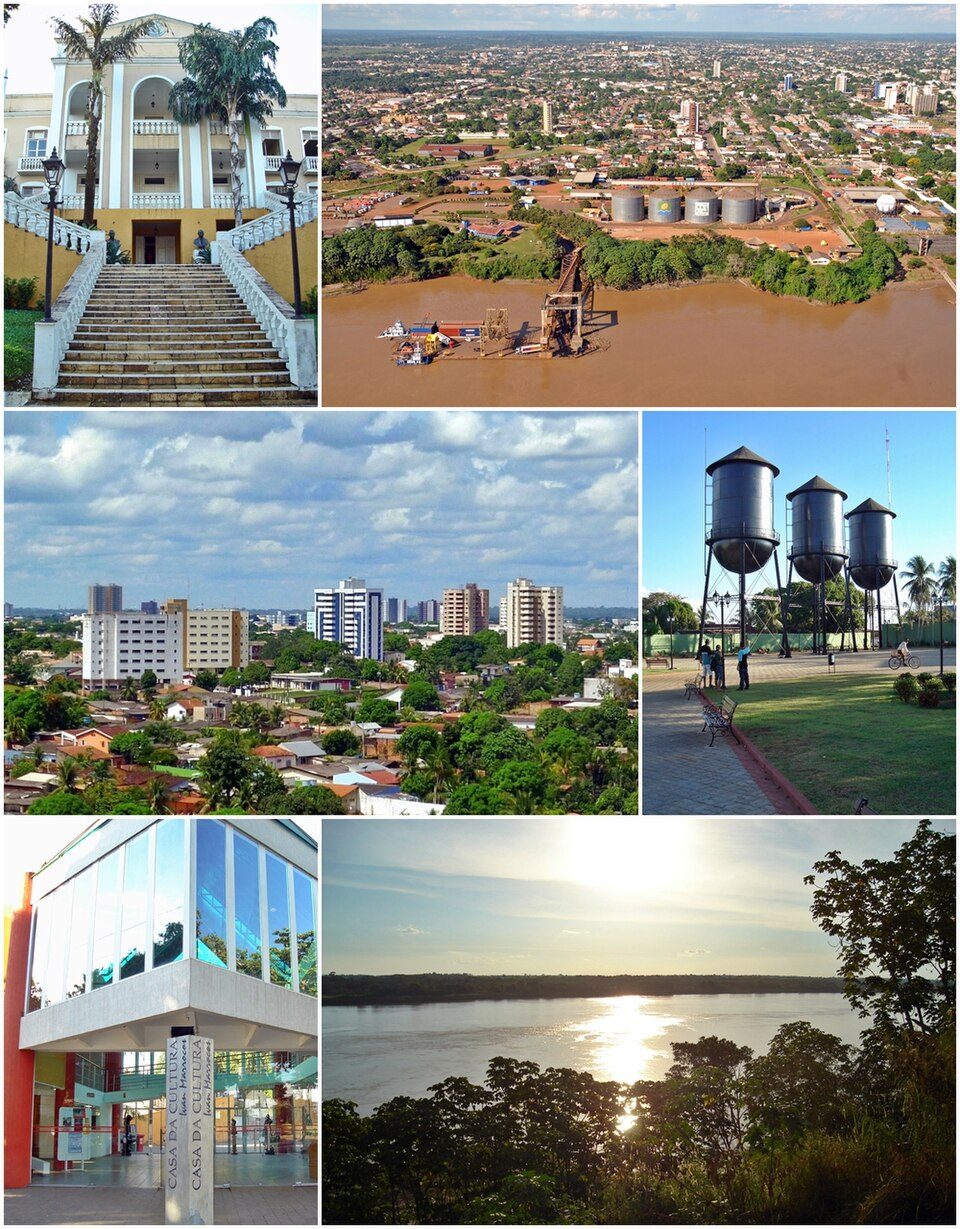
Porto Velho, Brazil: Submarine Cable Landing Point
Porto Velho is the capital of the Brazilian state of Rondônia, situated in the upper Amazon River basin on the eastern shore of the Madeira River. Although far removed from Brazil's Atlantic coastline, Porto Velho is a designated landing point for a submarine cable system, reflecting the broader definition of cable infrastructure that extends into inland waterway corridors. One submarine cable lands at Porto Velho, connecting it to the wider national network through the Norte Conectado (Infovia 05) system.
The cable landing at Porto Velho operates within an entirely domestic corridor, linking Brazilian locations to one another rather than reaching international destinations. This positions Porto Velho as part of an intra-national connectivity effort, extending modern fiber-optic infrastructure into the Amazon interior of Brazil.
Cables Landing at Porto Velho
Norte Conectado (Infovia 05) is currently in draft status and represents the single submarine cable landing at Porto Velho. The cable connects locations within Brazil, running entirely between domestic endpoints. As a draft project, it forms part of a planned expansion of submarine cable routes into the northern and Amazonian regions of the country. No length, ready-for-service date, or additional technical specifications are confirmed at this stage.
Regional Context
Within Brazil's submarine cable landscape, Porto Velho ranks among the smaller landing points by cable count. Major Brazilian hubs such as Fortaleza, with ten cables, and Rio de Janeiro, with eight, represent the high end of the national network, while Porto Velho's single cable places it in the lower tier of Brazil's 64 landing points. It is comparable in scale to Autazes, another inland Amazonian landing point that hosts two cables, suggesting a pattern of emerging connectivity efforts across the Brazilian interior.
Network Role
Porto Velho functions as a single-cable terminus within a domestic submarine cable route. Its role is oriented toward extending fiber-optic connectivity into the interior of Brazil, particularly the Amazon basin, rather than serving as an international gateway. The Norte Conectado (Infovia 05) project, of which it forms a part, reflects a national-level effort to integrate remote and inland Brazilian cities into the country's broader telecommunications fabric.
As a draft-status landing point hosting one planned domestic cable, Porto Velho represents the frontier of Brazil's expanding submarine cable geography. Its inclusion in the national landing point network signals that submarine cable infrastructure in Brazil is not limited to the Atlantic coastline, and that inland waterway corridors are increasingly being considered as routes for extending high-capacity connectivity across the country's vast interior.
What next: Porto Velho, Brazil in the global directory of cable landing points; see surrounding routes on the interactive submarine cable map or follow live network monitoring.
Other Landing Points in Brazil
Landing Point
- CountryBR Brazil
- Coordinates8.7617°S 63.9020°W
- Connected Cables1
See Real Cable Routes
View actual submarine cable routing from Porto Velho, Brazil - with backbone nodes, distance calculations, and latency estimates
Open Calculator →