Amaturá, Brazil
Landing Point · BR Brazil
1
Connected Cables
BR
Country
3.36°
Latitude
68.20°
Longitude
Ctrl + Scroll to zoom
Connected Cables
| Cable | Status |
|---|---|
| Norte Conectado (Infovia 02) | Active |
Live Performance
31
measurements
10
probes
149
days monitored
268.0
ms avg RTT
0
anomalies
RTT measurements to this landing point from 2026-03-21 through 2026-08-18 - live ICMP round-trip time via our monitoring probes. Recomputed daily. ✓ No anomalies detected in the monitored period.
Measurement sources
| Probe | Location | Samples | Avg |
|---|---|---|---|
| own probe | Minsk BY | 6 | 272.5 ms |
| own probe | Almaty KZ | 6 | 316.1 ms |
| own probe | Tbilisi GE | 4 | 285.6 ms |
| own probe | Jerusalem IL | 4 | 273.4 ms |
| #6410 own probe | Sao Paulo BR | 2 | 16.1 ms |
| #6487 | control probe | 2 | 367.8 ms |
| #7062 own probe | Cape Town ZA | 2 | 361.6 ms |
| #65263 | control probe | 2 | 117.1 ms |
| own probe | Moscow RU | 2 | 254.9 ms |
| own probe | Sevastopol UA | 1 | 306.6 ms |
About Amaturá, Brazil
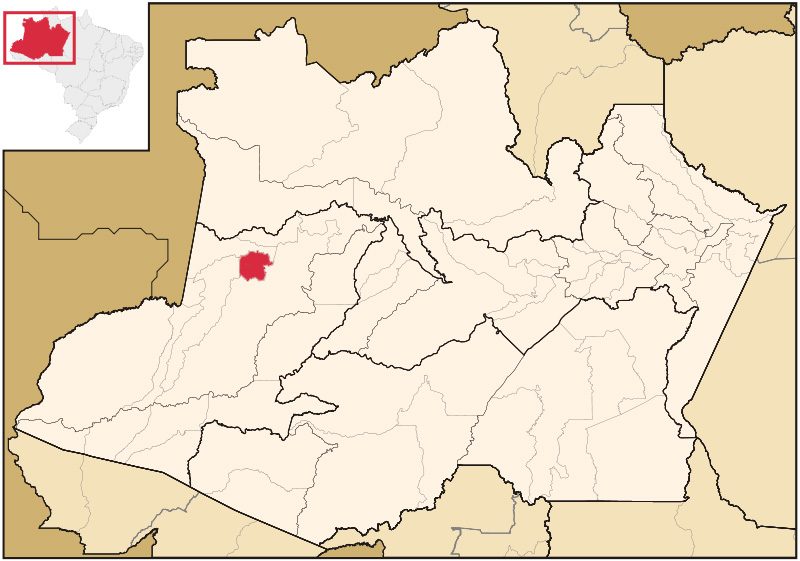
Amaturá: A Remote Link in Brazil's Connectivity Chain
Amaturá, nestled deep within the Brazilian state of Amazonas, is one of the most remote submarine cable landing points in the country. Despite its isolation, this municipality plays a key role in the Norte Conectado (Infovia 02) cable system - a domestic network stitching together towns and communities across the Amazon region.The Norte Conectado Cable
The Norte Conectado (Infovia 02) cable, scheduled to be ready for service in 2026, spans 1,796 km and connects Amaturá to 12 other landing points in Brazil, including Alvarães, Tabatinga, and Tefé. Unlike the major hubs of Fortaleza or Rio de Janeiro, which host multiple international cables, Amaturá’s connection is entirely domestic. This cable does not reach beyond Brazil’s borders, focusing instead on improving regional connectivity within the Amazon basin. The cable chain highlights the importance of linking smaller municipalities in a vast and often challenging geography. Amaturá’s neighbors, such as Benjamin Constant and Santo Antônio do Içá, are similarly part of this network, ensuring that even remote towns have access to modern digital infrastructure.Latency and Performance
GeoCables’ latency measurements reveal an average round-trip time of 284 ms, with the best observed latency at 226 ms. These numbers reflect the challenges of connecting a remote location like Amaturá to Brazil’s larger network hubs. While not as fast as connections in coastal cities like Fortaleza or Santos, the performance is sufficient to support essential communication and data transfer for the region.Amaturá’s Role in the Amazon
Amaturá itself is a small municipality with a population of 11,736 as of 2020. Its location in the heart of the Amazon rainforest underscores the significance of the Norte Conectado cable. For a town surrounded by dense jungle and far from Brazil’s urban centers, reliable connectivity can enable access to education, healthcare, and economic opportunities that would otherwise be out of reach. This cable is not just a technical achievement but a lifeline for communities like Amaturá, bridging the digital divide in one of the most remote parts of Brazil. While it may lack the international reach of cables landing in Fortaleza or Salvador, its purpose is clear: to connect the Amazon’s scattered towns and villages into a cohesive network.Positioning Amaturá in Brazil’s Cable Landscape
Brazil hosts 22 submarine cables across 64 landing points, with major hubs like Fortaleza and Rio de Janeiro boasting multiple international connections. Amaturá, by contrast, is part of a different story - one of regional integration rather than global reach. With just one cable landing here, it ranks modestly among Brazil’s landing points, yet its role is no less significant for the communities it serves. In a country where the average cable length is 4,862 km, the Norte Conectado cable’s 1,796 km span may seem modest. However, its focus on domestic connectivity highlights the importance of linking Brazil’s interior regions, ensuring that even the most isolated municipalities like Amaturá are part of the national network.What next: Amaturá, Brazil in the global directory of cable landing points; see surrounding routes on the interactive submarine cable map or follow live network monitoring.
Other Landing Points in Brazil
BR Afuá, Brazil
0.1571°S 50.3883°W
BR Alenquer, Brazil
1.9450°S 54.7360°W
BR Almeirim, Brazil
1.5284°S 52.5778°W
BR Alvarães, Brazil
3.2146°S 64.8121°W
BR Aracajú, Brazil
10.9096°S 37.0748°W
BR Atafona, Brazil
21.6312°S 41.0272°W
BR Atalaia do Norte, Brazil
4.3664°S 70.1932°W
BR Autazes, Brazil
3.5803°S 59.1317°W
BR Auxiliadora, Brazil
6.2496°S 61.8383°W
BR Bagre, Brazil
1.8988°S 50.2091°W
BR Barcelos, Brazil
0.9741°S 62.9258°W
BR Belém do Solimões, Brazil
4.0379°S 69.5218°W
Landing Point
- CountryBR Brazil
- Coordinates3.3621°S 68.1972°W
- Connected Cables1
See Real Cable Routes
View actual submarine cable routing from Amaturá, Brazil - with backbone nodes, distance calculations, and latency estimates
Open Calculator →
Submarine cables
Land fiber
Live probes