Aracajú, Brazil
Landing Point · BR Brazil
Connected Cables
| Cable | Status |
|---|---|
| Brazilian Festoon | Active |
Live Performance
RTT measurements to this landing point from 2026-03-25 through 2026-09-04 - live ICMP round-trip time via our monitoring probes. Recomputed daily. ✓ No anomalies detected in the monitored period.
Measurement sources
| Probe | Location | Samples | Avg |
|---|---|---|---|
| #6410 own probe | Sao Paulo BR | 6 | 15.8 ms |
| #6427 own probe | Sydney AU | 6 | 314.0 ms |
| #7062 own probe | Cape Town ZA | 6 | 388.4 ms |
| own probe | Balancer IL | 6 | 286.4 ms |
| #6487 | control probe | 5 | 370.9 ms |
| own probe | Almaty KZ | 5 | 291.2 ms |
| own probe | Minsk BY | 4 | 238.7 ms |
| own probe | Tbilisi GE | 4 | 260.6 ms |
| own probe | Jerusalem IL | 4 | 263.2 ms |
| own probe | Moscow RU | 1 | 258.8 ms |
About Aracajú, Brazil
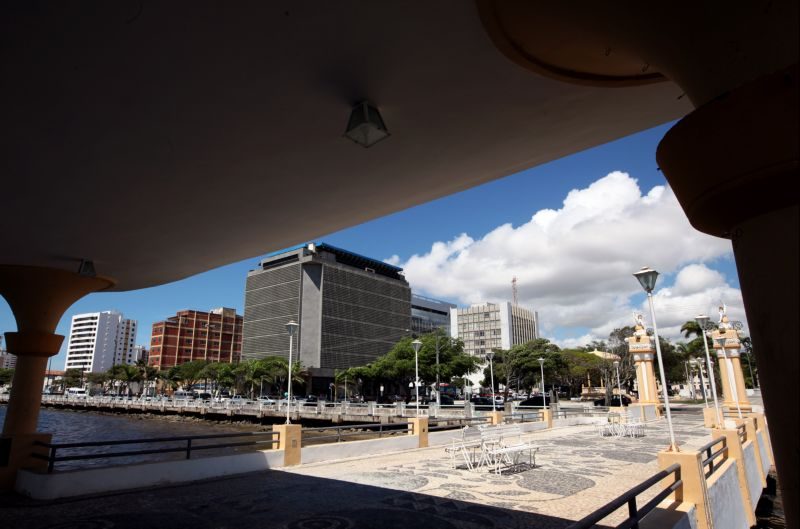
Aracajú, Brazil: Submarine Cable Landing Point
Aracajú is the capital of the state of Sergipe in northeastern Brazil, situated on the country's Atlantic coast approximately 350 kilometres north of Salvador. As a submarine cable landing point, Aracajú connects to Brazil's broader coastal cable network through one submarine cable. That cable, the Brazilian Festoon, runs entirely along the Brazilian coastline, linking Aracajú to other landing points within the same country rather than extending to international destinations.
The corridor enabled by the Brazilian Festoon is domestic in nature, forming part of an intra-national coastal ring that stitches together multiple Brazilian coastal cities. Aracajú's position along the northeastern stretch of this coastline places it between the denser cable hubs of Fortaleza to the north and Salvador to the south, giving the city a degree of connectivity within this domestic submarine infrastructure.
Cables Landing at Aracajú
The Brazilian Festoon is the sole submarine cable landing at Aracajú. With a total length of 2,552 kilometres, this cable reached ready-for-service status in 1996 and connects multiple landing points exclusively within Brazil. As a domestic coastal cable, all of its endpoints are located along the Brazilian seaboard. It was among the earliest submarine cable deployments in Brazil, with its 1996 RFS date coinciding with the earliest recorded submarine cable activity in the country.
Regional Context
Within Brazil's submarine cable landscape, Aracajú ranks among the smaller landing points by cable count. The country hosts 22 submarine cables across 64 landing points, with major hubs such as Fortaleza serving 10 cables and Rio de Janeiro serving 8. Aracajú, with its single cable, sits in the lower tier of Brazilian landing points alongside several other coastal cities that serve focused, single-cable roles rather than functioning as multi-cable international gateways.
Network Role
Aracajú functions as a single-cable terminus on the Brazilian Festoon, contributing one node to the domestic coastal submarine cable ring that runs along Brazil's Atlantic seaboard. Its role is oriented entirely toward intra-national connectivity, linking it to other Brazilian coastal communities rather than forming part of any intercontinental or regional international route.
Within the regional submarine cable graph, Aracajú represents one of many landing points that collectively distribute domestic coastal connectivity along a coastline otherwise dominated by a small number of high-density international hubs. The presence of even a single cable landing point in a northeastern state capital reflects the geographic reach of Brazil's coastal submarine infrastructure beyond its principal international gateway cities.
What next: Aracajú, Brazil in the global directory of cable landing points; see surrounding routes on the interactive submarine cable map or follow live network monitoring.
Other Landing Points in Brazil
Landing Point
- CountryBR Brazil
- Coordinates10.9096°S 37.0748°W
- Connected Cables1
See Real Cable Routes
View actual submarine cable routing from Aracajú, Brazil - with backbone nodes, distance calculations, and latency estimates
Open Calculator →