Point Roberts, WA, United States
Landing Point · US United States
Connected Cables
| Cable | Status |
|---|---|
| AmeriCan-1 | Active |
Live Performance
RTT measurements to this landing point from 2026-04-19 through 2026-09-15 - live ICMP round-trip time via our monitoring probes. Recomputed daily. ✓ No anomalies detected in the monitored period.
Measurement sources
| Probe | Location | Samples | Avg |
|---|---|---|---|
| own probe | Minsk BY | 4 | 164.8 ms |
| #7062 own probe | Cape Town ZA | 3 | 258.2 ms |
| own probe | Moscow RU | 3 | 134.8 ms |
| #6487 | control probe | 2 | 230.1 ms |
| #18838 | control probe | 2 | 53.0 ms |
| #23186 | control probe | 2 | 47.5 ms |
| #6427 own probe | Sydney AU | 1 | 188.0 ms |
| #20733 | control probe | 1 | 53.6 ms |
| #51640 | control probe | 1 | 51.9 ms |
| own probe | Almaty KZ | 1 | 223.7 ms |
| own probe | Tbilisi GE | 1 | 162.8 ms |
| own probe | Jerusalem IL | 1 | 157.9 ms |
| own probe | Sevastopol UA | 1 | 164.5 ms |
| own probe | Saint Petersburg RU | 1 | 134.1 ms |
| own probe | Odessa UA | 1 | 148.8 ms |
| own probe | Kyiv UA | 1 | 141.7 ms |
About Point Roberts, WA, United States
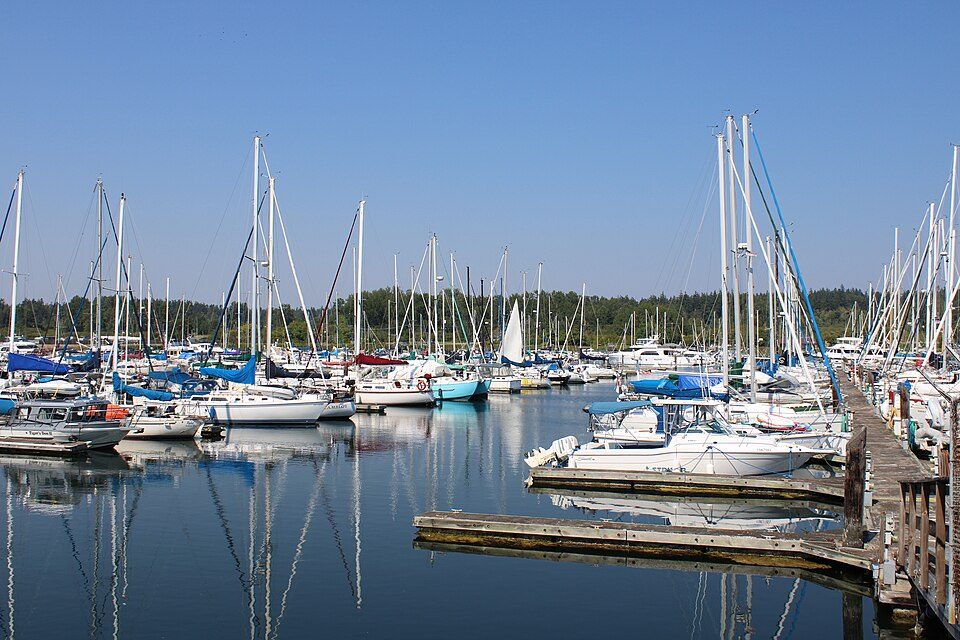
Point Roberts, WA: Submarine Cable Landing Point
Point Roberts is a small pene-exclave of the state of Washington, situated on the southernmost tip of the Tsawwassen peninsula in Whatcom County. Although it is United States territory, it is geographically separated from the contiguous American landmass by approximately 40 kilometres of Canadian soil, making direct land access from the rest of the United States impossible without crossing through Canada. Its coastal position along Boundary Bay, however, gives it direct maritime access to both Canadian and American waters, and it is this characteristic that makes it a viable location for submarine cable infrastructure.
One submarine cable lands at Point Roberts: AmeriCan-1. This short cross-border system connects the United States and Canada, reflecting the unique geographic position of the landing point as a node straddling the international boundary between the two countries.
Cables Landing at Point Roberts, WA
AmeriCan-1 is a submarine cable system measuring 140 kilometres in length, with a ready-for-service date of 1999. The cable connects landing points in both Canada and the United States, making Point Roberts one of its American termini. Given the cable's short length, AmeriCan-1 operates as a regional, cross-border system rather than a long-haul intercontinental route. Its 140-kilometre span is consistent with a corridor linking coastal communities across the Canada-United States boundary in the Pacific Northwest.
Regional Context
Within the United States, Point Roberts ranks among the smaller submarine cable landing points by cable count. Major American hubs such as Boca Raton, FL and San Juan, PR each host eight cables, while Hermosa Beach, CA, Kapolei, HI, and Myrtle Beach, SC each serve five. Point Roberts, with a single cable, occupies a more modest position in the national submarine cable map, though it nonetheless falls within the top 69 percent of the country's 160 landing points by cable count.
Network Role
Point Roberts functions as a single-cable terminus rather than a multi-cable hub. Its role is specific and geographically defined: it provides a submarine cable connection between the United States and Canada via a short regional system in the Pacific Northwest. The pene-exclave's maritime connectivity across Boundary Bay makes it a practical landfall for a bilateral cable that would otherwise require overland routing through Canadian territory.
In the broader United States submarine cable graph, which spans 113 cables across 160 landing points, Point Roberts represents a specialised endpoint serving a distinct bilateral corridor. Its value lies not in the volume of cables it hosts, but in the geographic circumstance that makes it a logical and accessible American landfall point along the Canada-US Pacific coastline.
What next: Point Roberts, WA, United States in the global directory of cable landing points; see surrounding routes on the interactive submarine cable map or follow live network monitoring.
Other Landing Points in United States
Landing Point
- CountryUS United States
- Coordinates48.9887°N 123.0568°W
- Connected Cables1
See Real Cable Routes
View actual submarine cable routing from Point Roberts, WA, United States - with backbone nodes, distance calculations, and latency estimates
Open Calculator →