Nome, AK, United States
Landing Point · US United States
Connected Cables
| Cable | Status |
|---|---|
| Nome to Homer Express (NTHE) | Planned |
| Quintillion Subsea Cable Network | Active |
Live Performance
RTT measurements to this landing point from 2026-04-20 through 2026-08-12 - live ICMP round-trip time via our monitoring probes. Recomputed daily. ✓ No anomalies detected in the monitored period.
Measurement sources
| Probe | Location | Samples | Avg |
|---|---|---|---|
| own probe | Minsk BY | 4 | 172.7 ms |
| own probe | Almaty KZ | 3 | 209.8 ms |
| own probe | Moscow RU | 3 | 134.0 ms |
| #6410 own probe | Sao Paulo BR | 2 | 148.7 ms |
| #7062 own probe | Cape Town ZA | 2 | 258.8 ms |
| own probe | Tbilisi GE | 2 | 169.4 ms |
| own probe | Jerusalem IL | 2 | 160.6 ms |
| own probe | Sevastopol UA | 2 | 166.5 ms |
| own probe | Saint Petersburg RU | 1 | 135.6 ms |
About Nome, AK, United States
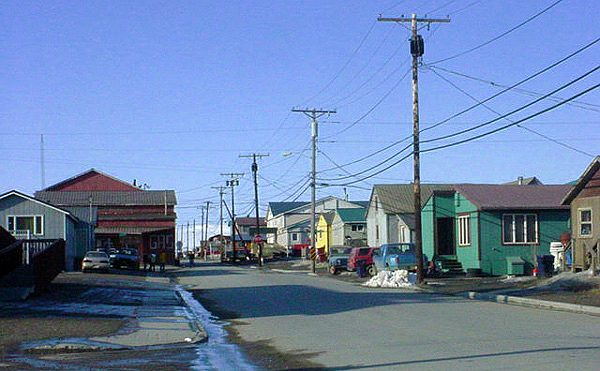
Nome, AK, United States: Submarine Cable Landing Point
Nome is a city situated on the southern Seward Peninsula coast along the Norton Sound of the Bering Sea, in the US state of Alaska. Its position on Alaska's western coastline makes it a notable point of submarine cable infrastructure in a region where overland connectivity options are limited. Two submarine cables land at Nome, connecting the city to broader Alaskan networks and forming part of a domestic United States corridor along the state's coast and beyond.
Both cables landing at Nome operate entirely within United States territory, linking various Alaskan communities rather than crossing international boundaries. This makes Nome's submarine cable footprint distinctly intra-national in character, supporting connectivity along one of North America's most remote coastlines. The cables collectively represent a significant investment in closing connectivity gaps across western and southern Alaska.
Cables Landing at Nome, AK
Quintillion Subsea Cable Network is a 1,900 km cable that reached ready-for-service status in 2017. It connects landing points entirely within the United States, running along the Alaskan Arctic and sub-Arctic coastline. Nome forms one of the nodes along this system, which was among the first fiber-optic submarine cable systems to serve Alaska's remote coastal communities directly.
Nome to Homer Express (NTHE) is a 1,545 km cable with a projected ready-for-service date of 2027. Like the Quintillion system, it connects landing points within the United States. As its name implies, the cable links Nome with Homer, Alaska, providing a dedicated high-capacity route between the western Alaskan coast and communities further south. Upon completion, it will represent a significant addition to Nome's submarine cable infrastructure.
Regional Context
Within the United States, Nome hosts 2 submarine cables, placing it among the less cable-dense landing points in a national network that spans 113 cables across 160 landing points. High-volume hubs such as Boca Raton, FL and San Juan, PR each serve eight cables, while Hermosa Beach, CA and Kapolei, HI each host five. Nome's profile reflects the particular demands of Alaskan coastal connectivity rather than the large international interchange volumes seen at those busier sites.
Network Role
Nome functions as a domestic Alaskan cable hub, with both of its submarine cables dedicated to linking communities within the United States rather than bridging continents or international borders. The Quintillion Subsea Cable Network, already in service since 2017, established Nome as a point on Alaska's coastal fiber network, while the forthcoming NTHE cable will extend direct submarine connectivity southward to Homer. Together, the two cables position Nome as a node serving the intra-Alaskan corridor along the Bering Sea and beyond.
As a two-cable landing point, Nome occupies a modest but geographically distinct place in the broader United States submarine cable graph, where its remoteness on the Seward Peninsula makes fiber-optic submarine infrastructure the most practical means of delivering modern broadband connectivity to the region.
What next: Nome, AK, United States in the global directory of cable landing points; see surrounding routes on the interactive submarine cable map or follow live network monitoring.
Other Landing Points in United States
Landing Point
- CountryUS United States
- Coordinates64.5011°N 165.4064°W
- Connected Cables2
See Real Cable Routes
View actual submarine cable routing from Nome, AK, United States - with backbone nodes, distance calculations, and latency estimates
Open Calculator →