King Cove, AK, United States
Landing Point · US United States
Connected Cables
| Cable | Status |
|---|---|
| AU-Aleutian | Active |
Live Performance
RTT measurements to this landing point from 2026-04-26 through 2026-09-16 - live ICMP round-trip time via our monitoring probes. Recomputed daily. ✓ No anomalies detected in the monitored period.
Measurement sources
| Probe | Location | Samples | Avg |
|---|---|---|---|
| own probe | Almaty KZ | 5 | 208.0 ms |
| own probe | Moscow RU | 5 | 136.0 ms |
| own probe | Saint Petersburg RU | 4 | 137.1 ms |
| #6410 own probe | Sao Paulo BR | 2 | 156.8 ms |
| #7062 own probe | Cape Town ZA | 2 | 258.0 ms |
| own probe | Minsk BY | 2 | 191.1 ms |
| own probe | Tbilisi GE | 2 | 225.8 ms |
| own probe | Jerusalem IL | 2 | 162.2 ms |
| own probe | Sevastopol UA | 1 | 198.6 ms |
About King Cove, AK, United States
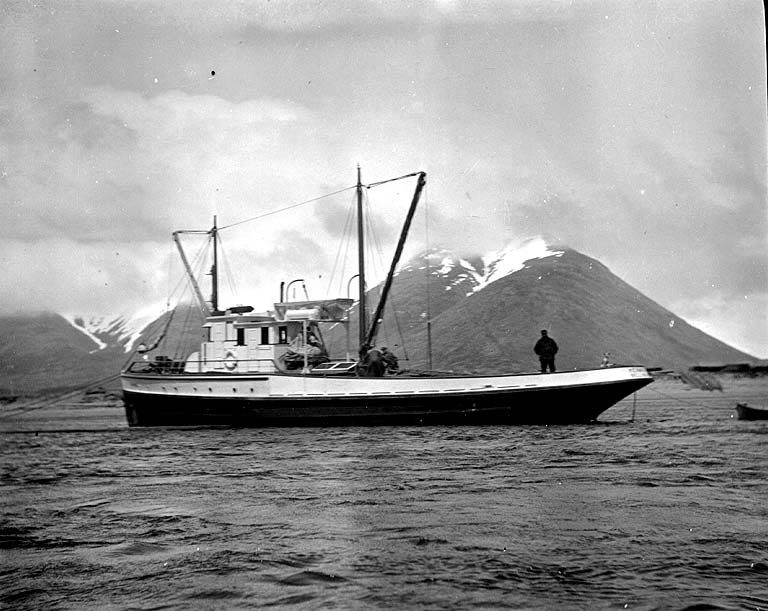
King Cove, AK: Submarine Cable Landing Point
King Cove is a city in the Aleutians East Borough of Alaska, situated along the Aleutian Peninsula in the western reaches of the United States. As a coastal community in one of Alaska's most remote regions, it serves as a landing point for submarine cable infrastructure connecting Aleutian communities. One submarine cable lands at King Cove, the AU-Aleutian system, which provides a regional connectivity corridor along the Aleutian island chain.
The AU-Aleutian cable is a domestic United States system, linking Aleutian communities with one another rather than bridging international borders. With a relatively compact length of 1,491 kilometers, it is well below the United States average cable length of 4,957 kilometers, reflecting its role as a regional rather than intercontinental link. King Cove's position as a landing point on this system places it within a corridor that serves some of the most geographically isolated communities in the country.
Cables Landing at King Cove, AK
AU-Aleutian is a 1,491-kilometer submarine cable with a scheduled ready-for-service year of 2022, noted as a draft timeline. The cable connects landing points entirely within the United States, running along the Aleutian region of Alaska. It does not extend to any foreign country, making it a purely domestic system designed to serve remote Alaskan coastal communities. Its relatively short length for a submarine cable reflects the geography of the Aleutian Peninsula, where overland connectivity is limited and undersea cable routes represent a practical solution for linking dispersed communities.
Regional Context
Within the broader United States submarine cable landscape, King Cove hosts a single cable, placing it among the smaller landing points in a national network that spans 113 cables across 160 landing points. By comparison, larger United States landing points such as Boca Raton, FL, San Juan, PR, Hermosa Beach, CA, Kapolei, HI, Myrtle Beach, SC, and Grover Beach, CA each host between four and eight cables, reflecting their roles in major international and transoceanic corridors. King Cove's single-cable footprint is characteristic of its function as a remote, regionally focused terminus.
Network Role
King Cove functions as a single-cable terminus on the AU-Aleutian system, enabling submarine cable connectivity for an area of Alaska where terrestrial infrastructure is limited and maritime geography makes underwater cable routes a practical means of communication. The landing point supports a domestic regional corridor rather than an international route, distinguishing it from the majority of higher-traffic United States cable hubs.
Within the United States submarine cable graph, King Cove represents the kind of geographically motivated deployment that extends connectivity to remote coastal communities, demonstrating that the national cable network serves not only major international gateways but also small, isolated population centers along Alaska's Aleutian coast.
What next: King Cove, AK, United States in the global directory of cable landing points; see surrounding routes on the interactive submarine cable map or follow live network monitoring.
Other Landing Points in United States
Landing Point
- CountryUS United States
- Coordinates55.0491°N 162.3044°W
- Connected Cables1
See Real Cable Routes
View actual submarine cable routing from King Cove, AK, United States - with backbone nodes, distance calculations, and latency estimates
Open Calculator →