Jimbaran, Indonesia
Landing Point · ID Indonesia
Connected Cables
| Cable | Status |
|---|---|
| JAVALI | Active |
| Link 2 Phase-2 | Active |
Live Performance
RTT measurements to this landing point from 2026-03-02 through 2026-10-14 - live ICMP round-trip time via our monitoring probes. Recomputed daily. ✓ No anomalies detected in the monitored period.
Measurement sources
| Probe | Location | Samples | Avg |
|---|---|---|---|
| own probe | Almaty KZ | 22 | 301.0 ms |
| #6410 own probe | Sao Paulo BR | 14 | 374.5 ms |
| #6427 own probe | Sydney AU | 14 | 243.6 ms |
| own probe | Minsk BY | 14 | 243.8 ms |
| own probe | Tbilisi GE | 8 | 317.7 ms |
| #6487 | control probe | 4 | 19.1 ms |
| #7290 | control probe | 4 | 24.4 ms |
| #64431 | control probe | 3 | 26.8 ms |
| #6568 own probe | Singapore SG | 2 | 53.5 ms |
| #1010039 | control probe | 1 | 28.0 ms |
| own probe | Jerusalem IL | 1 | 224.6 ms |
| own probe | Sevastopol UA | 1 | 241.8 ms |
| own probe | Moscow RU | 1 | 207.9 ms |
About Jimbaran, Indonesia
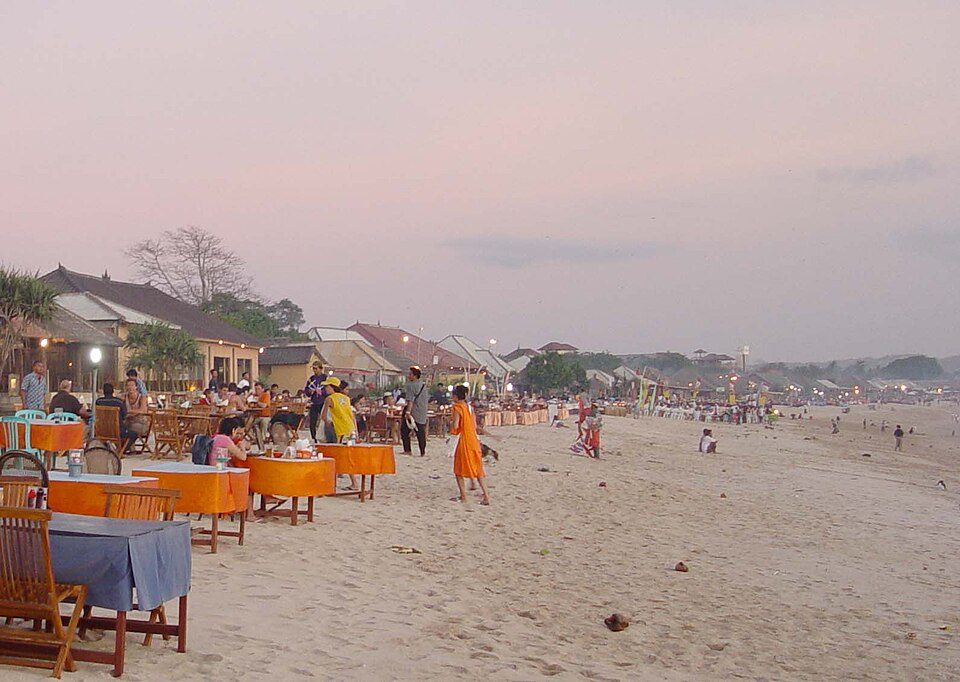
Jimbaran, Indonesia: Submarine Cable Landing Point
Jimbaran is a coastal settlement in the south of Bali, Indonesia, situated at the neck of the Bukit Peninsula near Ngurah Rai International Airport. As a location on the Indian Ocean coastline of Bali, it serves as a landing point for submarine cable infrastructure connecting parts of the Indonesian archipelago. Two submarine cables come ashore at Jimbaran, both of which link Indonesian endpoints, establishing this location as a node within the domestic Indonesian submarine cable network rather than an international gateway.
The two cables landing at Jimbaran - Link 2 Phase-2 and JAVALI - both operate entirely within Indonesian waters. This makes Jimbaran a contributor to intra-archipelago connectivity, supporting communications between Indonesian islands rather than providing intercontinental links. Within Indonesia's broad submarine cable landscape, which spans 70 cables across 139 landing points, Jimbaran occupies a defined position as a domestic-focused landing point.
Cables Landing at Jimbaran
Link 2 Phase-2 is a submarine cable with a total length of 221 kilometres, reaching ready-for-service (RFS) status in 2005, though currently carrying a draft status. The cable connects endpoints within Indonesia, forming a relatively short inter-island link suited to regional domestic connectivity within the archipelago.
JAVALI reached ready-for-service status in 2011 and also carries a draft status. Like Link 2 Phase-2, JAVALI connects points within Indonesia, further reinforcing Jimbaran's role as a landing point oriented toward domestic submarine cable routes. No length data is recorded for JAVALI.
Regional Context
Within Indonesia, Jimbaran hosts two submarine cables, placing it among the smaller landing points in a country that operates 70 submarine cables across 139 landing points. Larger Indonesian hubs such as Batam (20 cables), Jakarta (9 cables), Tanjung Pakis (9 cables), and Manado (8 cables) serve considerably more cables and carry a greater variety of both domestic and international connections. Jimbaran's two-cable footprint reflects its role as a locally oriented landing point within the broader Indonesian submarine cable network.
Network Role
Jimbaran functions as a two-cable domestic terminus, with both Link 2 Phase-2 and JAVALI operating entirely between Indonesian endpoints. This means the landing point contributes specifically to inter-island connectivity within Indonesia rather than participating in long-distance international cable corridors. The cables landing here are comparatively short in the Indonesian context, where the average cable length across the country's submarine network is 2,814 kilometres.
As one of 139 landing points distributed across the Indonesian archipelago, Jimbaran represents the distributed character of Indonesia's submarine cable infrastructure, where connectivity is achieved through numerous smaller, regionally focused landing points alongside major international hubs. Its presence in the submarine cable graph highlights the importance of dedicated domestic links in bridging the many islands that make up the Indonesian archipelago.
What next: Jimbaran, Indonesia in the global directory of cable landing points; see surrounding routes on the interactive submarine cable map or follow live network monitoring.
Other Landing Points in Indonesia
FAQ
Landing Point
- CountryID Indonesia
- Coordinates8.7841°S 115.1598°E
- Connected Cables2
See Real Cable Routes
View actual submarine cable routing from Jimbaran, Indonesia - with backbone nodes, distance calculations, and latency estimates
Open Calculator →