Igiugig, AK, United States
Landing Point · US United States
Connected Cables
| Cable | Status |
|---|---|
| Nome to Homer Express (NTHE) | Planned |
| TERRA SW | Active |
Live Performance
RTT measurements to this landing point from 2026-06-30 through 2026-07-26 - live ICMP round-trip time via our monitoring probes. Recomputed daily. ✓ No anomalies detected in the monitored period.
Measurement sources
| Probe | Location | Samples | Avg |
|---|---|---|---|
| #6410 own probe | Sao Paulo BR | 4 | 156.8 ms |
| #7062 own probe | Cape Town ZA | 4 | 259.5 ms |
| own probe | Minsk BY | 4 | 213.5 ms |
| own probe | Moscow RU | 4 | 132.4 ms |
| own probe | Saint Petersburg RU | 3 | 138.2 ms |
| #51310 | control probe | 1 | 112.2 ms |
| #60259 | control probe | 1 | 106.7 ms |
| #64833 | control probe | 1 | 90.0 ms |
| own probe | Almaty KZ | 1 | 214.2 ms |
About Igiugig, AK, United States
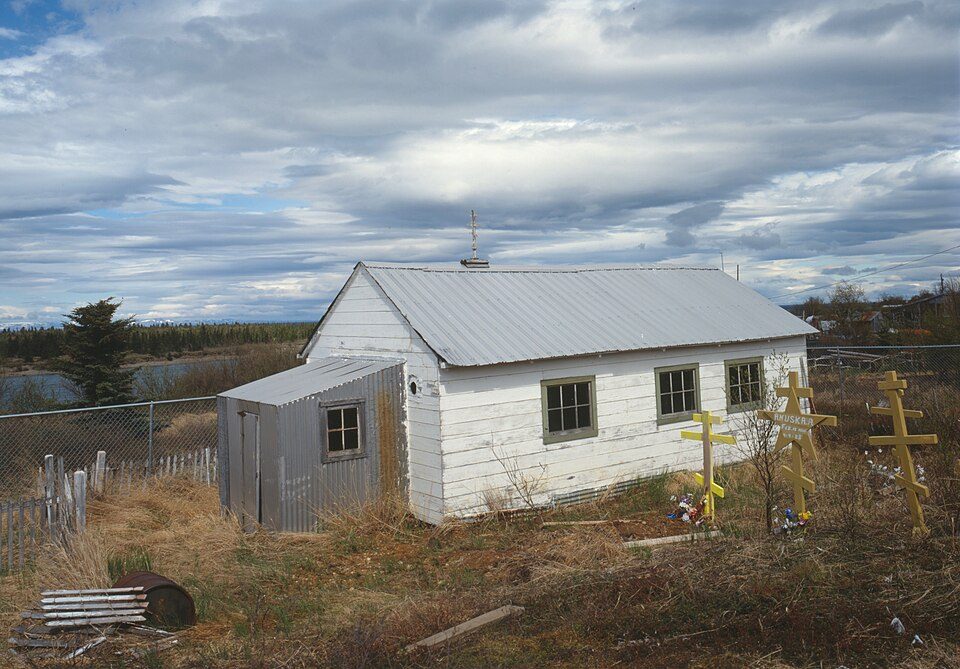
Igiugig, AK: Submarine Cable Landing Point
Igiugig is a small village in Lake and Peninsula Borough, Alaska, situated at the outlet of Lake Iliamna at the source of the Kvichak River. Despite a population of 68 recorded in the 2020 census, the community serves as a submarine cable landing point, connecting it to Alaska's broader underwater communications network. Two submarine cables land at Igiugig, both operating entirely within the United States and oriented toward improving connectivity across Alaska's remote southwestern region.
The two cables landing here - the Nome to Homer Express (NTHE) and TERRA SW - represent intra-national links rather than intercontinental connections. Both cables serve domestic Alaska corridors, reflecting the particular challenge of delivering reliable communications infrastructure across one of the most geographically dispersed and sparsely populated regions of the United States.
Cables Landing at Igiugig, AK
Nome to Homer Express (NTHE) is a submarine cable with a length of 1,545 km, with a scheduled ready-for-service (RFS) date of 2027, currently in draft status. The cable connects landing points within the United States, threading a route through Alaska that links Nome in the northwest with Homer on the Kenai Peninsula. Igiugig represents one of the intermediate or terminal landing points along this corridor.
TERRA SW reached its ready-for-service date in 2012 and also connects landing points within the United States. Like NTHE, it forms part of Alaska's intrastate submarine cable infrastructure, extending connectivity to communities along its route that lack terrestrial broadband alternatives. No length figure is recorded for TERRA SW in available documentation.
Regional Context
Within the United States, Igiugig sits in the lower tier of landing points by cable count. Larger hubs such as Boca Raton, FL and San Juan, PR each host eight cables, while Hermosa Beach, CA, Kapolei, HI, and Myrtle Beach, SC each serve as landing points for five cables. Igiugig's two cables place it in a group of smaller, regionally focused landing points that serve specific geographic corridors rather than high-volume international traffic aggregation points.
Network Role
Igiugig functions as a modest but purposeful node in Alaska's intrastate submarine cable network. Its two cables - one already operational since 2012 and one scheduled for 2027 - both operate exclusively within the United States, making this a domestic connectivity point rather than an international gateway. The NTHE cable, at 1,545 km, represents a significant span across Alaskan waters, and Igiugig's position along that route reflects the necessity of mid-route landing points in serving the scattered communities of southwest Alaska.
With 113 submarine cables landing across 160 points in the United States, the national network is large and diverse, but Igiugig occupies a distinct niche: it is one of the few landing points where submarine cable infrastructure has reached a community with fewer than 100 residents. Its presence in the submarine cable graph underscores how intrastate Alaskan cable systems extend the network into communities that terrestrial infrastructure has not reliably reached.
What next: Igiugig, AK, United States in the global directory of cable landing points; see surrounding routes on the interactive submarine cable map or follow live network monitoring.
Other Landing Points in United States
Landing Point
- CountryUS United States
- Coordinates59.3278°N 155.8947°W
- Connected Cables2
See Real Cable Routes
View actual submarine cable routing from Igiugig, AK, United States - with backbone nodes, distance calculations, and latency estimates
Open Calculator →