Geoje, South Korea
Landing Point · KR South Korea
Connected Cables
| Cable | Status |
|---|---|
| FLAG Europe-Asia (FEA) | Active |
| Trans-Pacific Express (TPE) Cable System | Active |
Live Performance
RTT measurements to this landing point from 2026-03-21 through 2026-06-21 - live ICMP round-trip time via our monitoring probes. Recomputed daily. ✓ No anomalies detected in the monitored period.
Measurement sources
| Probe | Location | Samples | Avg |
|---|---|---|---|
| own probe | Almaty KZ | 9 | 210.0 ms |
| own probe | Minsk BY | 8 | 202.0 ms |
| own probe | Tbilisi GE | 7 | 335.4 ms |
| own probe | Jerusalem IL | 7 | 311.7 ms |
| own probe | Moscow RU | 5 | 159.1 ms |
| #6410 own probe | Sao Paulo BR | 3 | 285.9 ms |
| #6487 | control probe | 3 | 64.0 ms |
| #7062 own probe | Cape Town ZA | 1 | 377.1 ms |
| own probe | Sevastopol UA | 1 | 226.6 ms |
| own probe | Saint Petersburg RU | 1 | 287.6 ms |
About Geoje, South Korea
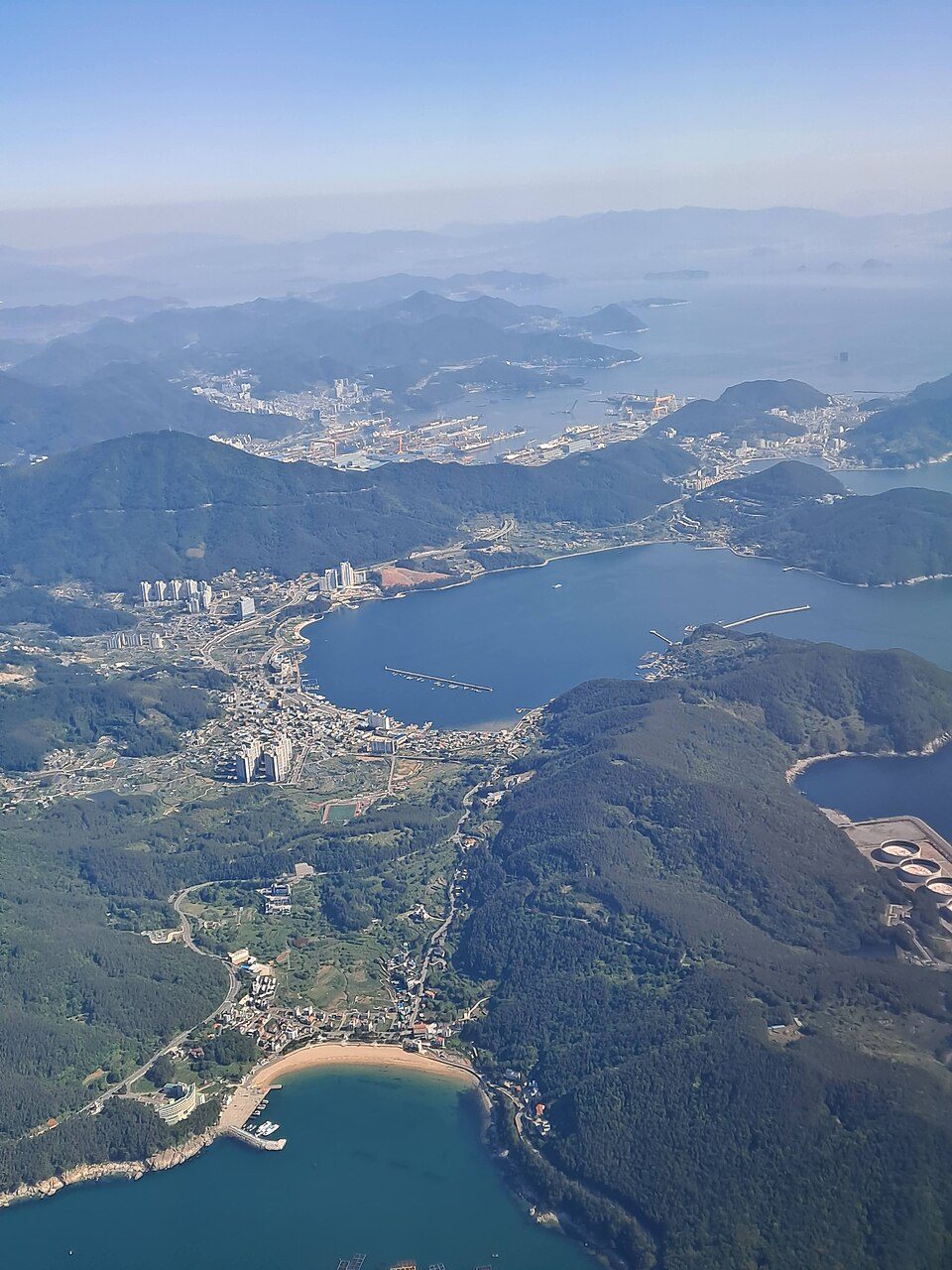
Geoje, South Korea: Submarine Cable Landing Point
Geoje is a city in South Gyeongsang Province, South Korea, situated close to Busan on the southeastern coast. As an island-based city, Geoje sits at a natural convergence point for submarine cable infrastructure reaching both the broader Asia-Pacific region and destinations further afield. Two submarine cables land at Geoje, connecting South Korea to a wide arc of countries spanning the Middle East, South Asia, Southeast Asia, East Asia, and the United States.
The two cables landing at Geoje represent notably long-haul systems. The FLAG Europe-Asia (FEA) cable extends westward toward Egypt, Jordan, India, Malaysia, and China, as well as eastward to Japan, creating a corridor that links South Korea into intercontinental routes reaching Europe via the Middle East. The Trans-Pacific Express (TPE) Cable System runs across the Pacific, connecting South Korea to China, Japan, Taiwan, and the United States, establishing a direct transoceanic link to North America. Together, these two systems make Geoje a landing point engaged in both intercontinental and intra-regional connectivity across two of the world's most significant submarine cable corridors.
Cables Landing at Geoje
FLAG Europe-Asia (FEA) is a 28,000 km submarine cable system that entered service in 1997. In addition to Geoje, it connects landing points in China, Egypt, India, Japan, Jordan, and Malaysia. The cable spans from East Asia westward through Southeast Asia and the Indian subcontinent, continuing through the Red Sea and into the Mediterranean region, making it one of the longer intercontinental systems landing in South Korea.
Trans-Pacific Express (TPE) Cable System measures 17,968 km in length and reached ready-for-service status in 2008. Beyond Geoje, TPE lands in China, Japan, Taiwan, and the United States. The system crosses the Pacific Ocean, linking East Asian economies directly to the west coast of North America and forming one of the primary transoceanic routes in the Asia-Pacific submarine cable network.
Regional Context
Within South Korea's submarine cable infrastructure, which spans 17 cables across 10 landing points, Geoje ranks among the upper portion of landing points by cable count. Busan dominates the national landscape with 10 cables, while Goseong-ri hosts 3. Geoje's two cables place it comfortably ahead of single-cable landing points such as Goheung, Gunsan, Hosan-ri, and Mijo-myeon, positioning it as a secondary but substantive node in the country's coastal cable geography.
Network Role
Geoje functions as a dual-cable landing point serving two of the most geographically extensive submarine routes touching South Korean shores. Through FEA, Geoje participates in a corridor that reaches across the Indian Ocean and into the Middle East, connecting South Korea to markets in South and Southeast Asia as well as onward to Europe. Through TPE, it maintains a direct transpacific link to North America while also reinforcing regional connectivity with China, Japan, and Taiwan. The combination of an intercontinental westward route and a transpacific eastward route gives Geoje a well-rounded position in the submarine cable graph despite its relatively modest cable count.
In the broader regional submarine cable graph, Geoje's role as a landing point for two long-haul, multi-country cable systems means that it anchors connections across a combined reach of more than a dozen countries on two separate oceanic corridors.
What next: Geoje, South Korea in the global directory of cable landing points; see surrounding routes on the interactive submarine cable map or follow live network monitoring.
Other Landing Points in South Korea
FAQ
Landing Point
- CountryKR South Korea
- Coordinates34.8943°N 128.6212°E
- Connected Cables2
See Real Cable Routes
View actual submarine cable routing from Geoje, South Korea - with backbone nodes, distance calculations, and latency estimates
Open Calculator →