Gunsan, South Korea
Landing Point · KR South Korea
Connected Cables
| Cable | Status |
|---|---|
| Asia United Gateway East (AUG East) | Planned |
Live Performance
RTT measurements to this landing point from 2026-04-02 through 2026-10-06 - live ICMP round-trip time via our monitoring probes. Recomputed daily. ✓ No anomalies detected in the monitored period.
Measurement sources
| Probe | Location | Samples | Avg |
|---|---|---|---|
| own probe | Almaty KZ | 8 | 210.6 ms |
| #6410 own probe | Sao Paulo BR | 4 | 315.1 ms |
| #6487 | control probe | 4 | 78.4 ms |
| #7062 own probe | Cape Town ZA | 4 | 367.0 ms |
| own probe | Moscow RU | 4 | 177.4 ms |
| own probe | Tbilisi GE | 3 | 338.9 ms |
| own probe | Jerusalem IL | 3 | 312.1 ms |
| own probe | Minsk BY | 2 | 202.8 ms |
| #6568 own probe | Singapore SG | 1 | 190.5 ms |
| #64216 | control probe | 1 | 3.9 ms |
| #64670 | control probe | 1 | 6.7 ms |
| own probe | Saint Petersburg RU | 1 | 297.5 ms |
| own probe | Ekaterinburg RU | 1 | 165.9 ms |
| #1017988 | control probe | 1 | 1.7 ms |
About Gunsan, South Korea
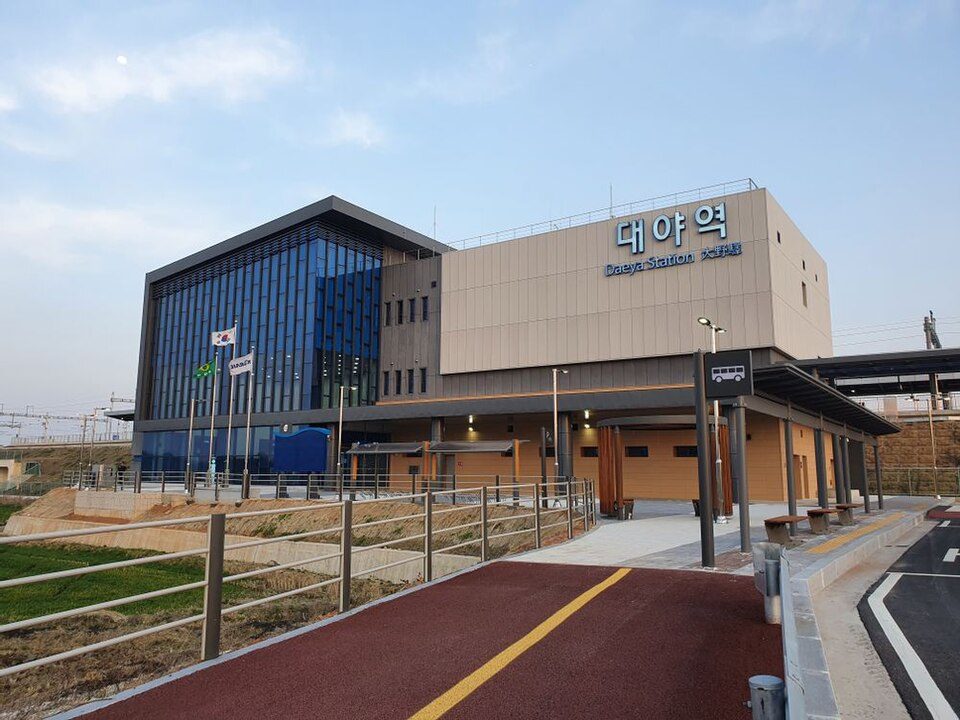
Gunsan: Submarine Cable Landing Point
Gunsan is a city in North Jeolla Province, South Korea, situated on the south bank of the Geum River near its mouth on the Yellow Sea, approximately 200 kilometres southwest of Seoul on the midwest coast of the Korean Peninsula. As a seaport city with direct access to open water, Gunsan provides a natural connection point for submarine cable infrastructure. One submarine cable lands at Gunsan, linking South Korea to a broad set of Southeast Asian nations and Japan through a single high-capacity international system.
The cable landing here - Asia United Gateway East - positions Gunsan within a corridor that spans the western Pacific and Southeast Asia, connecting South Korea to countries including Brunei, Indonesia, Japan, Malaysia, the Philippines, and Singapore. This gives the landing point an intercontinental and inter-regional character, bridging Northeast Asia with the major connectivity hubs of Southeast Asia along a single cable route.
Cables Landing at Gunsan
Asia United Gateway East (AUG East) is a submarine cable system with a total length of 8,900 kilometres, currently in draft status with a scheduled ready-for-service date of 2029. In addition to its landing at Gunsan in South Korea, the cable connects to Brunei, Indonesia, Japan, Malaysia, the Philippines, and Singapore. The system links Gunsan into a multi-country Southeast and East Asian network, providing onward connectivity across some of the most active maritime routes in the Asia-Pacific region.
Regional Context
South Korea hosts 17 submarine cables across 10 landing points, with Busan standing as the country's dominant cable hub at 10 cables. Gunsan, with one cable, sits alongside a small group of single-cable landing points in the country that also includes Goheung, Hosan-ri, and Mijo-myeon, ranking within the top 70 percent of South Korean landing points by cable count. This places Gunsan as a secondary but established node in the national submarine cable geography.
Network Role
Gunsan functions as a single-cable terminus on the forthcoming AUG East system, providing South Korea's midwest coast with a direct link into Southeast Asia. The cable's reach across seven countries - including major connectivity centres such as Singapore and Japan - means that Gunsan, once AUG East enters service in 2029, will serve as a western-facing gateway on the Korean Peninsula, complementing the more densely connected eastern and southern landing points concentrated around Busan and Geoje.
The addition of a landing point on the Yellow Sea coast diversifies the geographic distribution of South Korea's submarine cable access points, reducing the concentration of international connectivity at the peninsula's southeastern tip. In the broader regional submarine cable graph, Gunsan represents a new node connecting the midwest Korean coast directly into the Southeast Asian network fabric.
What next: Gunsan, South Korea in the global directory of cable landing points; see surrounding routes on the interactive submarine cable map or follow live network monitoring.
Other Landing Points in South Korea
Landing Point
- CountryKR South Korea
- Coordinates35.9677°N 126.7366°E
- Connected Cables1
See Real Cable Routes
View actual submarine cable routing from Gunsan, South Korea - with backbone nodes, distance calculations, and latency estimates
Open Calculator →