Freeport, TX, United States
Landing Point · US United States
1
Connected Cables
US
Country
28.95°
Latitude
95.34°
Longitude
Ctrl + Scroll to zoom
Connected Cables
| Cable | Status |
|---|---|
| Gulf of Mexico Fiber Optic Network | Active |
Live Performance
12
measurements
6
probes
1
days monitored
170.2
ms avg RTT
0
anomalies
RTT measurements to this landing point from 2026-07-12 through 2026-07-13 - live ICMP round-trip time via our monitoring probes. Recomputed daily. ✓ No anomalies detected in the monitored period.
Measurement sources
| Probe | Location | Samples | Avg |
|---|---|---|---|
| #6410 own probe | Sao Paulo BR | 2 | 135.1 ms |
| #6487 | control probe | 2 | 205.8 ms |
| #7062 own probe | Cape Town ZA | 2 | 247.2 ms |
| own probe | Minsk BY | 2 | 145.4 ms |
| own probe | Moscow RU | 2 | 144.8 ms |
| own probe | Saint Petersburg RU | 2 | 142.8 ms |
About Freeport, TX, United States
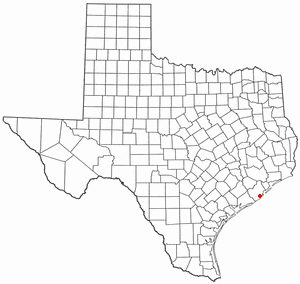
Freeport, TX: A Gulf Connection
Freeport, Texas, is one of the quieter nodes in the vast network of submarine cables that connect the United States to itself and the world. Located on the Gulf of Mexico, this landing point is home to the Gulf of Mexico Fiber Optic Network, a domestic cable that links Freeport to Pascagoula, Mississippi. While Freeport's single cable might seem modest compared to major hubs like Boca Raton, FL, or San Juan, PR, which host eight cables each, its role is focused and specific: connecting two Gulf Coast cities with a reliable fiber optic link.The Gulf of Mexico Fiber Optic Network
The Gulf of Mexico Fiber Optic Network, operational since 2008, spans 1200 kilometers and exclusively serves the United States. Unlike international cables that bridge continents, this cable is a domestic lifeline for Gulf Coast connectivity. Its other landing point in Pascagoula creates a direct fiber optic corridor between Texas and Mississippi, supporting regional data traffic without relying on larger hubs further afield. This localized approach is especially valuable for industries and services along the Gulf Coast that depend on stable, low-latency connections.Latency Insights
GeoCables' monitoring of Freeport's connectivity reveals an average round-trip latency of 170 milliseconds, with the best observed latency at 135 milliseconds. These figures highlight the efficiency of the Gulf of Mexico Fiber Optic Network for regional data transfer. While Freeport cannot match the ultra-low latencies of larger hubs or international cables, its performance is more than adequate for the domestic traffic it supports.Freeport's Place in the Network
Freeport ranks among the top 69% of submarine cable landing points in the United States by cable count, hosting one of the country's 113 active cables. While its single cable contrasts sharply with the multi-cable hubs on the East and West Coasts, Freeport's location on the Gulf of Mexico gives it a distinct role. This landing point is part of a smaller chain that stitches together the Gulf Coast, complementing the broader national and international network.Beyond the Cables
Founded in 1912, Freeport has a long history tied to its coastal location. With a population of 10,696 as of the 2020 census, the city has seen shifts in demographics and industry over the years. While it may not be a major urban center, Freeport's proximity to the Gulf of Mexico makes it a natural choice for a cable landing point, serving the needs of local industries and communities.Conclusion
Freeport, TX, may not boast the cable density of larger hubs, but its role in the Gulf of Mexico Fiber Optic Network is clear: connecting two Gulf Coast cities with reliable, domestic fiber optic infrastructure. For Freeport, the story is not about scale but about serving a specific region with efficiency and focus.What next: Freeport, TX, United States in the global directory of cable landing points; see surrounding routes on the interactive submarine cable map or follow live network monitoring.
Other Landing Points in United States
US Akutan, AK, United States
54.1356°N 165.7731°W
US Alakanuk, AK, United States
62.6847°N 164.6455°W
US Anchorage, AK, United States
61.2175°N 149.8584°W
US Angoon, AK, United States
57.5018°N 134.5823°W
US Bandon, OR, United States
43.1186°N 124.4082°W
US Barber’s Point, HI, United States
21.3138°N 158.0943°W
US Beaver Island, MI, United States
45.7409°N 85.5353°W
US Bellport, NY, United States
40.7555°N 72.9378°W
US Benton Harbor, MI, United States
42.1162°N 86.4545°W
US Boca Raton, FL, United States
26.3503°N 80.0889°W
US Brookhaven, NY, United States
40.7731°N 72.9123°W
US Buffalo, NY, United States
42.8854°N 78.8785°W
Landing Point
- CountryUS United States
- Coordinates28.9496°N 95.3444°W
- Connected Cables1
See Real Cable Routes
View actual submarine cable routing from Freeport, TX, United States - with backbone nodes, distance calculations, and latency estimates
Open Calculator →
Submarine cables
Land fiber
Live probes