Cloverdale, OR, United States
Landing Point · US United States
Connected Cables
| Cable | Status |
|---|---|
| JUPITER | Active |
Live Performance
RTT measurements to this landing point from 2026-06-02 through 2026-10-15 - live ICMP round-trip time via our monitoring probes. Recomputed daily. ✓ No anomalies detected in the monitored period.
Measurement sources
| Probe | Location | Samples | Avg |
|---|---|---|---|
| #7062 own probe | Cape Town ZA | 5 | 260.4 ms |
| own probe | Moscow RU | 5 | 133.0 ms |
| own probe | Minsk BY | 4 | 165.3 ms |
| #6487 | control probe | 3 | 235.1 ms |
| #13213 | control probe | 3 | 72.7 ms |
| #54133 | control probe | 3 | 58.1 ms |
| own probe | Saint Petersburg RU | 3 | 135.3 ms |
| #6568 own probe | Singapore SG | 2 | 209.3 ms |
| #52886 | control probe | 1 | 43.5 ms |
| own probe | Sevastopol UA | 1 | 194.3 ms |
| own probe | Kyiv UA | 1 | 143.5 ms |
| own probe | Ekaterinburg RU | 1 | 169.7 ms |
About Cloverdale, OR, United States
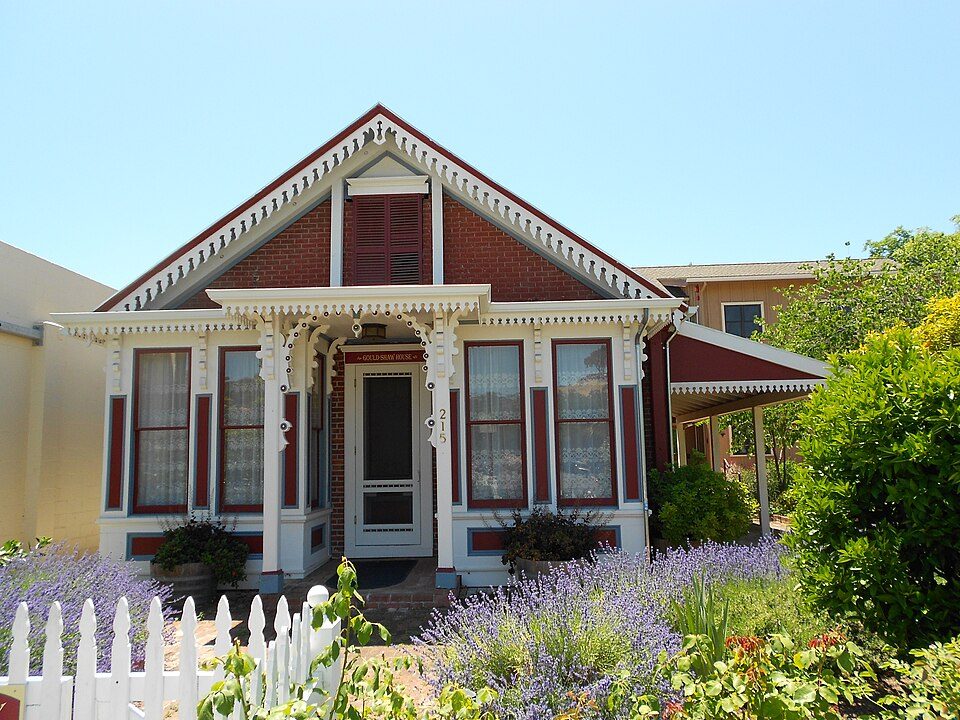
Cloverdale, OR, United States: Submarine Cable Landing Point
Cloverdale is a submarine cable landing point on the Pacific coast of the United States in the state of Oregon. As a coastal landing facility, it connects the continental United States directly to trans-Pacific submarine cable infrastructure. One submarine cable currently lands at Cloverdale, the JUPITER system, which links the United States with Japan and the Philippines across the Pacific Ocean.
The JUPITER cable establishes a significant trans-Pacific corridor from Cloverdale, enabling connectivity between North America and two major Asia-Pacific nations. This positions Cloverdale as a terminus on one of the world's most trafficked oceanic cable corridors, spanning the eastern and western Pacific Rim.
Cables Landing at Cloverdale, OR, United States
JUPITER is a submarine cable system with a total length of 14,557 km, which reached ready-for-service (RFS) status in 2020. In addition to Cloverdale, Oregon in the United States, the JUPITER cable lands in Japan and the Philippines. The cable spans the Pacific Ocean and connects three distinct national networks across two continents and the broader Asia-Pacific region. With its 2020 RFS date, JUPITER represents a modern addition to the trans-Pacific cable infrastructure serving the United States' west coast.
Regional Context
Within the United States, which hosts 113 submarine cables across 160 landing points, Cloverdale is a single-cable landing point, placing it among the less concentrated nodes in a national infrastructure that includes multi-cable hubs such as Boca Raton, FL and San Juan, PR, each landing eight cables, as well as Hermosa Beach, CA, Kapolei, HI, Myrtle Beach, SC, and Grover Beach, CA, which each host four to five systems. Cloverdale's role is therefore more focused than these peers, serving as a dedicated terminus for the JUPITER system rather than a convergence point for multiple cable routes.
Network Role
Cloverdale functions as a single-cable terminus, anchoring the US end of the JUPITER trans-Pacific system and enabling direct connectivity between the continental United States, Japan, and the Philippines. Rather than aggregating multiple cable routes, it contributes a specific, dedicated link in the broader Pacific submarine cable graph, complementing other west coast landing points that collectively distribute trans-Pacific traffic across several California and Oregon shore stations.
In the regional submarine cable network, Cloverdale's significance lies in the reach of the single cable it hosts: a 14,557 km system connecting three countries across the Pacific, demonstrating that a landing point with limited cable count can still serve a geographically expansive and internationally meaningful route.
What next: Cloverdale, OR, United States in the global directory of cable landing points; see surrounding routes on the interactive submarine cable map or follow live network monitoring.
Other Landing Points in United States
Landing Point
- CountryUS United States
- Coordinates45.2311°N 123.9564°W
- Connected Cables1
See Real Cable Routes
View actual submarine cable routing from Cloverdale, OR, United States - with backbone nodes, distance calculations, and latency estimates
Open Calculator →