Chignik Lagoon, AK, United States
Landing Point · US United States
Connected Cables
| Cable | Status |
|---|---|
| AU-Aleutian | Active |
Live Performance
RTT measurements to this landing point from 2026-05-20 through 2026-09-24 - live ICMP round-trip time via our monitoring probes. Recomputed daily. ✓ No anomalies detected in the monitored period.
Measurement sources
| Probe | Location | Samples | Avg |
|---|---|---|---|
| own probe | Moscow RU | 5 | 132.7 ms |
| #6410 own probe | Sao Paulo BR | 4 | 153.4 ms |
| #7062 own probe | Cape Town ZA | 4 | 257.3 ms |
| own probe | Minsk BY | 4 | 191.5 ms |
| own probe | Almaty KZ | 3 | 209.1 ms |
| own probe | Saint Petersburg RU | 2 | 135.7 ms |
| own probe | Tbilisi GE | 1 | 173.1 ms |
| own probe | Jerusalem IL | 1 | 158.1 ms |
About Chignik Lagoon, AK, United States
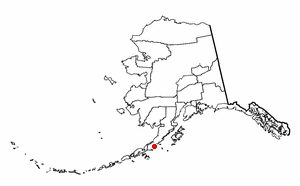
Chignik Lagoon, AK: Submarine Cable Landing Point
Chignik Lagoon is a census-designated place located in Lake and Peninsula Borough, Alaska, on the Alaska Peninsula of the United States. Despite its small population of 72 residents as of the 2020 census, the community hosts submarine cable infrastructure connecting it to the broader domestic cable network of the United States. One submarine cable lands at Chignik Lagoon, linking it to other points within the country along an intra-national corridor.
The single cable landing here, the AU-Aleutian, reflects a domestic connectivity role, running between points within the United States. This positions Chignik Lagoon as a terminus serving remote Alaskan coastal communities rather than as an intercontinental gateway, underlining the distinct role that geographically isolated Alaskan landing points play within the overall United States submarine cable network.
Cables Landing at Chignik Lagoon
AU-Aleutian is a submarine cable with a length of 1,491 km, with a ready-for-service (RFS) year of 2022 (draft status). The cable connects landing points within the United States, running along what is understood to be a route serving Alaskan and Aleutian communities. At 1,491 km, it is notably shorter than the United States national average submarine cable length of 4,957 km, consistent with its role as a regional domestic link rather than a long-distance transoceanic system.
Regional Context
Within the United States submarine cable landscape, which encompasses 113 cables across 160 landing points, Chignik Lagoon ranks in the top 69 percent of domestic landing points by cable count. High-volume United States landing points such as Boca Raton, FL, and San Juan, PR, each host eight cables, while Hermosa Beach, CA, Kapolei, HI, and Myrtle Beach, SC, each serve five. Chignik Lagoon's single-cable profile is characteristic of remote Alaskan landing points that address localized connectivity needs rather than aggregating multiple international or continental routes.
Network Role
Chignik Lagoon functions as a single-cable terminus in the domestic United States submarine cable graph. The AU-Aleutian cable, at 1,491 km and serving only United States endpoints, provides intra-national connectivity along a coastal Alaskan corridor, a function quite different from the multi-cable, intercontinental hubs found at larger United States landing points. There is no international dimension to the traffic enabled at this landing point based on the cables present.
As a single-cable landing point in a sparsely populated and geographically remote part of Alaska, Chignik Lagoon illustrates how the United States submarine cable network extends beyond major coastal cities to reach isolated communities through dedicated domestic-only cable systems. Its presence in the national cable inventory highlights the geographic breadth of the United States undersea network across 160 landing points.
What next: Chignik Lagoon, AK, United States in the global directory of cable landing points; see surrounding routes on the interactive submarine cable map or follow live network monitoring.
Other Landing Points in United States
Landing Point
- CountryUS United States
- Coordinates56.3213°N 158.5072°W
- Connected Cables1
See Real Cable Routes
View actual submarine cable routing from Chignik Lagoon, AK, United States - with backbone nodes, distance calculations, and latency estimates
Open Calculator →