Toronto, ON, Canada
Landing Point · CA Canada
Connected Cables
| Cable | Status |
|---|---|
| Crosslake Fibre | Active |
Live Performance
RTT measurements to this landing point from 2026-03-26 through 2026-10-03 - live ICMP round-trip time via our monitoring probes. Recomputed daily. ✓ No anomalies detected in the monitored period.
Measurement sources
| Probe | Location | Samples | Avg |
|---|---|---|---|
| own probe | Minsk BY | 8 | 112.1 ms |
| #6427 own probe | Sydney AU | 6 | 202.4 ms |
| own probe | Moscow RU | 6 | 126.8 ms |
| own probe | Saint Petersburg RU | 4 | 111.9 ms |
| own probe | Almaty KZ | 3 | 177.9 ms |
| own probe | Tbilisi GE | 3 | 136.6 ms |
| own probe | Jerusalem IL | 3 | 132.5 ms |
| #4553 | control probe | 1 | 21.1 ms |
| #6888 | control probe | 1 | 12.9 ms |
| #7062 own probe | Cape Town ZA | 1 | 210.1 ms |
| #10444 | control probe | 1 | 0.8 ms |
| own probe | Sevastopol UA | 1 | 151.3 ms |
About Toronto, ON, Canada
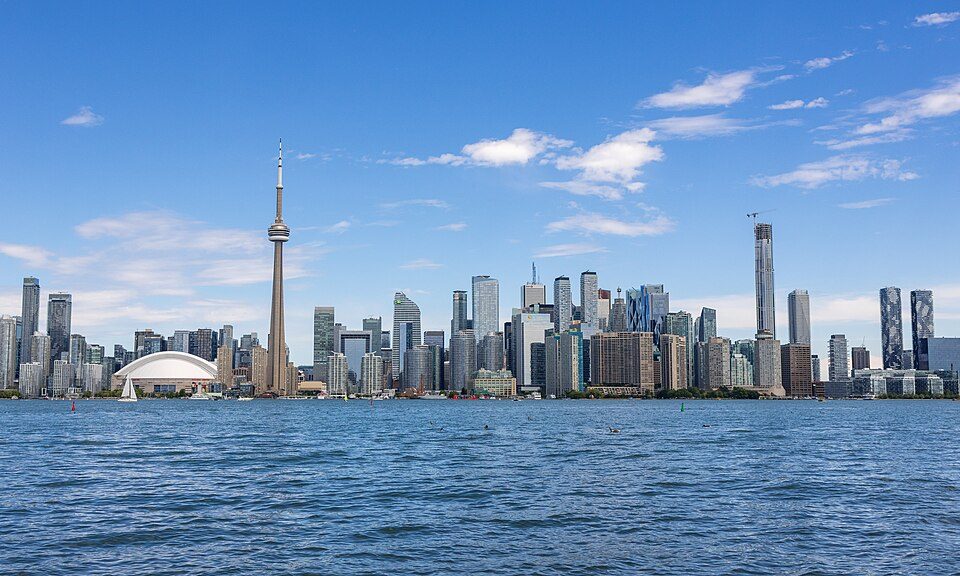
Toronto, ON, Canada: Submarine Cable Landing Point
Toronto is the most populous city in Canada and the capital of the province of Ontario, situated at the western end of Lake Ontario. Despite its scale as a major urban centre, Toronto hosts one submarine cable landing point, connecting it to the United States via a short freshwater crossing beneath Lake Ontario. That single cable, Crosslake Fibre, positions Toronto as a participant in the North American submarine cable network, enabling a direct cross-border data corridor between Canada and the United States.
The Crosslake Fibre cable, at just 59 kilometres in length, represents a compact but functional transboundary link. The connection it provides is binational in scope, joining Canada and the United States across Lake Ontario rather than spanning ocean basins. This places Toronto in the category of landing points serving regional and cross-border connectivity rather than intercontinental routes.
Cables Landing at Toronto, ON, Canada
Crosslake Fibre is a 59-kilometre submarine cable that reached ready-for-service status in 2019. The cable runs between Canada and the United States, crossing beneath Lake Ontario to establish a direct link between the two countries. With its short route length and focused two-country design, Crosslake Fibre is a regionally oriented system built to serve the densely populated corridor along the lake's shores.
Regional Context
Within Canada's submarine cable infrastructure, Toronto is one of 155 landing points across the country, which together host 21 submarine cables. Several Canadian landing points serve two cables each, including Halifax in Nova Scotia, Vancouver in British Columbia, Prince Rupert in British Columbia, and two sites in Quebec - Kangiqsujuaq and Puvirnituq. Toronto, with one cable, ranks alongside Addenbroke Island in British Columbia as a single-cable landing point within this national network.
Network Role
Toronto functions as a single-cable terminus rather than a multi-cable hub, with Crosslake Fibre providing its sole submarine connection. The cable enables a direct underwater path between Canada and the United States, complementing the overland and aerial links that otherwise carry traffic across this heavily traversed border. The route's brevity - 59 kilometres - reflects the geographic proximity of the two countries at Lake Ontario and the practical value of a dedicated underwater crossing at this location.
In the broader Canadian submarine cable graph, Toronto's landing point demonstrates that submarine cable infrastructure is not limited to ocean-facing coastlines; inland freshwater bodies such as Lake Ontario can also serve as the medium for international submarine cable systems, extending the reach of such networks into the continental interior.
What next: Toronto, ON, Canada in the global directory of cable landing points; see surrounding routes on the interactive submarine cable map or follow live network monitoring.
Our measurements to Toronto
Traceroutes from our own measurement points over the last 30 days: usual delay and number of network hops on the way to Toronto.
- From RIPE Atlas probes: 4 ms, 17 hops, 20 traces
- From Odessa: 36 ms, 12 hops, 197 traces
- From Kyiv: 37 ms, 5 hops, 120 traces
- From Jerusalem: 45 ms, 10 hops, 231 traces
- From Minsk: 45 ms, 12 hops, 237 traces
- From Almaty: 50 ms, 13 hops, 234 traces
- From Moscow: 53 ms, 11 hops, 237 traces
- From Tbilisi: 61 ms, 13 hops, 227 traces
- From Rostov: 73 ms, 13 hops, 237 traces
- From Saint Petersburg: 79 ms, 13 hops, 236 traces
- From Sevastopol: 81 ms, 12 hops, 233 traces
- From Ekaterinburg: 136 ms, 15 hops, 123 traces
Last trace: 2026-10-16. Live network map
Other Landing Points in Canada
Landing Point
- CountryCA Canada
- Coordinates43.6486°N 79.3853°W
- Connected Cables1
See Real Cable Routes
View actual submarine cable routing from Toronto, ON, Canada - with backbone nodes, distance calculations, and latency estimates
Open Calculator →