Bamfield, BC, Canada
Landing Point · CA Canada
1
Connected Cables
CA
Country
48.83°
Latitude
125.14°
Longitude
Ctrl + Scroll to zoom
Connected Cables
| Cable | Status |
|---|---|
| Connected Coast | Active |
Live Performance
21
measurements
12
probes
122
days monitored
126.7
ms avg RTT
0
anomalies
RTT measurements to this landing point from 2026-03-22 through 2026-07-22 - live ICMP round-trip time via our monitoring probes. Recomputed daily. ✓ No anomalies detected in the monitored period.
Measurement sources
| Probe | Location | Samples | Avg |
|---|---|---|---|
| own probe | Minsk BY | 4 | 116.4 ms |
| #6487 | control probe | 2 | 171.3 ms |
| #7062 own probe | Cape Town ZA | 2 | 215.3 ms |
| own probe | Almaty KZ | 2 | 169.1 ms |
| own probe | Tbilisi GE | 2 | 133.3 ms |
| own probe | Jerusalem IL | 2 | 153.9 ms |
| own probe | Moscow RU | 2 | 111.2 ms |
| #16129 | control probe | 1 | 0.7 ms |
| #17830 | control probe | 1 | 11.5 ms |
| #50094 | control probe | 1 | 21.5 ms |
| own probe | Sevastopol UA | 1 | 143.8 ms |
| own probe | Kyiv UA | 1 | 109.7 ms |
About Bamfield, BC, Canada
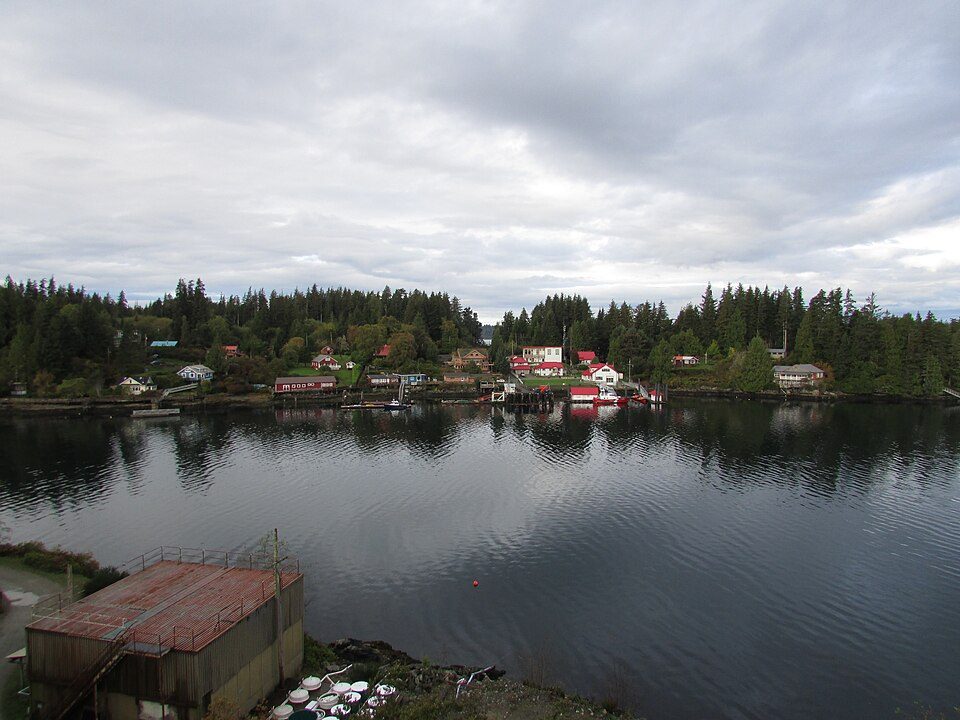
Bamfield, BC: A Remote Gateway to Connectivity
Bamfield, a small community nestled on Vancouver Island’s rugged west coast, might seem an unlikely hub for modern connectivity. Surrounded by Crown Land, First Nation lands of the Huu-ay-aht Nations, and the Pacific Rim National Park, this picturesque village is better known for its natural beauty and isolation than technological infrastructure. Yet, Bamfield plays a quiet but essential role in Canada’s digital landscape as one of the landing points for the Connected Coast submarine cable.The Connected Coast Cable: Stitching Together Remote Communities
The Connected Coast cable, set to begin service in 2024, is a domestic network linking 108 landing points along British Columbia’s coastline. Bamfield is one of these stops, joining a chain of remote and semi-remote communities such as Addenbroke Island, Ahousat, and Bella Bella. This cable does not connect internationally but serves as a lifeline for local and regional connectivity, providing internet access to areas where terrestrial networks are sparse or non-existent. What makes Bamfield’s role unique is its position within this chain. Unlike larger hubs like Vancouver or Prince Rupert, which host multiple cables and serve as major nodes for international and domestic traffic, Bamfield is part of a more localized effort to bring broadband to underserved areas. The Connected Coast cable is designed to bridge gaps in connectivity along British Columbia’s rugged coastline, ensuring that even isolated communities like Bamfield can access modern digital services.Latency Insights: Measuring Bamfield’s Connection
GeoCables’ latency monitoring reveals that Bamfield’s connectivity is performing well within expectations for a remote landing point. Across 13 completed checks from eight source cities, the average round-trip latency to Bamfield is 142 ms, with the best observed latency at 104 ms. While these numbers are higher than those seen in urban hubs, they reflect the challenges of reaching remote locations and the importance of submarine cables in overcoming those barriers.A Community at the Edge of the Pacific
Bamfield itself is a place defined by its geography and history. Divided by Bamfield Inlet, the community is surrounded by dense forests, rocky shores, and the waters of Barkley Sound. Its population of 179 (as of 2016) is small, but the area has long been a destination for outdoor enthusiasts, marine researchers, and those seeking solitude. The presence of the Connected Coast cable ensures that Bamfield’s residents and visitors are not entirely cut off from the digital world, enabling access to services that are increasingly essential for education, business, and communication.Positioning Bamfield in Canada’s Cable Network
Canada hosts 21 submarine cables across 155 landing points, with Bamfield ranking in the top 97% by cable count due to its single connection. While larger hubs like Halifax and Vancouver serve as major gateways for international and domestic traffic, Bamfield’s role is more modest but no less important. It exemplifies how submarine cables can bring connectivity to places that might otherwise remain isolated, supporting local communities and fostering regional development.Conclusion
Bamfield may not be a bustling hub of activity, but its inclusion in the Connected Coast cable network highlights the importance of connecting even the most remote corners of Canada. As the cable becomes operational in 2024, Bamfield will continue to serve as a quiet yet significant point in British Columbia’s digital landscape, ensuring that the community remains part of the broader conversation in an increasingly connected world.What next: Bamfield, BC, Canada in the global directory of cable landing points; see surrounding routes on the interactive submarine cable map or follow live network monitoring.
Other Landing Points in Canada
CA Addenbroke Island, BC, Canada
51.6032°N 127.8637°W
CA Ahousat, BC, Canada
49.2763°N 126.0563°W
CA Akulivik, QC, Canada
60.8177°N 78.1442°W
CA Alert Bay, BC, Canada
50.5884°N 126.9263°W
CA Aupaluk, QC, Canada
59.3057°N 69.5975°W
CA Aylesford, NS, Canada
45.0895°N 64.9483°W
CA Baie-Comeau, QC, Canada
49.2210°N 68.1525°W
CA Bella Bella, BC, Canada
52.1612°N 128.1447°W
CA Bella Coola, BC, Canada
52.3721°N 126.7528°W
CA Bic, QC, Canada
48.3728°N 68.7093°W
CA Blind Channel, BC, Canada
50.4128°N 125.5034°W
CA Bliss Landing, BC, Canada
50.0358°N 124.8164°W
Landing Point
- CountryCA Canada
- Coordinates48.8328°N 125.1415°W
- Connected Cables1
See Real Cable Routes
View actual submarine cable routing from Bamfield, BC, Canada - with backbone nodes, distance calculations, and latency estimates
Open Calculator →
Submarine cables
Land fiber
Live probes