Tonantins, Brazil
Landing Point · BR Brazil
Connected Cables
| Cable | Status |
|---|---|
| Norte Conectado (Infovia 02) | Active |
Live Performance
RTT measurements to this landing point from 2026-03-12 through 2026-09-29 - live ICMP round-trip time via our monitoring probes. Recomputed daily. ✓ No anomalies detected in the monitored period.
Measurement sources
| Probe | Location | Samples | Avg |
|---|---|---|---|
| own probe | Minsk BY | 8 | 253.8 ms |
| own probe | Almaty KZ | 8 | 319.8 ms |
| own probe | Tbilisi GE | 6 | 284.0 ms |
| own probe | Jerusalem IL | 5 | 267.3 ms |
| #6410 own probe | Sao Paulo BR | 2 | 16.9 ms |
| #7062 own probe | Cape Town ZA | 2 | 368.4 ms |
| #65263 | control probe | 2 | 118.9 ms |
| own probe | Moscow RU | 2 | 256.6 ms |
| #6427 own probe | Sydney AU | 1 | 315.9 ms |
| #6487 | control probe | 1 | 414.0 ms |
| own probe | Sevastopol UA | 1 | 307.5 ms |
| own probe | Saint Petersburg RU | 1 | 275.3 ms |
About Tonantins, Brazil
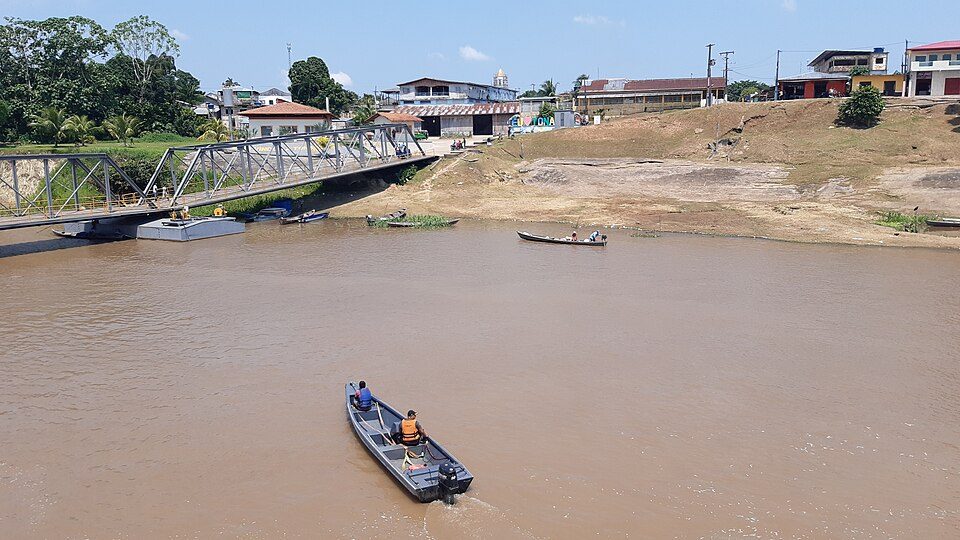
Tonantins, Brazil: Submarine Cable Landing Point
Tonantins is a municipality in the state of Amazonas in north-western Brazil, situated on the Amazon River approximately 867 kilometres upstream of Manaus. Accessible only by boat, the town sits in a remote stretch of the Amazon basin, directly east of the Jutaí-Solimões Ecological Station. Despite its geographic isolation, Tonantins serves as a submarine cable landing point, connecting it to Brazil's growing inland and riverine cable infrastructure.
One submarine cable lands at Tonantins: Norte Conectado (Infovia 02). This domestic cable links Tonantins to other points within Brazil, positioning the landing point as part of an intra-country connectivity corridor running through the Amazon region. The cable's relatively modest length of 1,796 kilometres reflects the scale of the riverine route it follows, rather than an oceanic crossing.
Cables Landing at Tonantins
Norte Conectado (Infovia 02) is a 1,796-kilometre submarine cable with a scheduled ready-for-service (RFS) date of 2026, currently in draft status. All endpoints on this cable are located within Brazil, making it a wholly domestic system. The cable is designed to extend connectivity through the Amazon basin, serving communities along one of the most geographically challenging corridors in the country.
Regional Context
Among Brazil's 64 submarine cable landing points, Tonantins hosts a single cable, placing it in the lower tier of the country's landing point hierarchy by cable count. Major Brazilian hubs such as Fortaleza (10 cables), Rio de Janeiro (8 cables), and Santos (5 cables) handle significantly larger volumes of cable traffic, predominantly international. Tonantins is more comparable in scale to Autazes, another Amazonian landing point hosting two cables, both of which serve domestic connectivity in the interior of the country.
Network Role
Tonantins functions as a single-cable terminus within Brazil's domestic submarine cable network. The Norte Conectado (Infovia 02) system, due for completion in 2026, is designed to extend fibre-optic connectivity along the Amazon River corridor, reaching municipalities that have historically been underserved due to the absence of road infrastructure and the reliance on river transport. As a landing point for a purely domestic cable, Tonantins does not participate in international submarine cable routes but instead represents an extension of Brazil's internal network into the remote north-west of Amazonas state.
Within the broader Brazilian submarine cable graph, Tonantins illustrates how submarine and riverine cable deployments are being used to address connectivity gaps in the Amazon interior, complementing the internationally oriented hubs concentrated on Brazil's Atlantic coastline.
What next: Tonantins, Brazil in the global directory of cable landing points; see surrounding routes on the interactive submarine cable map or follow live network monitoring.
Other Landing Points in Brazil
Landing Point
- CountryBR Brazil
- Coordinates2.8617°S 67.7754°W
- Connected Cables1
See Real Cable Routes
View actual submarine cable routing from Tonantins, Brazil - with backbone nodes, distance calculations, and latency estimates
Open Calculator →