Tobruk, Libya
Landing Point · LY Libya
Connected Cables
| Cable | Status |
|---|---|
| LFON (Libyan Fiber Optic Network) | Active |
| Tobrok-Emasaed Cable System | Active |
Live Performance
RTT measurements to this landing point from 2026-03-24 through 2026-08-10 - live ICMP round-trip time via our monitoring probes. Recomputed daily. ✓ No anomalies detected in the monitored period.
Measurement sources
| Probe | Location | Samples | Avg |
|---|---|---|---|
| own probe | Jerusalem IL | 12 | 136.2 ms |
| #6410 own probe | Sao Paulo BR | 8 | 164.5 ms |
| #6427 own probe | Sydney AU | 8 | 198.4 ms |
| own probe | Balancer IL | 8 | 136.6 ms |
| own probe | Odessa UA | 6 | 128.2 ms |
| own probe | Tbilisi GE | 5 | 149.6 ms |
| own probe | Minsk BY | 4 | 238.5 ms |
| own probe | Almaty KZ | 4 | 173.0 ms |
| own probe | Sevastopol UA | 4 | 270.7 ms |
About Tobruk, Libya
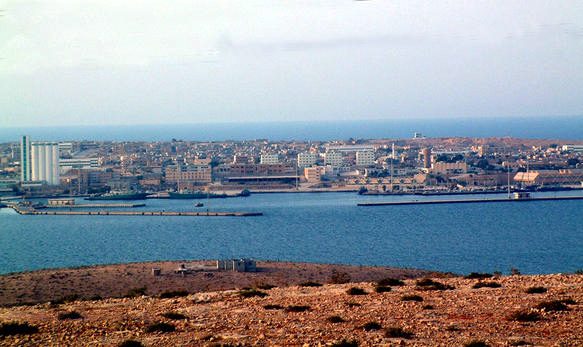
Tobruk, Libya: Submarine Cable Landing Point
Tobruk is a port city situated on Libya's eastern Mediterranean coast, close to the border with Egypt, and serves as the capital of the Butnan District. As a coastal settlement with an established port, Tobruk hosts submarine cable infrastructure that connects it to Libya's broader national fiber optic network. Two submarine cables land at Tobruk, making it one of the more active landing points along Libya's eastern seaboard.
Both cables landing at Tobruk are domestic in scope, linking Tobruk to other points within Libya rather than extending to foreign territories. The Libyan Fiber Optic Network (LFON) and the Tobrok-Emasaed Cable System together constitute Tobruk's submarine connectivity, enabling intra-national data transmission along the Libyan coastline. This places Tobruk within a corridor of Libyan coastal infrastructure rather than an intercontinental or cross-border communications route.
Cables Landing at Tobruk, Libya
LFON (Libyan Fiber Optic Network) is a domestic submarine cable stretching 1,639 km, with a ready-for-service (RFS) date of 1999. The cable links multiple landing points within Libya, running along the country's Mediterranean coastline. As one of the earlier submarine cable systems deployed in Libya, LFON forms a foundational element of the country's coastal fiber optic connectivity.
Tobrok-Emasaed Cable System is a shorter domestic cable measuring 178 km, with an RFS date of 2010. Like LFON, this cable connects points entirely within Libya, serving as a more targeted link between Tobruk and another Libyan coastal location. Its relatively modest length suggests a regional, point-to-point function within the eastern portion of the country's coastal network.
Regional Context
Among Libya's 14 submarine cable landing points, Tobruk ranks alongside Benghazi, Derna, and Misuratah, each of which also hosts two cables. Tripoli leads the country with three cables, while Al Bayda and Al Khums each host a single cable. Tobruk's two-cable presence places it within the upper tier of Libyan landing points by cable count, though it remains below Tripoli in terms of connectivity volume.
Network Role
Tobruk functions as a domestic submarine cable hub on Libya's eastern Mediterranean coast, with both of its cables dedicated entirely to intra-Libyan connectivity. Rather than serving as a gateway to international networks, Tobruk contributes to the national coastal fiber loop that Libya has developed to link its geographically dispersed coastal population centers. The combination of the long-haul LFON system and the shorter Tobrok-Emasaed Cable System gives Tobruk dual connectivity within the national submarine cable framework.
With two cables, Tobruk avoids the vulnerability of a single-cable terminus while not yet reaching the multi-cable density of Tripoli. Its position on the eastern Mediterranean coastline, near the Egyptian border, means it anchors the easternmost active segment of Libya's domestic submarine cable network, connecting the country's far eastern communities to the broader national fiber infrastructure.
What next: Tobruk, Libya in the global directory of cable landing points; see surrounding routes on the interactive submarine cable map or follow live network monitoring.
Other Landing Points in Libya
FAQ
Landing Point
- CountryLY Libya
- Coordinates32.0796°N 23.9603°E
- Connected Cables2
See Real Cable Routes
View actual submarine cable routing from Tobruk, Libya - with backbone nodes, distance calculations, and latency estimates
Open Calculator →