Al Bayda, Libya
Landing Point · LY Libya
1
Connected Cables
LY
Country
32.88°
Latitude
21.74°
Longitude
Ctrl + Scroll to zoom
Connected Cables
| Cable | Status |
|---|---|
| LFON (Libyan Fiber Optic Network) | Active |
Live Performance
57
measurements
11
probes
169
days monitored
164.3
ms avg RTT
0
anomalies
RTT measurements to this landing point from 2026-04-21 through 2026-10-07 - live ICMP round-trip time via our monitoring probes. Recomputed daily. ✓ No anomalies detected in the monitored period.
Measurement sources
| Probe | Location | Samples | Avg |
|---|---|---|---|
| own probe | Jerusalem IL | 12 | 135.0 ms |
| #6427 own probe | Sydney AU | 8 | 234.1 ms |
| #6410 own probe | Sao Paulo BR | 7 | 122.2 ms |
| own probe | Balancer IL | 6 | 133.1 ms |
| own probe | Tbilisi GE | 5 | 152.0 ms |
| own probe | Odessa UA | 5 | 124.9 ms |
| own probe | Almaty KZ | 4 | 170.1 ms |
| own probe | Minsk BY | 3 | 197.2 ms |
| own probe | Sevastopol UA | 3 | 277.1 ms |
| own probe | Moscow RU | 3 | 199.1 ms |
| own probe | DVM IL | 1 | 135.2 ms |
About Al Bayda, Libya
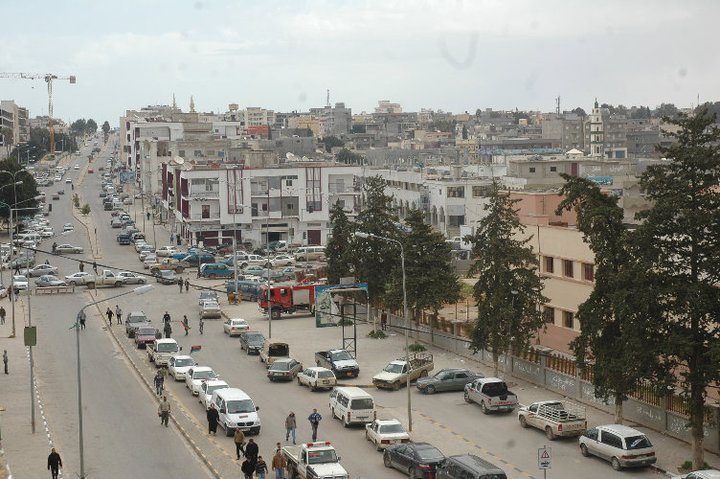
Connectivity in Al Bayda: A Link in Libya's Fiber Optic Network
Al Bayda, situated in the Jabal al Akhdar district of eastern Libya, is a commercial and industrial hub that plays a modest but meaningful role in the country's telecommunications infrastructure. Though it hosts only one submarine cable, the LFON (Libyan Fiber Optic Network), this connection ties Al Bayda into a broader domestic chain of 13 landing points across Libya, ensuring its integration into the national fiber optic network.The LFON Cable: Stitching Libya Together
The LFON cable, operational since 1999 and spanning 1639 km, is a purely domestic system designed to connect Libya's coastal cities. Al Bayda is one of its 13 landing points, alongside others such as Tripoli, Benghazi, Misuratah, and Derna. While cities like Tripoli and Benghazi host multiple cables, Al Bayda relies solely on LFON for its submarine connectivity. This single cable ensures that the city remains linked to Libya's major urban centers and industrial hubs, facilitating the exchange of data and communication across the country.Latency Measurements: Reliable Domestic Connectivity
GeoCables' monitoring of the LFON cable at Al Bayda reveals average latency of 166 ms, with a best-observed round-trip time of 114 ms. These figures highlight the cable's efficiency in handling domestic traffic, ensuring that Al Bayda remains connected to Libya's larger cities and their industries. While the latency is not competitive with international links, it is sufficient for domestic communication needs such as business operations, government services, and local commerce.Al Bayda's Role in Libya's Network
As the fourth-largest city in Libya, Al Bayda is home to a population of approximately 250,000 people. Its position as the capital of Jabal al Akhdar district underscores its importance as a regional center for commerce and industry. The LFON cable supports these activities by enabling the digital exchange of information and services, connecting Al Bayda to Libya's other major cities. While other landing points in Libya, such as Tripoli and Benghazi, benefit from multiple cables and international connectivity, Al Bayda's reliance on the LFON cable reflects its role as a regional node rather than an international gateway. This domestic focus aligns with the city's industrial and commercial character, ensuring that it remains an integral part of Libya's internal communications network.Conclusion
Al Bayda's single submarine cable landing point may not rival the connectivity of larger cities like Tripoli or Benghazi, but its inclusion in the LFON network ensures its place in Libya's telecommunications framework. As a regional hub in eastern Libya, Al Bayda depends on this connection to maintain its economic and industrial activities, demonstrating how even a single cable can sustain a city’s link to the rest of the country.What next: Al Bayda, Libya in the global directory of cable landing points; see surrounding routes on the interactive submarine cable map or follow live network monitoring.
Other Landing Points in Libya
LY Al Khums, Libya
32.6497°N 14.2644°E
LY Benghazi, Libya
32.1166°N 20.0668°E
LY Brega, Libya
30.3781°N 19.5765°E
LY Derna, Libya
32.7636°N 22.6392°E
LY El-Quawef, Libya
31.7608°N 25.0874°E
LY Misuratah, Libya
32.3743°N 15.0948°E
LY Ras Lanuf, Libya
30.5867°N 18.4119°E
LY Sirte, Libya
31.2053°N 16.5883°E
LY Tobruk, Libya
32.0796°N 23.9603°E
LY Tolmeta, Libya
32.7167°N 20.9500°E
LY Tripoli, Libya
32.8773°N 13.1873°E
LY Zawia, Libya
32.7747°N 12.5298°E
Landing Point
- CountryLY Libya
- Coordinates32.8817°N 21.7417°E
- Connected Cables1
See Real Cable Routes
View actual submarine cable routing from Al Bayda, Libya - with backbone nodes, distance calculations, and latency estimates
Open Calculator →
Submarine cables
Land fiber
Live probes