Sydney Mines, NS, Canada
Landing Point · CA Canada
Connected Cables
| Cable | Status |
|---|---|
| APOCS 1 | Active |
Live Performance
RTT measurements to this landing point from 2026-07-14 through 2026-07-14 - live ICMP round-trip time via our monitoring probes. Recomputed daily. ✓ No anomalies detected in the monitored period.
Measurement sources
| Probe | Location | Samples | Avg |
|---|---|---|---|
| #6427 own probe | Sydney AU | 2 | 275.3 ms |
| #6487 | control probe | 2 | 225.4 ms |
| own probe | Minsk BY | 2 | 160.7 ms |
| own probe | Moscow RU | 2 | 130.1 ms |
| own probe | Saint Petersburg RU | 2 | 117.6 ms |
| own probe | Kyiv UA | 2 | 112.2 ms |
About Sydney Mines, NS, Canada
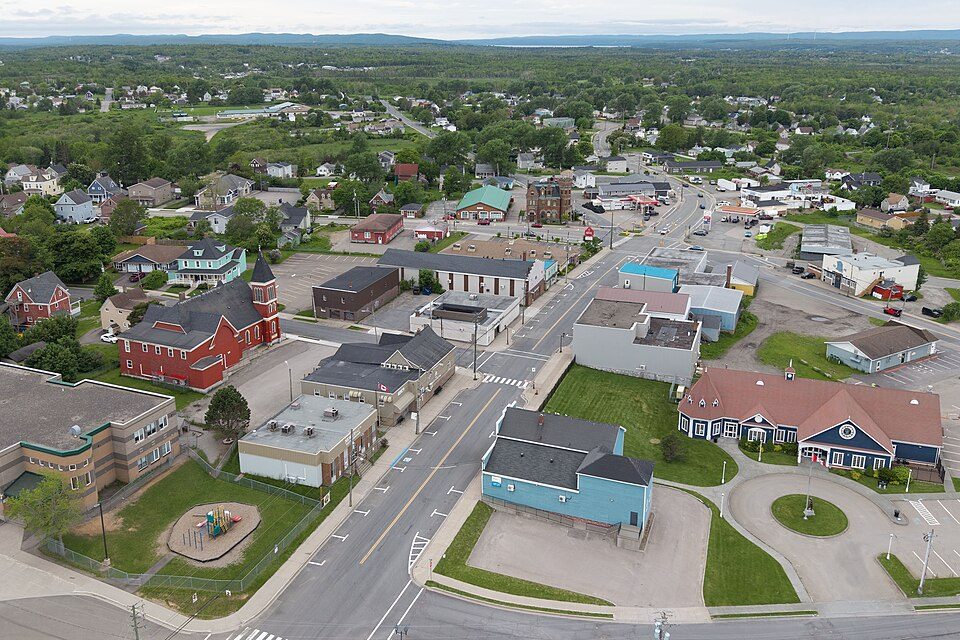
How the Internet Reaches Sydney Mines, NS, Canada
Sydney Mines is a community in Cape Breton Regional Municipality, Nova Scotia, on Canada's Atlantic coast. Its position on Cape Breton Island places it at the northeastern edge of Nova Scotia, facing the waters of the Cabot Strait that separate Nova Scotia from Newfoundland and Labrador. International and inter-provincial internet traffic reaches Sydney Mines through submarine cable infrastructure that physically lands at this point on the island's coastline.
Sydney Mines is served by a single submarine cable landing - the APOCS 1 cable, which entered service in 1991. Rather than connecting Sydney Mines to international destinations across an ocean, this cable operates as a regional link, connecting Cape Breton Island to Cape Ray in Newfoundland and Labrador. Internet traffic traveling between Nova Scotia and Newfoundland via this route passes beneath the Cabot Strait along this relatively short inter-provincial corridor.
The Cable Serving Sydney Mines, NS, Canada
The APOCS 1 cable, which entered service in 1991, links Sydney Mines directly to Cape Ray, NL, Canada. This makes it a domestic Canadian cable connecting two provinces - Nova Scotia and Newfoundland and Labrador - across the Cabot Strait. It is one of Canada's earliest submarine cables still recorded in service, with its 1991 ready-for-service date marking the beginning of Canada's submarine cable era as reflected in the national infrastructure record.
Regional Context
Canada hosts 18 submarine cables across 44 landing points, with an average cable length of 877 km. Sydney Mines represents one of the smaller, single-cable terminuses within this national network. Among neighbouring landing points in Atlantic and northern Canada, Halifax, NS carries two submarine cables, giving it greater connectivity diversity than Sydney Mines. Further afield, landing points in northern Quebec - including Kangiqsujuaq, Puvirnituq, Akulivik, and Aupaluk - similarly serve as regional and remote community links, reflecting Canada's broad use of submarine cables to connect geographically dispersed communities.
What This Means for Connectivity
Because Sydney Mines is served by a single submarine cable, all traffic routed through this landing point flows exclusively over APOCS 1. An outage on this cable would directly affect the inter-provincial submarine link between Nova Scotia and Newfoundland and Labrador at this location. The cable's sole destination - Cape Ray, NL - means the connectivity it provides is specifically inter-provincial in character rather than intercontinental, serving as a fixed underwater path between two Canadian provinces across the Cabot Strait.
Understanding Sydney Mines as a single-cable, domestically focused landing point illustrates how submarine cable infrastructure in Canada extends well beyond major international hubs, reaching smaller coastal communities to maintain regional land-to-island connections. This is a reminder that submarine cables serve not only global internet routing but also essential links between a country's own territories separated by water.
What next: Sydney Mines, NS, Canada in the global directory of cable landing points; see surrounding routes on the interactive submarine cable map or follow live network monitoring.
Other Landing Points in Canada
Landing Point
- CountryCA Canada
- Coordinates46.2293°N 60.2241°W
- Connected Cables1
See Real Cable Routes
View actual submarine cable routing from Sydney Mines, NS, Canada - with backbone nodes, distance calculations, and latency estimates
Open Calculator →