São Mateus, Brazil
Landing Point · BR Brazil
Connected Cables
| Cable | Status |
|---|---|
| Brazilian Festoon | Active |
Live Performance
RTT measurements to this landing point from 2026-04-04 through 2026-10-07 - live ICMP round-trip time via our monitoring probes. Recomputed daily. ✓ No anomalies detected in the monitored period.
Measurement sources
| Probe | Location | Samples | Avg |
|---|---|---|---|
| #1014473 own probe | Minsk BY | 9 | 150.3 ms |
| #6427 own probe | Sydney AU | 8 | 309.3 ms |
| #1014589 own probe | Almaty KZ | 7 | 208.9 ms |
| #7062 own probe | Cape Town ZA | 6 | 332.0 ms |
| #1014597 own probe | Tbilisi GE | 6 | 185.3 ms |
| #1014969 own probe | Jerusalem IL | 6 | 184.5 ms |
| #6410 own probe | Sao Paulo BR | 5 | 16.3 ms |
| #1015984 own probe | Balancer IL | 5 | 287.6 ms |
| #6487 | control probe | 4 | 435.2 ms |
| #1015313 own probe | Sevastopol UA | 4 | 204.4 ms |
| #50483 | control probe | 3 | 31.1 ms |
| #1016031 own probe | Kyiv UA | 3 | 64.4 ms |
| #1015523 own probe | Moscow RU | 2 | 166.4 ms |
| #1015563 own probe | Saint Petersburg RU | 2 | 81.9 ms |
| #6568 own probe | Singapore SG | 1 | 177.3 ms |
| #1015932 own probe | Odessa UA | 1 | 81.3 ms |
About São Mateus, Brazil
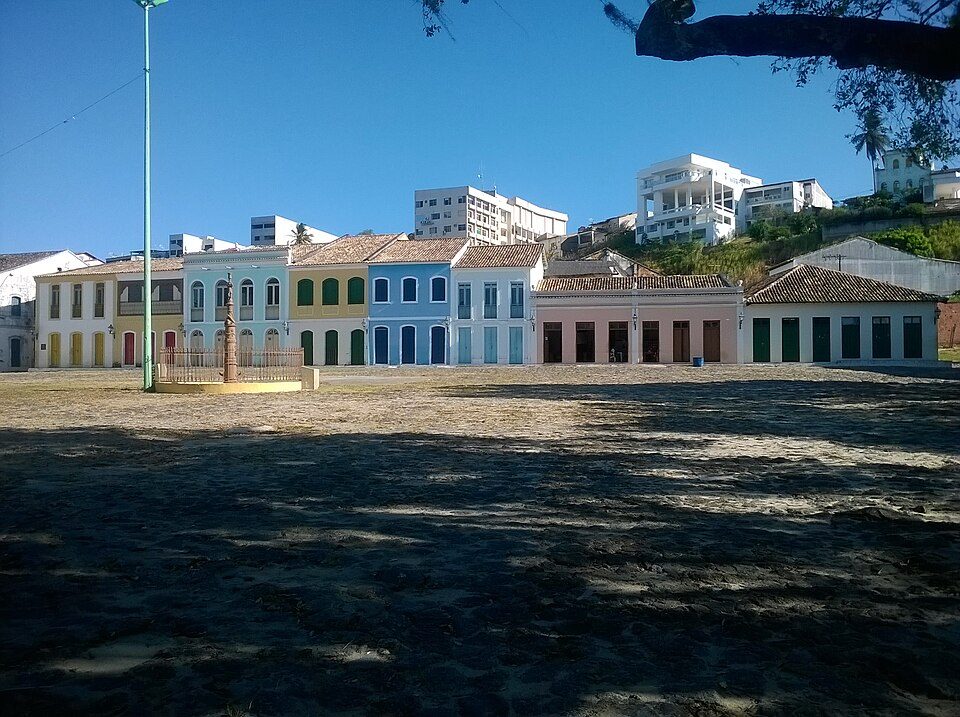
São Mateus, Brazil: Submarine Cable Landing Point
São Mateus is a municipality located in the state of Espírito Santo, on the eastern coast of Brazil. As a coastal settlement on the Atlantic seaboard, it serves as a landing point for submarine cable infrastructure connecting segments of Brazil's coastal network. One submarine cable lands at São Mateus, making it a single-cable terminus within the broader Brazilian submarine cable landscape.
The cable serving São Mateus is the Brazilian Festoon, a domestic coastal system that links multiple points along Brazil's coastline. Rather than providing intercontinental connectivity, this cable forms part of a regional, intra-country corridor, enabling data transmission between Brazilian coastal communities and population centers.
Cables Landing at São Mateus
The Brazilian Festoon is the sole submarine cable landing at São Mateus. Spanning 2,552 km, this cable reached ready-for-service status in 1996 and carries a draft status designation. Its endpoints are entirely within Brazil, making it a domestic submarine cable system that connects various points along the Brazilian coast. The Brazilian Festoon represents the earliest generation of submarine cable deployment in Brazil, with 1996 coinciding with the year the first submarine cable was commissioned in the country.
Regional Context
Within Brazil's submarine cable infrastructure, which spans 22 cables across 64 landing points, São Mateus ranks as a smaller node. Major Brazilian landing points such as Fortaleza (10 cables), Rio de Janeiro (8 cables), and Santos (5 cables) host significantly more cable systems, while São Mateus, with its single cable, sits alongside other more modestly connected locations in the country. With one cable, it falls within the top 81% of Brazil's 74 landing points by cable count, reflecting its role as a supporting rather than primary node in the national submarine cable graph.
Network Role
São Mateus functions as a single-cable terminus on the Brazilian Festoon, a domestic coastal system running along Brazil's Atlantic shoreline. Its connectivity is oriented entirely toward intra-national communication rather than intercontinental exchange, channeling regional data flows between coastal Brazilian communities. The cable's 2,552 km length and 1996 commissioning date place it among the foundational elements of Brazil's submarine network.
As a one-cable landing point on a purely domestic cable, São Mateus occupies a specialized position in Brazil's submarine cable graph - one that supports coastal regional connectivity rather than serving as a gateway to international networks. Its presence nonetheless illustrates the geographic reach of Brazil's festoon-style coastal cabling, which extended submarine infrastructure to communities along the full length of the country's eastern seaboard.
What next: São Mateus, Brazil in the global directory of cable landing points; see surrounding routes on the interactive submarine cable map or follow live network monitoring.
Other Landing Points in Brazil
Landing Point
- CountryBR Brazil
- Coordinates18.7167°S 39.8591°W
- Connected Cables1
See Real Cable Routes
View actual submarine cable routing from São Mateus, Brazil - with backbone nodes, distance calculations, and latency estimates
Open Calculator →