Rio de Janeiro, Brazil
Landing Point · BR Brazil
Connected Cables
| Cable | Status |
|---|---|
| America Movil Submarine Cable System-1 (AMX-1) | Active |
| Brazilian Festoon | Active |
| BRUSA | Active |
| GlobeNet | Active |
| Junior | Active |
| Malbec | Active |
| South America-1 (SAm-1) | Active |
| South American Crossing (SAC) | Active |
Live Performance
RTT measurements to this landing point from 2026-03-28 through 2026-10-17 - live ICMP round-trip time via our monitoring probes. Recomputed daily. ✓ No anomalies detected in the monitored period.
Measurement sources
| Probe | Location | Samples | Avg |
|---|---|---|---|
| #55026 | control probe | 176 | 140.5 ms |
| #10386 | control probe | 171 | 133.9 ms |
| #61587 | control probe | 94 | 36.9 ms |
| #54250 | control probe | 21 | 119.2 ms |
| #65314 | control probe | 19 | 145.5 ms |
| #4113 | control probe | 18 | 43.6 ms |
| #6410 own probe | Sao Paulo BR | 14 | 10.6 ms |
| #6487 | control probe | 14 | 364.5 ms |
| #7062 own probe | Cape Town ZA | 14 | 342.6 ms |
| own probe | Almaty KZ | 2 | 312.7 ms |
| own probe | Balancer IL | 2 | 287.2 ms |
| #7460 | control probe | 1 | 33.5 ms |
| own probe | Minsk BY | 1 | 224.5 ms |
| own probe | Tbilisi GE | 1 | 249.5 ms |
| own probe | Jerusalem IL | 1 | 243.4 ms |
About Rio de Janeiro, Brazil
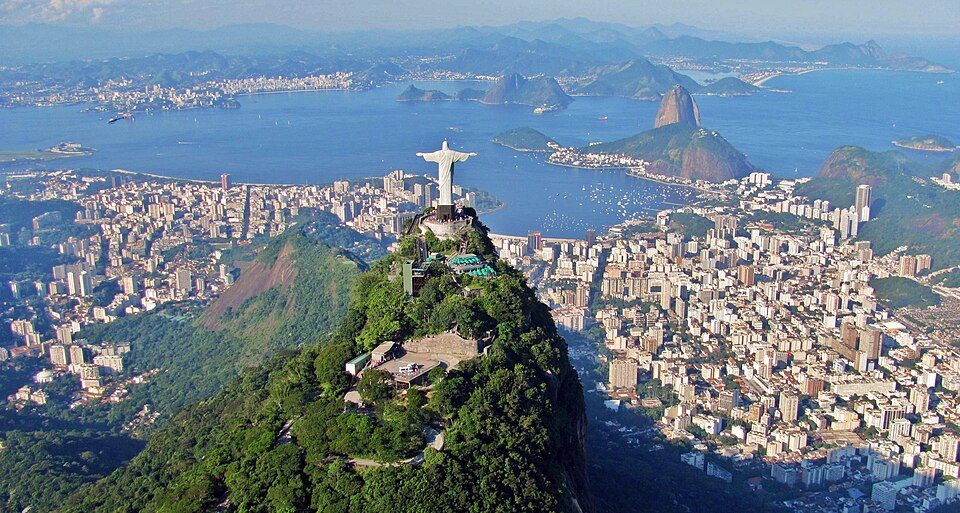
Rio de Janeiro, Brazil is a submarine cable landing point in Brazil (coordinates -22.9034°, -43.2096°). It serves 8 submarine cable systems, making it a significant node in Brazil's international connectivity infrastructure.
Rio de Janeiro, also known simply as Rio, is the capital of the state of Rio de Janeiro. It is the second-most-populous city in Brazil after São Paulo and the sixth-most-populous city in the Americas. Wikipedia
Connected submarine cables
| Cable | RFS | Length | Owners |
|---|---|---|---|
| Malbec | 2021 | 2,880 km | Meta, V.tal |
| BRUSA | 2018 | 11,000 km | Telxius |
| Junior | 2018 | 390 km | |
| America Movil Submarine Cable System-1 (AMX-1) | 2014 | 17,800 km | América Móvil (Claro) |
| South America-1 (SAm-1) | 2001 | 25,000 km | Telxius |
| GlobeNet | 2000 | 23,500 km | V.tal |
| South American Crossing (SAC) | 2000 | 20,000 km | Cirion Technologies, Sparkle |
| Brazilian Festoon | 1996 | 2,552 km | Embratel |
Operators landing at Rio de Janeiro, Brazil
Cables landing at Rio de Janeiro, Brazil are operated by 8 distinct consortium partners and carriers, including América Móvil (Claro), Cirion Technologies, Embratel, Google, Meta, Sparkle, Telxius, V.tal. Each cable is typically jointly owned by a consortium of tier-one carriers and hyperscale operators who share construction costs and capacity; the operator mix reflects both regional incumbents and global players with interest in the routes served by this landing point.
Connectivity profile
From Rio de Janeiro, Brazil, international traffic can reach 15 countries through 8 cable systems. Destinations include Argentina, Bermuda, Brazil, Chile, Colombia, Costa Rica, Dominican Republic, Ecuador and 7 more. With multiple redundant paths, traffic at this landing point can reroute through alternative cables if any single system experiences an outage.
Monitoring status
GeoCables recorded 1 monitoring event on cables serving Rio de Janeiro, Brazil in the past 90 days. Our monitoring network continuously samples latency from external probes to targets reachable via these cables.
About the cables
- Malbec (2021) - Malbec is a point-to-point submarine cable linking Argentina and Brazil. Landing at Las Toninas, Porto Alegre, Praia Grande, Rio de Janeiro, it provides a direct fiber-optic path between the two countries, serving as both a primary data route and a redundancy option for neighboring cable systems. Read more →
- BRUSA (2018) - BRUSA is a point-to-point submarine cable linking Brazil and United States. Landing at Fortaleza, Rio de Janeiro, San Juan, Virginia Beach, it provides a direct fiber-optic path between the two countries, serving as both a primary data route and a redundancy option for neighboring cable systems. Read more →
- Junior (2018) - Junior is a submarine cable system operating within Brazil, with landing points at Rio de Janeiro, Santos. It provides dedicated submarine fiber capacity between these locations, supporting telecommunications, internet access, and enterprise connectivity. Read more →
- America Movil Submarine Cable System-1 (AMX-1) (2014) - America Movil Submarine Cable System-1 (AMX-1) is a major intercontinental submarine cable system spanning 7 countries across South America, Central America, North America. With 15 landing points - including Barranquilla, Cancún, Cartagena, Fortaleza, Hollywood, and 10 more - it forms one of the backbone links carrying international internet traffic between continents. Read more →
- South America-1 (SAm-1) (2001) - South America-1 (SAm-1) is a major intercontinental submarine cable system spanning 9 countries across South America, North America. With 16 landing points - including Arica, Barranquilla, Boca Raton, Fortaleza, Las Toninas, and 11 more - it forms one of the backbone links carrying international internet traffic between continents. Read more →
- GlobeNet (2000) - GlobeNet is a cross-regional submarine cable connecting Colombia, United States, Brazil, Venezuela, Bermuda. Its 7 landing points at Barranquilla, Boca Raton, Fortaleza, Maiquetia, Rio de Janeiro, and 2 more bridge the networks of South America, North America, providing an important path for international data traffic. Read more →
- South American Crossing (SAC) (2000) - South American Crossing (SAC) is a regional submarine cable connecting 8 countries - Colombia, Panama, Brazil, Argentina, Peru and others - with 11 landing points including Buenaventura, Colombia, Colón, Panama, Fort Amador, Panama, Fortaleza, Brazil and others. Read more →
- Brazilian Festoon (1996) - Brazilian Festoon is a domestic submarine cable network within Brazil, connecting 14 coastal and island locations including Aracajú, Atafona, Ilhéus, João Pessoa, Macaé, and 9 more. The system provides essential telecommunications infrastructure for communities that would otherwise depend entirely on satellite or microwave links. Read more →
What next: Rio de Janeiro, Brazil in the global directory of cable landing points; see surrounding routes on the interactive submarine cable map or follow live network monitoring.
Incident history
Significant incidents on cables landing here, each with its own report.
Other Landing Points in Brazil
FAQ
Landing Point
- CountryBR Brazil
- Coordinates22.9034°S 43.2096°W
- Connected Cables8
See Real Cable Routes
View actual submarine cable routing from Rio de Janeiro, Brazil - with backbone nodes, distance calculations, and latency estimates
Open Calculator →